

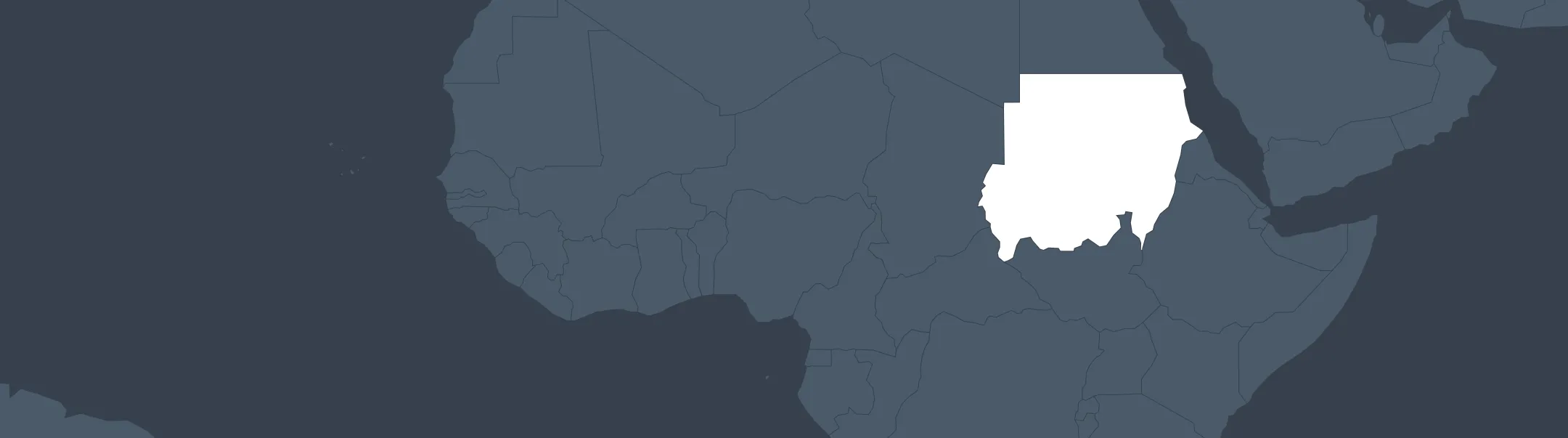

Sudan
Freedom at a Glance
Global Freedom
1 / 100
Not Free
Internet Freedom
27 / 100
Not Free


In late 2021, military leadership dissolved Sudan's transitional government in a coup and cracked down on the ensuing prodemocracy protests. Throughout the transition period, violence involving security forces, other armed groups, and rival ethnic communities has persisted in many parts of the country.
Research & Recommendations
Sudan
Not Free
1
100
| PR Political Rights | -4 40 |
| CL Civil Liberties | 5 60 |
Last Year's Score & Status
2
100
Not Free
A country or territory’s Freedom in the World status depends on its aggregate Political Rights score, on a scale of 0–40, and its aggregate Civil Liberties score, on a scale of 0–60.
See the methodology.
Overview
After military commanders and a prodemocracy protest movement ousted the repressive regime of longtime President Omar al-Bashir and his National Congress Party (NCP) in 2019, Sudan was ruled by a transitional government in which military and civilian leaders agreed to share power until national elections could be held. The process was thrown into turmoil in late 2021 when the military leadership dissolved the transitional government in a coup and cracked down on the ensuing prodemocracy protests. In April 2023, hostilities broke out between the regular Sudanese Armed Forces (SAF) and the Rapid Support Forces (RSF), a paramilitary group originally formed by al-Bashir, and the fighting quickly spread across the country. The ongoing conflict has been characterized by extreme levels of violence, including reported atrocities against non-Arab ethnic groups in Darfur, and has led more generally to the mass killing and displacement of civilians.
Freedom in the World 2026 Policy Recommendations
Strengthen democratic coordination and collective action in a contested global order
Democratic resilience will increasingly depend on stronger coordination among countries that share a commitment to freedom, the rule of law, and accountable governance.
Reimagine international democracy assistance to help reverse the global decline in freedom
International support for democratic institutions, civil society, and independent media has been associated with modest but meaningful improvements in democratic governance, and it is far less costly than the military outlays necessitated by rising authoritarian aggression.
Prioritize engagement with younger generations in the digital spaces where civic identity is now formed
Young people are increasingly dissatisfied with democracy—not because they reject its principles, but because they see institutions failing to deliver on them. Programmatic work should create clear pathways for meaningful political participation, from voting and policy engagement to community organizing and public leadership, so that young people can translate their expectations into agency.
Sudan
Not Free
27
100
| A Obstacles to Access | 5 25 |
| B Limits on Content | 13 35 |
| C Violations of User Rights | 9 40 |
Last Year's Score & Status
27
100
Not Free
Scores are based on a scale of 0 (least free) to 100 (most free).
See the methodology en report acknowledgements.
Overview
Internet freedom remained highly restricted in Sudan amid the ongoing civil war between the Sudanese Armed Forces (SAF) and the paramilitary Rapid Support Forces (RSF). Security forces continued to carry out arrests in retaliation for people’s social media activity, while online journalists were subject to physical attacks, abductions, and forced disappearances by the RSF. The conflict has had an extreme chilling effect on online expression, and fear of prosecution or violence for critical speech has led to increased self-censorship. Destruction of internet infrastructure and internet disruptions during the war continued to exacerbate the country’s humanitarian crisis, hamper the delivery of aid, and prevent residents from documenting crimes against humanity that have left thousands of people dead and millions displaced.
Freedom on the Net 2026 Policy Recommendations
Undermine Authoritarian Internet Restrictions
Access to the internet is under threat as authoritarian powers continue to create barriers for people to freely express themselves online. Internet shutdowns, throttling, and platform blocking remain among the most common tools of digital repression. At the same time, digital technologies serve as a lifeline for people seeking to expose human rights violations to the outside world and hold dictators accountable.
Safeguard Privacy Online
Protecting privacy online is essential to safeguarding free expression in repressive contexts. Without strong privacy protections, journalists and human rights defenders may self-censor out of a fear of reprisal. Rapid advances in AI—and the growing threat of automated vulnerability exploitation—heighten these risks, leaving civil society organizations increasingly vulnerable to sophisticated cyberattacks.
News and Updates

Freedom House Perspectives


News Releases & Media Coverage

Country Facts
Basic Facts
Freedom in the World Score
1
/ 100
Not Free
Freedom on the Net Score
27
/ 100
Not Free
Population: 46,870,000
Election Facts
Status
Not Tracked
Transnational Repression
Status
Not Tracked
