

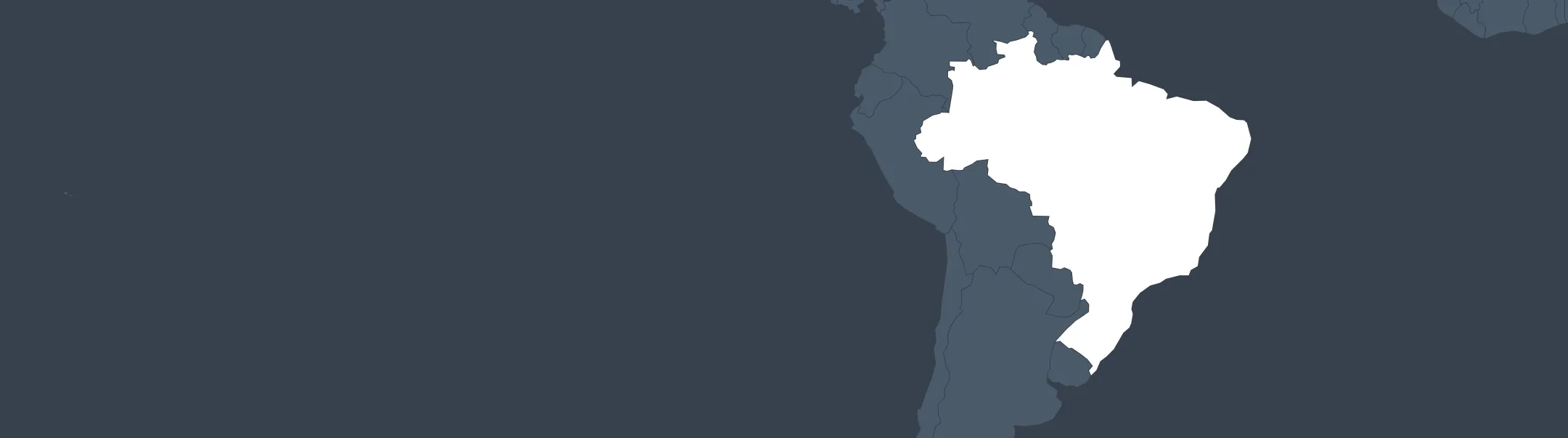

Brazil
Freedom at a Glance
Global Freedom
73 / 100
Free
Internet Freedom
65 / 100
Partly Free


Brazil is a democracy that holds competitive elections. The political arena, though polarized, is characterized by vibrant public debate. However, independent journalists and civil society activists risk harassment and violent attack, political violence is high, and the government has struggled to address crime and disproportionate violence against and economic exclusion of minorities.
Research & Recommendations
Brazil
Free
73
100
| PR Political Rights | 30 40 |
| CL Civil Liberties | 43 60 |
Last Year's Score & Status
72
100
Free
A country or territory’s Freedom in the World status depends on its aggregate Political Rights score, on a scale of 0–40, and its aggregate Civil Liberties score, on a scale of 0–60.
See the methodology.
Overview
Brazil is a democracy that holds competitive elections. Its political arena, though polarized, is characterized by vibrant public debate. However, independent journalists and civil society activists risk harassment and violent attack and political violence is high. Minority groups suffer from crime, disproportionate violence, and economic exclusion, and corruption is endemic at top levels. Societal discrimination and violence against LGBT+ people remain serious problems.
Freedom in the World 2026 Policy Recommendations
Strengthen democratic coordination and collective action in a contested global order
Democratic resilience will increasingly depend on stronger coordination among countries that share a commitment to freedom, the rule of law, and accountable governance.
Reimagine international democracy assistance to help reverse the global decline in freedom
International support for democratic institutions, civil society, and independent media has been associated with modest but meaningful improvements in democratic governance, and it is far less costly than the military outlays necessitated by rising authoritarian aggression.
Prioritize engagement with younger generations in the digital spaces where civic identity is now formed
Young people are increasingly dissatisfied with democracy—not because they reject its principles, but because they see institutions failing to deliver on them. Programmatic work should create clear pathways for meaningful political participation, from voting and policy engagement to community organizing and public leadership, so that young people can translate their expectations into agency.
Brazil
Partly Free
65
100
| A Obstacles to Access | 22 25 |
| B Limits on Content | 24 35 |
| C Violations of User Rights | 19 40 |
Last Year's Score & Status
65
100
Partly Free
Scores are based on a scale of 0 (least free) to 100 (most free).
See the methodology and report acknowledgements.
Political Overview
Brazil is a democracy that holds competitive elections. Its political arena, though polarized, is characterized by vibrant public debate. However, independent journalists and civil society activists risk harassment and violent attack and political violence is high. Minority groups suffer from crime, disproportionate violence, and economic exclusion, issues the government struggles to address. Corruption is endemic at top levels, contributing to widespread disillusionment among the public. Societal discrimination and violence against LGBT+ people remain serious problems.
Freedom on the Net 2025 Policy Recommendations
Countering Restrictions on Freedom of Expression
Freedom of expression online has been and is increasingly under attack as governments shut off internet connectivity, block social media platforms, and restrict access to websites that host political, social, and religious speech. Protecting freedom of expression will require strong legal and regulatory safeguards for digital communications.
Countering Manipulation of the Online Environment
Governments should encourage a whole-of-society approach to fostering a high-quality, diverse, and trustworthy information space. The Global Declaration on Information Integrity Online identifies best practices for safeguarding the information ecosystem, to which governments should adhere.
Countering Restrictions on Privacy and Disproportionate Government Surveillance
Comprehensive data-protection regulations and industry policies on data protection are essential for upholding privacy and combating disproportionate government surveillance, but they require careful crafting to ensure that they do not contribute to internet fragmentation—the siloing of the global internet into nation-based segments—and cannot be used by governments to undermine privacy and other fundamental freedoms.
News and Updates
Featured

Freedom House Perspectives


News Releases & Media Coverage


Country Facts
Basic Facts
Freedom in the World Score
73
/ 100
Free
Freedom on the Net Score
65
/ 100
Partly Free
Population: 215,300,000
Internet Facts
Status
Partly Free
Networks Restricted
No
Social Media Blocked
Yes
Websites Blocked
No
Pro-government Commentators
No
Users Arrested
Yes
Election Facts
Status
Past Election
Date of Election
October 2, 2022
Type of Election
General
Internet Penetration
74.09%
Election Year
2022
Vulnerability Index
66
/ 100
Transnational Repression
Status
Not Tracked
