


Policy Brief April 23, 2026
Beyond Maduro: Building a Sustainable Democratic Transition in Venezuela
Nicolás Maduro’s removal offers a unique opportunity for a democratic transition in Venezuela. The United States and other democracies should support the Venezuelan people in their demands for truth, justice, accountability, and free elections.
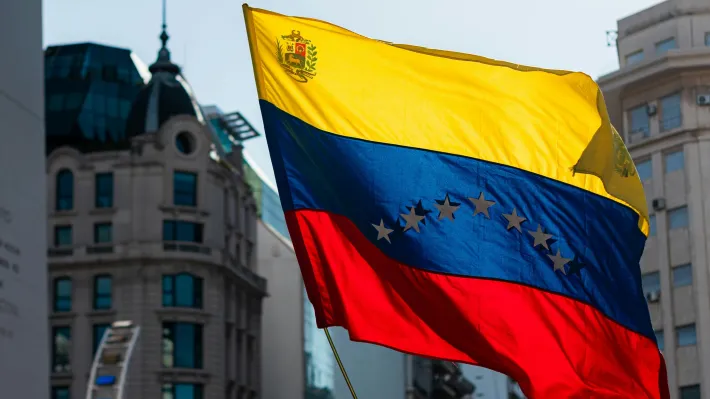
On January 3, 2026, US special forces carried out Operation Absolute Resolve, capturing Nicolás Maduro and his wife Cilia Flores and giving way to a new political reality in Venezuela. A significant blow to the authoritarian regime, the moment has restored hope for freedom to millions of Venezuelans.
However, over three months after Maduro’s removal, Venezuelan authorities have yet to signal a decisive break with his authoritarian rule. The country is wrestling with a legacy of severe human rights abuses, corrupt power structures, and an interim regime drawn from the vestiges of the previous administration. The United States and other democratic countries cannot trust the existing regime to be a stable and long-term partner that will lead the country towards democracy, rule of law, freedom, and economic prosperity.
Still, this moment represents an unprecedented opportunity in Venezuela to implement reforms that lead to a democratic transition. It is essential that the United States and other democratic governments press for the dismantling of Venezuela’s repressive regime apparatus, a genuine process of justice for its victims, institutional renewal, and free and fair elections as soon as possible. A stable and democratic Venezuela is of vital interest to the United States, as it would be a key partner in reducing regional instability, weakening transnational criminal networks, limiting the influence of autocratic regimes such as those in China, Iran, and Russia in the Western Hemisphere, and supporting more stable energy markets.
New amnesty law falls short
According to the nongovernmental organization (NGO) Foro Penal, 902 political prisoners were being held in Venezuela at the end of 2025, the majority of whom were detained during the harsh crackdown that followed Maduro’s victory in the fraudulent 2024 presidential election. After Maduro’s removal, one of the first measures taken by the interim regime, under pressure of the United States, was the release of some political prisoners. The process began on January 8 and was hastily followed by the approval of a general amnesty law that is supposed to grant a broad pardon for political offenses between 1999 and 2026.
However, human rights organizations have denounced the law’s limited scope and claim that it is another politicized mechanism that discriminates against certain political prisoner cases, especially those of former military members. Moreover, the law is not applied automatically—one must file a petition before the courts—and it excludes high-profile political leaders inside and outside the country. By excluding these categories of people the law effectively perpetuates Maduro’s “traitors to the homeland” narrative, which he had wielded to discredit regime critics.
Further complicating matters is the lack of transparency and independent oversight of information provided by the interim regime. By early March, the interim regime reported that at least 7,654 people had benefited from the amnesty: 247 released from prison and 7,407 whose precautionary measures—temporary legal actions meant to protect rights before a final judgment, but which in practice often limited freedoms—were lifted. Yet no verifiable official lists have been published, and the information released contrasts with that of organizations such as Foro Penal and data provided by the Office of the UN High Commissioner for Human Rights (OHCHR). By April 2026, Foro Penal reported that over 400 political prisoners remained incarcerated.
Amnesty must not become a new mechanism of political control. It is essential that victims become the focal point of a transitional justice process that is transparent, addresses accountability, and promotes guarantees of nonrepetition of the crimes against humanity committed in Venezuela, which have been documented by the Independent International Fact-Finding Mission.
Toward democratic institutional reform, or reinforcing repressive structures?
Any stabilization and economic recovery promoted by the United States must go hand in hand with a genuine process of institutional transformation that builds public trust. This transformation should be grounded in meaningful changes that pave the way for truth, justice, rule of law, and free elections.
The resignation of key figures in late February, including the attorney general and the ombudsman, represented an opportunity to appoint reform-minded individuals outside the inner circle of power who could contribute to the state institutional reform process. However, changes in the interim regime’s cabinet have been cosmetic and if anything, the reshuffling of leadership has brought loyal regime supporters back into the fold. The new minister of defense, Gustavo González López, held key positions under Maduro, including director of the SEBIN, the Bolivarian National Intelligence Service. The new head of the state-owned gas company PDVSA’s US subsidiary CITGO is Asdrúbal Chávez, Hugo Chávez’s cousin. Chávez had been denied a US visa to run CITGO before US sanctions were imposed on the country in 2019.
In early April, the interim authorities sent a clear signal that they intend to hold on to power. The National Assembly, under the regime’s control, hastily appointed Larry Devoe as the new attorney general and Eglée González as the new ombudswoman—loyalists to Delcy Rodriguez. Democratic advocates for the Venezuelan people should not tolerate measures advanced by interim authorities who aim to manufacture the illusion of change while keeping Venezuela’s previous power structures intact.
A roadmap for reforms in the short term should prioritize removing compromised individuals, and in the long term overhaul institutions including the justice system and anticorruption bodies that have been captured by the corrupt regime. Reforms that improve accountability and transparency could attract international investment and help to lift up the economic prospects of the Venezuelan people.
Civil society as a pillar of the transition
Venezuelans are ready to help with the transition to a new democratic era. Even under years of rule by one of the world’s most repressive regimes, Venezuelan civil society has demonstrated profound resilience inside Venezuela and in exile. It has persisted in its efforts to rigorously document human rights violations, support victims, and sustain civic organization and mobilization within the country and abroad, all in pursuit of justice and democratic restoration.
In its ongoing role in oversight and accountability promotion, civil society remains indispensable, and Venezuela’s democratic partners should support these groups in their efforts to expose abuses, seek justice for victims, advance genuine democratic recovery, and mobilize citizens to participate in free and fair elections.
The way forward
Three days after January 3, Freedom House issued its Guidance for a Peaceful Transition to Democracy in Venezuela. We highlighted the importance of working with independent civil society and the international community to ensure the release of political prisoners, reestablish the rule of law, and clear a pathway for a freely elected Venezuelan government. As the political situation in Venezuela evolves, Freedom House recommends that the United States and other democratic governments support concrete steps over the next 6 months to move the democratic transition forward.
Secure the immediate release of remaining political prisoners. While the interim regime has freed hundreds of political prisoners, many have been subject to restrictive and legally baseless conditions, such as mandatory court appearances, travel bans, and gag orders, and others have reportedly been pressured to sign promises to remain silent as their legal cases remain open. As expressed by Representative Maria Elvira Salazar during a recent House Foreign Affairs subcommittee hearing, the releases under the current amnesty law are not enough. Democracy in Venezuela demands the immediate release of all political prisoners. All remaining political prisoners should be immediately released, without conditions and with their freedom fully restored.
Dismantle the repressive apparatus and adopt a transitional justice strategy. The immediate restoration of rights and freedoms must be foremost in a comprehensive transition. As part of the three-phase strategy—aimed at stabilizing the country, jump-starting its economy, and steering toward a political transition—proposed by the Secretary of State Marco Rubio, the United States should maintain maximum pressure on the interim regime to ensure the dismantling of chains of command and state power networks involved in systemic repression. This demands the repealing of various laws intended to criminalize human rights defense and shutter civic space, such as the anti-NGO law, law on nonprofit organizations, law against hatred, social responsibility on radio and television law, antiterrorism law, and antifascism law, among others. Also, a victim-centric transitional justice strategy should be designed, ensuring the public recognition of crimes, justice and reparations for victims, and guarantees of nonrepetition. This strategy should be complimented with the prompt response by international criminal justice mechanisms to avoid impunity and ensure accountability.
Support civil society’s role in the transition. Civil society must have a seat at the table and uphold citizens’ expectations for the transition. To fulfill this role in a still hostile and uncertain environment, civil society groups require technical assistance, funding, protection mechanisms, and proper security measures. Venezuelan civil society has been a key actor in containing authoritarianism and defending democracy, and has also played an essential role in responding to the humanitarian emergency affecting the country since 2016. Their participation was critical in the 2024 elections, and they will be a key factor in the upcoming elections. Civil society should be trusted to serve as a critical pillar of support, guiding a fragile transition and helping consolidate its success.
Guarantee the safe return of exiles. The safe return of exiles, including political leaders, is vital for advancing justice and reconciliation. Exiled political leaders and civil society actors will bring renewed energy, international networks, and experience that can help revitalize citizen mobilization and expand space for free expression. Their experiences will help link domestic and international efforts and broaden participation during the transition, breaking the control of dominant elites.
Establish transparency and accountability in public office and finances. While the United States maintains oversight over Venezuela’s financial resources, it is essential that regular public information be provided regarding this control, as well as the planning and allocation of expenditures aimed at addressing humanitarian assistance and improving living conditions for the Venezuelan people. Even prior to Maduro’s removal, the Venezuela Advancing Liberty, Opportunity, and Rights Act (VALOR Act), sponsored by Senator Jim Risch and Senator Michael Bennet, and Representative María Elvira Salazar and Representative Debbie Wasserman Schultz, established clear benchmarks for a new democratic governance in Venezuela. The standards and principles outlined in the act should continue to frame US policy toward Venezuela in this critical moment. The United States should question the appointment of human rights violators or previously sanctioned individuals to public office; all new appointees should demonstrate a genuine commitment to democratic reform, including elections.
Hold a presidential election as soon as possible. A free and fair election needs to be scheduled as soon as possible and supported by the highest level of international technical assistance and international and domestic observation. A number of safeguards need to be in place to ensure the integrity of elections, including the appointment of a fully independent electoral authority to oversee their organization and verification, as well as the full restoration of rights to ensure the free participation of the Venezuelan people. Several members of the US Congress, including Representatives Carlos Giménez and Maria Elvira Salazar, as well as ranking members of the Senate Foreign Relations Committee, have been emphatic about the urgency of genuine elections. Guarantees to safeguard Venezuelans’ rights are essential, so that with their vote they can legitimize new elected authorities and take control of their future. Venezuelans already voted overwhelmingly for change in 2024, and they welcomed the capturing of Maduro and Flores. There are high expectations for democratic transition, and if it does not happen soon, protests and manifestations of discontent will grow. Prompt and free elections can become the foundation for a democratic future that reflects the clear will of the Venezuelan people.