


Perspectives April 16, 2026
Detained, Denied, Deported: How Chinese Authorities Attempted to Silence a Uyghur Scholar and Rights Advocate
In a Q&A with Freedom House, Abdulhakim Idris, head of the Center for Uyghur Studies, discusses his work exposing the Chinese Communist Party’s repression and how Chinese authorities have menaced him and his family in an attempt to prevent him from speaking out.
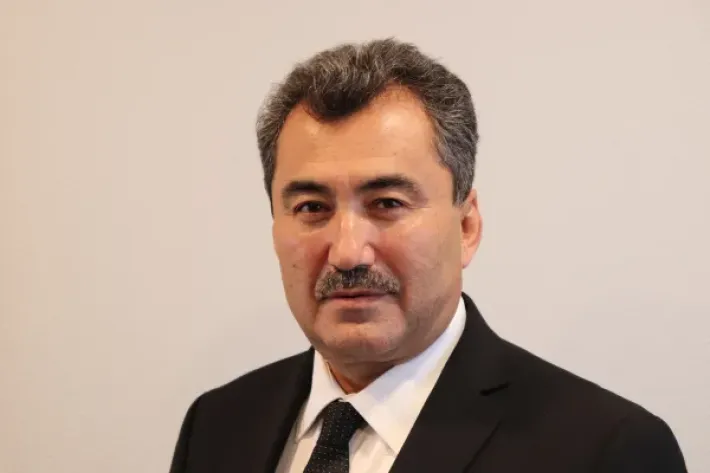
Abdulhakim Idris (Photo Credit: Center for Uyghur Studies)
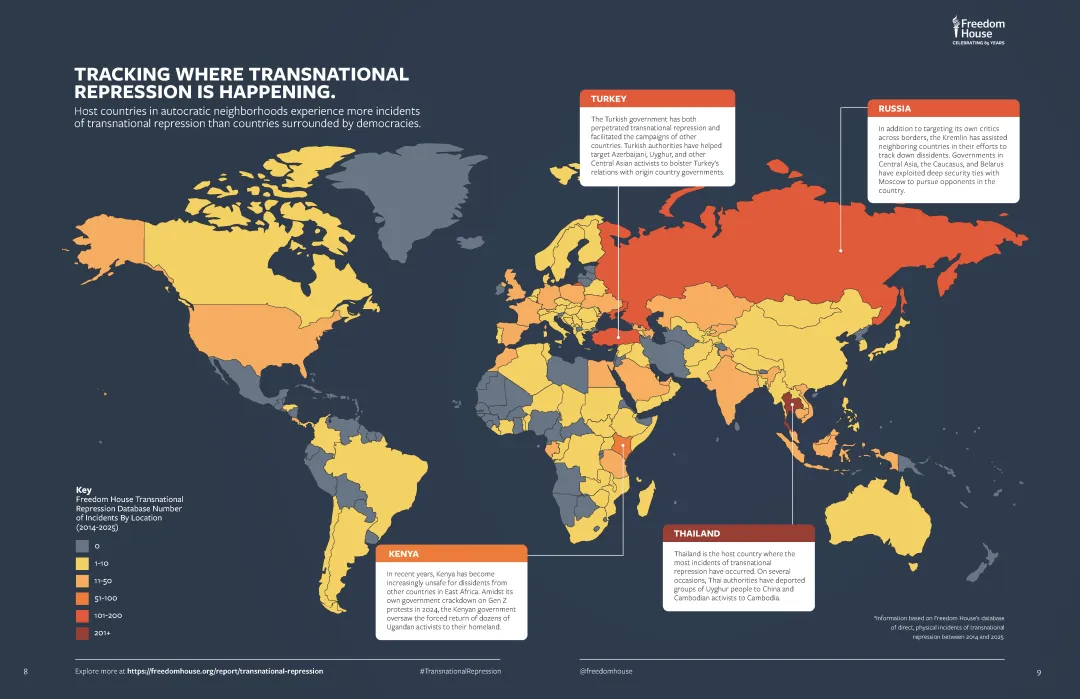
The People’s Republic of China conducts the world’s most sophisticated and comprehensive campaign of transnational repression, targeting human rights defenders, journalists, students, artists, and members of religious and ethnic minorities. Uyghurs, an ethnic group from the Xinjiang Uyghur Autonomous Region, have fled repression in China for decades. Abroad, many members of the group face the threat of transnational repression via detention, unlawful deportation, rendition, coercion by proxy, surveillance, and digital harassment. Uyghur individuals are involved in over 20 percent of the incidents in Freedom House’s transnational repression database, which catalogues direct, physical cases around the world from 2014 to 2025.
Last month, Abdulhakim Idris, head of the Center for Uyghur Studies in Washington, DC, and a leading Uyghur scholar and advocate, was detained for nearly a day and subsequently expelled from Malaysia at the behest of Chinese authorities, preventing him from launching the Malay-language edition of his book about how the Chinese Communist Party (CCP) pressures governments in the Islamic world to remain silent about its persecution of Uyghurs. As Idris explains, this act of transnational repression sets a dangerous precedent for every other American advocate, journalist, and researcher operating abroad. Below, Idris describes his work exposing CCP abuses, and how they sought to silence him—in Malaysia and elsewhere.
Freedom House: Could you describe your work as executive director of the Center for Uyghur Studies?
Abdulhakim Idris: As executive director of the Center for Uyghur Studies (CUS), I lead a mission at the intersection of human rights advocacy, academic research, and diplomatic engagement to address the crisis in East Turkistan (known formally as the Xinjiang Uyghur Autonomous Region). By producing rigorous, evidence-based reports and briefing global lawmakers, I work to expose Chinese Communist Party narratives and ensure the international conversation on its persecution of Uyghurs remains rooted in scholarly data and cultural expertise. My work translates this research into action, raising awareness through media advocacy and high-level briefings to reach the audiences most capable of effectuating change. I also work to engage Muslim-majority countries where Chinese economic pressure often buys silence. By briefing religious leaders and civil society across the Middle East, Africa, and Asia, I demonstrate that the persecution of Uyghurs is an assault on our shared faith and part of China’s war on religious beliefs.
My advocacy is deeply personal: 24 of my family members have been missing since 2017, including my mother, Habibehan Idris; my brother Abdurehim; my sister Buhedichehan; and all of my nieces and nephews. In August 2023, I learned about my father’s passing in Hotan seven months earlier in January 2023.
As a bridge between the diaspora and the international community, I provide the strategic recommendations and testimony needed to transform our personal data into global action.
How long have you been involved in advocacy on behalf of the Uyghur people?
I was born in Hotan, East Turkistan, in 1968. My journey began with a foundation in faith and scholarship; I studied Islamic Sciences and Arabic in underground madrasas in Hotan before leaving in 1986 to study at Al-Azhar University in Egypt. This background gave me a profound understanding of the religious identity that the CCP is currently attempting to erase.
In 1990, I became one of the first Uyghurs to seek asylum in Germany. Settling in Munich, I balanced my studies in Industrial Management with a mission to organize our people. I am one of the founders of the East Turkistan Union in Europe (1991), the very first Uyghur organization on the continent. Over the next two decades, I focused on building the institutional architecture of our struggle. I am proud to be one of the founders of both the World Uyghur Youth Congress (1996), where I served as chairman of the executive committee, and the World Uyghur Congress (2004), where I have held different leadership roles.
Since moving to the United States in 2009, I have continued this work in Washington, DC, serving on the board of the Uyghur American Association. In 2017, my wife, Rushan Abbas, and I cofounded Campaign for Uyghurs (CFU) to bring more urgent awareness to CCP abuses against Uyghurs.
In recent years, the nature of the struggle has changed. As the Chinese government intensified its repression campaign, our response needed to become more robust. This led me to establish the Center for Uyghur Studies, where I have combined advocacy with the intellectual and scholarly dimension necessary to challenge China’s influence, particularly in the Muslim-majority countries.
Why were you traveling to Malaysia? Can you describe what happened when you arrived?
We have been engaging in Uyghur advocacy in Malaysia since 2022, and since then, I have been there several times, including for a meeting with Malaysian Prime Minister Anwar Ibrahim.
The CCP considers me one of the foremost experts on its influence in Muslim-majority countries. My book is now translated into Turkish, Arabic, Malay, and Bahasa Indonesia. It has been an eye-opener about Chinese infiltration into Muslim-majority countries. Following its publication, both my wife and I were subjected to coordinated death threats and digital harassment. When I traveled to Jakarta for the Indonesian launch of the book, the Chinese embassy mobilized local proxies to stage public protests, including the burning of my picture and copies of my book.
Our Malaysian partner planned this advocacy trip and invited me to join. We were well prepared with reports and planned to launch the Malay-language edition of my book alongside several new reports from the Center for Uyghur Studies. My arrival in Kuala Lumpur was on March 29, 2026, and my departure was scheduled for April 8, 2026.
I arrived in Kuala Lumpur on March 29 at 7:00 am local time. When I came to the immigration hall, a Malaysian immigration officer pulled me aside, took my passport, and brought me to his office. An officer introduced himself as a Royal Malaysia Police officer and said that I would be denied entry and be deported. Five hours into this conversation, they put me in a temporary detention center at the airport. [Note: US citizens are not required to apply for a visa for a business or tourism stay in Malaysia of less than 90 days.]
My US passport was seized, and I was held without justification for 21 hours in detention, given only one small meal and one small bottle of water, before being escorted by four police officers onto a deportation flight.
They put me on a Turkish Airlines plane and deported me back to the United States through transit in Istanbul at 4:25 am local time on March 30, where I got my passport back in Istanbul. I took the connecting flight to Washington at 3:50 pm Istanbul time on March 30 and arrived at Dulles Airport at 19:50 pm.
After approximately 70 hours of continuous travel and detention, I arrived safely back in the United States. Our partner in Kuala Lumpur confirmed to me that my denied entry was the result of pressure directly from Beijing.
This is not an isolated incident but a pattern of Chinese intimidation. Last year, I was similarly denied entry to Indonesia under pressure from the Chinese embassy in Jakarta, but that time, after intervention by the US government, I was able to secure entry. This time, despite the State Department and the US embassy in Kuala Lumpur escalating the matter to Malaysian immigration, Beijing prevailed. The escalation is alarming.
Beijing’s goal is to silence my research before it reaches Malay-speaking communities. My only “crime” is being a dissident from a community persecuted by the Chinese government and exposing China’s broader threats to humanity, freedom, and democracy. China has now successfully used a third country to detain and expel a US citizen. If this stands, it sets a dangerous precedent for every American advocate, journalist, and researcher operating abroad. This is a clear case of Chinese transnational repression, specifically targeting me as a US citizen.
How did this experience make you feel?
From the moment I was pulled aside at immigration, I feared for my life. I was now being held by Malaysian law enforcement at the request of a state that has already made people like me disappear. The officer’s tone was hostile, treating me as though I were a criminal or a threat. Several men in plain clothes and dark glasses were present. They did not identify themselves, said nothing to me, and watched in silence. I did not know who they were or who they worked for.
No immigration officer explained why I was being held. My Malaysian partner, who had come to pick me up from the airport, was sending me messages from outside telling me that China had pressured Malaysia to place me on a red list. I was being detained on Beijing’s orders, on Malaysian soil, for exercising my rights as a US citizen.
When they moved me into the temporary detention area, a room with more than 20 detainees and no officers present, my fear deepened. I am aware that Uyghur activists have been killed abroad, and that those killings have been traced back to Beijing. I sat in the corner for more than 15 hours, alone with that knowledge.
After being targeted this way by the CCP, I returned home deeply traumatized. I have had immense difficulty sleeping ever since.
Has anything like this happened before?
Yes. We held an advocacy trip to Indonesia between July 11, 2024, and July 20, 2024. Our partner in Indonesia organized the events and invited me. The trip involved multiple meetings, seminars, and roundtable discussions with key Indonesian stakeholders, including politicians, NGO leaders, and religious figures. In total, we visited and held activities in five cities, including Jakarta, Pontianak, Surabaya, Yogyakarta, and remotely in Medan.
There were several challenges we faced during this trip. The CCP propaganda campaign is now widespread across Indonesia, including among NGOs and social media platforms such as TikTok, X, and Facebook. The Chinese government’s extensive propaganda campaigns, including social media advertisements and influence on local leaders, have created a significant hurdle.
When we held our event in Pontianak, Indonesian immigration officials showed up, checked my visa, and told me I was not allowed to speak at events on a tourist visa and that I would need a C10 visa for that purpose. We then changed our approach: I gave all my presentations to our Indonesian partners, who then proceeded with the seminars. We could adapt because our Indonesian colleagues were trained and experienced on the Uyghur issue after two years of working together.
On a subsequent trip between April 26, 2025, and May 6, 2025 to Indonesia, I traveled on a speaker visa and was detained at the airport for three hours before being allowed to enter the country after the intervention of the US government.
In both cases, as in Malaysia, the pressure traced back to Beijing. The difference is that in Indonesia, I was eventually able to seek clarity and secure entry. In Malaysia, I was not.
Have you ever experienced any other forms of transnational repression, such as threats, harassment, or coercion of your family?
Transnational repression is not an abstract concept for me. It is a painful, daily reality that has fundamentally reshaped my family’s life. The Chinese government frequently uses the safety and freedom of our loved ones back home as leverage to silence our advocacy in the West. Since repression of Uyghurs has intensified deeply since 2017, I have lost all contact with my relatives in Hotan. In Uyghur culture, family is everything. Being severed from one’s roots is a form of psychological warfare.
In August 2023, I received a devastating message from an anonymous source. I was informed that my father, Abdulkarim Zikrullah Idris, had passed away seven months earlier, in January 2023, in our hometown of Hotan. Because the CCP has cut all lines of communication between the diaspora and our families in East Turkistan, I was not able to be with him, speak to him, or even know he was gone when it happened. The last time I heard my father’s voice was in April 2017. Shortly after that phone call, the mass detentions began, and contact was severed entirely. For six years, I lived with the agonizing uncertainty of not knowing if he was safe, if he was in a camp, or if he was even alive.
This is a form of psychological torture that hundreds of thousands of Uyghurs in the diaspora face every day. Because of the total lack of transparency in the region, the exact circumstances of his death remain unclear. We do not know if he had access to medical care, or if the stress of the ongoing persecution contributed to his passing. What we do know is that he died in a police-state environment where his children were unable to fulfill their final duties to him.
My family was not the only one targeted. In September 2018, just six days after my wife Rushan Abbas spoke publicly about my families’ disappearance while highlighting the Chinese government’s mass detention of Uyghurs, her sister Dr. Gulshan Abbas was forcibly disappeared from her home in Urumqi. The spokesperson of China’s Foreign Ministry officially confirmed on December 31, 2020, that she had been sentenced to 20 years in prison on baseless charges in connection with terrorism. Dr. Gulshan Abbas was a retired medical doctor who had never been involved in politics. Her imprisonment remains an act of transnational repression, intended to terrorize our family, silence us, and force us to stop advocating for our people.
The CCP’s tactics of transnational repression have taken other forms as well. After I gave testimony before the Uyghur Tribunal in London in 2021, which concluded that China was committing crimes against humanity against the Uyghur people, Chinese state television broadcast my photograph and denounced me for testifying. This was meant to intimidate me publicly and to warn others of the consequences of speaking the truth. Before the 2024 General Assembly of the World Uyghur Congress in Sarajevo, my wife and I received an online video message containing direct death threats. The Federal Bureau of Investigation (FBI) contacted me and confirmed they were aware of the threat.
We have become targets of dehumanization, smear campaigns, character assassination, and threats against our lives. Even outside China, we live under constant fear and intimidation. Through these tactics, the Chinese government seeks not only to punish individuals but to spread fear across entire families and communities.
Did what happened to you change your approach to your work or advocacy, or even travel?
Yes. The repression and personal losses I have endured have profoundly affected my work and my life, both physically and psychologically. I do not sleep well. I think about my safety when I travel. I think about what it means to be held in a detention room, not knowing who the men watching me were or who sent them. That fear is real.
It extends beyond me personally. Our partners abroad now face pressure associated with us. Organizations that once welcomed us hesitate, knowing that hosting a Uyghur advocate can invite unwanted attention from their national secret law enforcement and from Beijing. This makes the work harder and narrows the space in which we can operate.
However, I refuse to live in fear. I continue to travel across the world, to the European Parliament, to the United Nations, and throughout Muslim-majority countries, to speak the truth about what is happening. These crimes have not deterred me or some of our partners in Muslim-majority countries. On the contrary, our partners in Muslim-majority countries see the CCP’s infiltration of their countries and its undermining of their sovereignty. The Chinese Communist Party’s campaign of transnational repression was designed to silence me. By taking my family and my sister-in-law, Dr. Gulshan Abbas, as hostages and by cutting off all contact with my father until his death, the CCP sought to break my spirit. Instead, these crimes stripped away any remaining hesitation. Having already lost so much, I came to understand that the only path left was to fight even harder so that others would not suffer the same fate. If I were to silence myself or restrict my movements, it would mean that the CCP’s campaign of intimidation had succeeded. I will not allow that. I owe it to my family, and to the millions of Uyghurs suffering in camps and prisons, to speak for those who cannot speak for themselves.
Every threat I receive and every sacrifice my family has been forced to make only strengthen my determination. In fact, these acts of repression confirm the urgency and importance of my mission. I will not stop until there is accountability, justice, and a future in which every Uyghur family can live free from the terror of state-sponsored repression.
What kind of response would you like to see from democratic governments, especially of countries where Uyghurs live?
The response we need must be twofold: it requires both the moral courage of Muslim-majority countries and the principled leadership of Western democracies. The world can no longer allow economic interests to serve as a blindfold to the reality of the CCP’s grave abuses.
The CCP’s campaign of transnational repression is an escalating assault on global stability. While it began with the silencing of Uyghurs, Tibetans, and Hong Kongers, it has now expanded to threaten the Taiwanese people and the sovereignty of every democratic nation. By exporting its authoritarian tactics, Beijing is actively eroding the foundations of freedom and democracy worldwide. The free world must recognize that a threat to one is an attack on the security of all.
As someone who studied at Al-Azhar and has spent my life immersed in Islamic scholarship, my message to Muslim-majority nations and to the global community is unequivocal: the silence must end. The Chinese Communist Party is not merely targeting an ethnic group from Central Asia; it is waging a systematic assault on faith, identity, and human dignity. It is a war on religion itself. Muslim leaders must recognize this for what it is and speak with moral clarity. Countries that claim to defend the dignity of the Muslim world cannot remain silent while Uyghur Muslims are imprisoned, erased, and persecuted for their beliefs.
Western democracies must also act with urgency and principle. Governments such as the United States and Canada should strengthen legal protections for Uyghurs by advancing policies that recognize them as a uniquely persecuted group in need of priority protection and resettlement. Uyghurs living in exile, whether in Turkey, Germany, the United States, or elsewhere, need more than temporary residency. They need meaningful protection from transnational repression. Chinese state harassment, surveillance, and intimidation of Uyghurs abroad must be treated as a direct violation of national sovereignty and met with serious legal and diplomatic consequences.
At the same time, governments should provide institutional support to preserve Uyghur language, religion, and culture, such as community schools, cultural institutions, documentation efforts, and safe spaces for Uyghur families in exile, so that while the CCP seeks to erase us in our homeland, our identity can survive and flourish in the free world.
The Uyghur crisis is one of the clearest tests of the international human rights system in our time. If the world continues to choose trade deals over human lives, then the promise of “Never Again” will be exposed as hollow words. We are asking for action that matches the scale of the atrocity.
And I say this especially to Muslim-majority countries, including Malaysia: it is time to stop the hypocrisy. No nation can claim solidarity with oppressed Muslims while ignoring the suffering of the Uyghurs. History will remember not only those who committed these crimes, but also those who stood by in silence.
Note: This interview has been lightly edited for clarity and concision. Views expressed by the interviewees may not reflect Freedom House’s official position.
