


Perspectives April 2, 2026
Q&A: Persecuted for Her Work in Turkey, Journalist Sofya Alagaş Won’t Be Silenced
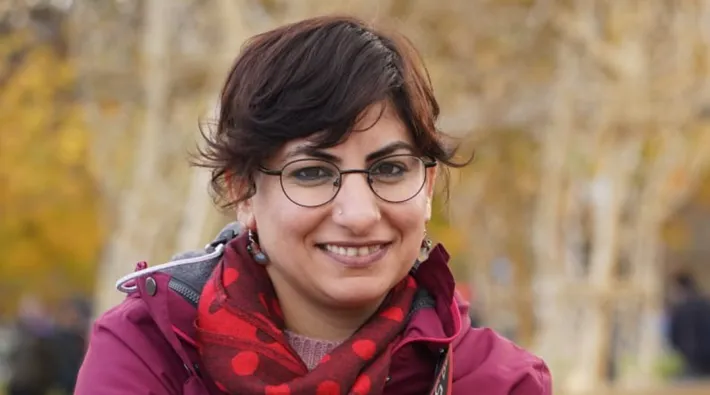
Sofya Alagaş is a Kurdish journalist and politician in Turkey who spent a year in prison in connection with her reporting on the separatist Kurdistan Workers Party (PKK). Based in part on this journalistic work, she was convicted of belonging to the PKK, which has been designated as a terrorist organization by Turkey and a number of other countries. Alagaş was also elected mayor of the southeastern Turkish city of Siirt in 2024, but authorities removed her from the position as a result of her conviction. She currently remains free, though with a travel ban that prevents her from leaving Turkey, pending resolution of her appeal.
Freedom House’s Fred Hiatt Program to Free Political Prisoners has taken on Alagaş’s case, working to bring attention to the false charges that have disrupted her life—and which reflect the growing pressure on independent media and political dissent in Turkey—and to assist her in her fight to overturn her conviction. Below, Alagaş discusses the situation for journalists in Turkey, her own persecution by Turkish authorities, and what inspires her to keep fighting for the freedom of journalists, women, and people who face repression around the world.
Freedom House: Please tell us about the state of journalism in Turkey, and the issues facing Kurdish journalists in particular.
Sofya Alagaş: Currently, there is a polarized media landscape with two extremes. One side constantly defends the policies of the ruling party, the AKP [Justice and Development Party]. The government doesn’t touch these journalists or media outlets in any way; on the contrary, it financially supports them. The other side constantly criticizes and harshly attacks the government. Both sides impose their views on the public instead of informing them.
The Kurdish media follows a different policy. For example, there is currently a peace process in Turkey led by Abdullah Öcalan [the leader of the PKK]. The Kurdish media advocates for peace, supporting the government’s positive approaches on this issue but also criticizing some of its policies. The Kurdish media argues that the government should take more courageous and concrete steps towards peace. However, it does not reach the entire public in Turkey.
Journalists in Turkey work in a very difficult environment. Journalists’ right to life, right to security, and freedom of expression are under serious threat. In Turkey, journalists are subjected to physical attacks, detention, arrest, and judicial pressure because of their journalistic activities. For example, in February, five journalists were arrested due to the news they reported.
Being Kurdish in Turkey comes with inherent disadvantages. Being both Kurdish and a journalist means facing double pressure from the government. We are facing a government that cannot tolerate the voice of Kurds, that simply cannot accept Kurds.
This year began with serious pressure on and human rights violations against Kurdish journalists. With the start of the attacks against Kurds in Syria, the websites of various Kurdish media outlets with an antiwar stance were blocked by court orders. Journalists’ social media accounts were also blocked by the courts. Mesopotamia Agency, Jin News [founded by Alagaş], the Yeni Yaşam newspaper, and the Azadiya Welat newspaper were all blocked multiple times in January. In February, their digital media accounts were blocked once each.
At least 10 journalists are currently imprisoned in Turkey for their work, according to Turkish press freedom advocates. These imprisoned journalists also face human rights violations. They are subjected to disciplinary punishments, such as restrictions on family visits and phone calls, for protesting their conditions of detention and mistreatment by prison officials.
In June 2022, you and several other Kurdish journalists were arrested in what’s considered to be among the most serious operations against Kurdish journalists in recent years. What do you think the government hoped to accomplish by detaining you and the other journalists?
Yes, in June 2022, 22 Kurdish journalists were detained, and 16 other journalists were arrested. The government detained us and also confiscated dozens of our pieces of equipment. They rendered our workplaces unusable. Because of this pressure, some of our colleagues had to leave their jobs.
The government aimed to silence us and make our workplaces unusable because there was a general election in May 2023. That election was very important for AKP leader and President Recep Tayyip Erdoğan. Erdoğan allowed such a large-scale operation to prevent the Kurdish media from raising strong voices against him in the elections. Kurdish parties and organizations were absolutely determined not to support him at that time. Therefore, he launched the operation against the Kurdish media, aiming to silence them. He partially succeeded in this for a while.
Ultimately, elections were held in May 2023, and I was released on bail shortly afterward in June 2023 by court order.
After you were released on bail in June 2023, why did you decide to run for the office of mayor of Siirt?
Siirt is the city where I was born. Unfortunately, when I was three years old, my family had to leave Siirt due to state persecution. I always wanted to return to Siirt. When the election debates started, I thought to myself, why not return as mayor? I wanted to make such a return to the city that my family had to leave.
However, our chances of winning the Siirt Municipality were very slim—the government had brought in over 7,000 fake police and military votes here. None of them were from here. It is also a city where it is extremely difficult for women to be elected. Despite all this, I succeeded. But the government couldn’t stomach it, and I was removed from my position as mayor after I was convicted.
In January 2025, you were convicted on terrorism charges and sentenced to 6 years and 3 months in prison. However, you have been allowed to remain free (with a travel ban) pending resolution of your appeal. Why do you think you were not immediately imprisoned upon your conviction?
Because there is no strong suspicion of guilt. The possibility of this case being overturned is very high.
I was convicted hastily despite many deficiencies in the case file. They rushed to appoint a trustee to the municipality to replace me as mayor. One of the reasons for this haste was the possibility of a peace process starting as a result of Turkish authorities’ meetings with Kurdish leader Abdullah Öcalan. Ultimately, a month after a trustee was appointed to the Siirt municipality, the peace process began with Öcalan’s statement calling for the PKK to integrate into democratic politics, and the government stopped the trustee appointments.
The possibility of my conviction being overturned is very high because there are no criminal acts in the case file. Furthermore, the court sentenced me by a majority vote, but one of the court members dissented to the decision and raised serious questions about its validity. Therefore, my appeal to the higher court is on strong grounds.
Did you foresee the possibility that you might be detained in relation to your work?
Unfortunately, the possibility of being detained in connection with my work was always there. This always worried me and my family. Throughout my journalistic career, I have been detained and tried many times based on my work. I faced serious punishments. Jin News, the all-woman news agency I founded, was a leap for me. We aimed to be the voice of women. This meant exposing the government’s policies towards Kurds and women (for example, President Erdoğan and the AKP have campaigned to dissuade women from seeking divorce). And I knew that the government would be very disturbed by this.
Years ago, an Italian journalist asked me, “Aren’t you afraid of being arrested?” And I gave this answer: “No, I’m not afraid of being arrested. I’m afraid of not being able to fight, of giving up the fight.” A few years after that interview, I was arrested.
Even though I knew there was a real possibility of arrest, I didn’t give up. In this system where a male-dominated mentality reigns, condemning nations to war, showing women the door to slavery, and leaving children without a future, struggle is essential, it is honorable. From my childhood to the present day, I have never accepted this system. Remaining silent in the face of this system where women and children are murdered every day drives me mad. To avoid getting mad, I fight. Again, I repeat, “I’m not afraid of being arrested, I’m afraid of not being able to fight.”
Throughout this ordeal, is there anything that has given you comfort or hope?
Many organizations and people stood by me during this process. I thank them all. However, I especially thank Freedom House, the Tigris Euphrates Journalists Association, and the Mesopotamia Women Journalists Association, who have been with me since the beginning of my case. Your presence gave me strength.
The voices of journalists who are oppressed and persecuted need to be heard. International organizations can help make our voices heard strongly. Amplifying our voices can somewhat restrain the Turkish government from carrying out its abuses.
Knowing that I am not alone is very valuable. Many of us possess differences in religion, language, and belief, yet we are able to find common ground against injustice. It is very important to raise a unified voice against injustice. I knew I was right, but it is very valuable that others also defended my righteousness. I hope we will work together on many wonderful projects.
Is there anything else you would like people to know?
Human history has progressed through oppressors and those who resist oppression. Nothing is over yet. Everything is just beginning.
A free life comes from being organized. For an honorable and free life, the organized struggle needs to grow. We will succeed together, not alone. Let the inability to fight, not the struggle, frighten us. Because if we give up fighting, we give up existing. I wish all women, journalists, and everyone a life worthy of human dignity. Serkeftin.
Note: This interview has been lightly edited for clarity and concision. Views expressed by the interviewees may not reflect Freedom House’s official position.