

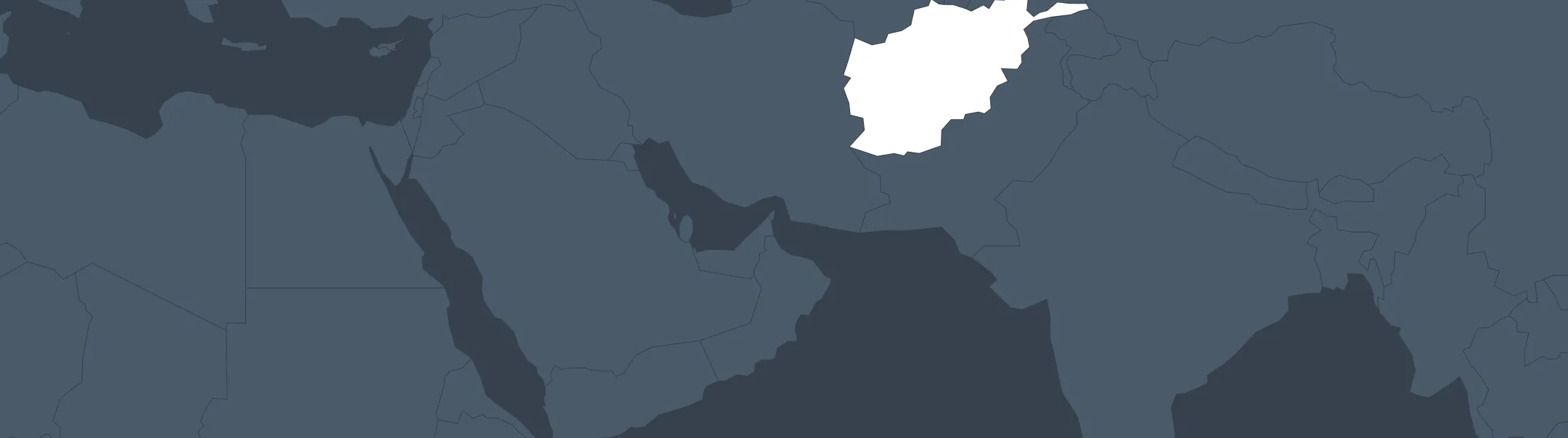

Afghanistan
Freedom at a Glance
Global Freedom
8 / 100
Not Free


Since overthrowing the elected government, the Taliban have closed the country’s political space; opposition to its rule is not tolerated, while women and minority groups have seen their rights curtailed by the new regime.
Research & Recommendations
Afghanistan
Not Free
8
100
| PR Political Rights | 1 40 |
| CL Civil Liberties | 7 60 |
Last Year's Score & Status
6
100
Not Free
A country or territory’s Freedom in the World status depends on its aggregate Political Rights score, on a scale of 0–40, and its aggregate Civil Liberties score, on a scale of 0–60.
See the methodology.
Overview
Afghanistan is controlled by an armed Islamist movement, the Taliban, which has operated the Afghan state as an emirate since overthrowing an elected republican administration in August 2021. In the Islamic Emirate of Afghanistan, the Taliban leader exercises unlimited political authority and rules by decree in the absence of a constitution. Some laws inherited from the republican period are applied, selectively. The Taliban has suspended all political and civic rights, abolished representative bodies, and prohibit any criticism of the regime. Women and religious and ethnic minority groups have faced the most severe curbs on freedoms, while journalists are restricted by harsh edicts and the threat of violence. Meanwhile, the population is facing economic and humanitarian crises.
Freedom in the World 2026 Policy Recommendations
Strengthen democratic coordination and collective action in a contested global order
Democratic resilience will increasingly depend on stronger coordination among countries that share a commitment to freedom, the rule of law, and accountable governance.
Reimagine international democracy assistance to help reverse the global decline in freedom
International support for democratic institutions, civil society, and independent media has been associated with modest but meaningful improvements in democratic governance, and it is far less costly than the military outlays necessitated by rising authoritarian aggression.
Prioritize engagement with younger generations in the digital spaces where civic identity is now formed
Young people are increasingly dissatisfied with democracy—not because they reject its principles, but because they see institutions failing to deliver on them. Programmatic work should create clear pathways for meaningful political participation, from voting and policy engagement to community organizing and public leadership, so that young people can translate their expectations into agency.
News and Updates

Freedom House Perspectives


News Releases & Media Coverage
Country Facts
Basic Facts
Freedom in the World Score
8
/ 100
Not Free
Population: 41,130,000
Internet Facts
Status
Not Tracked
Election Facts
Status
Not Tracked
Transnational Repression
Status
Not Tracked
