
Accessibility

Invest in Freedom’s Future. Support Freedom House.

Freedom House Logo - Torch next to words Freedom House

Primary Navigation

  • Freedom Map
  • Countries
  • Issues
  • Perspectives
  • Policy Recommendations
Expanding Freedom and Democracy

Quicklinks

  • Perspectives Blog
  • Find A Country
  • Explore The Map
  • Events

Mega Menu

  • Reports
    • Freedom in the World
    • Freedom on the Net
    • Nations in Transit
    • Transnational Repression
    • Election Watch for the Digital Age
    • China Dissent Monitor
    • Archives
  • Our Issues
    • Countering Authoritarianism
    • Supporting Defenders for Democratic Change
    • Promoting a Global Democratic Landscape
  • Programs
    • Free Them All: The Fred Hiatt Program to Free Political Prisoners
  • Policy Recommendations
    • Testimony and Advocacy Letters
    • Strengthening US Democracy
  • Countries
  • Events
  • Perspectives Blog
  • News Releases & Statements
    • Media Center
  • About Us
    • History
    • Board and Leadership
    • Our Experts
    • Ambassadors for Freedom
    • Ways to Give
    • Financials
    • Careers
    • Contact Us
  • Sign Up for Updates
Jump To:

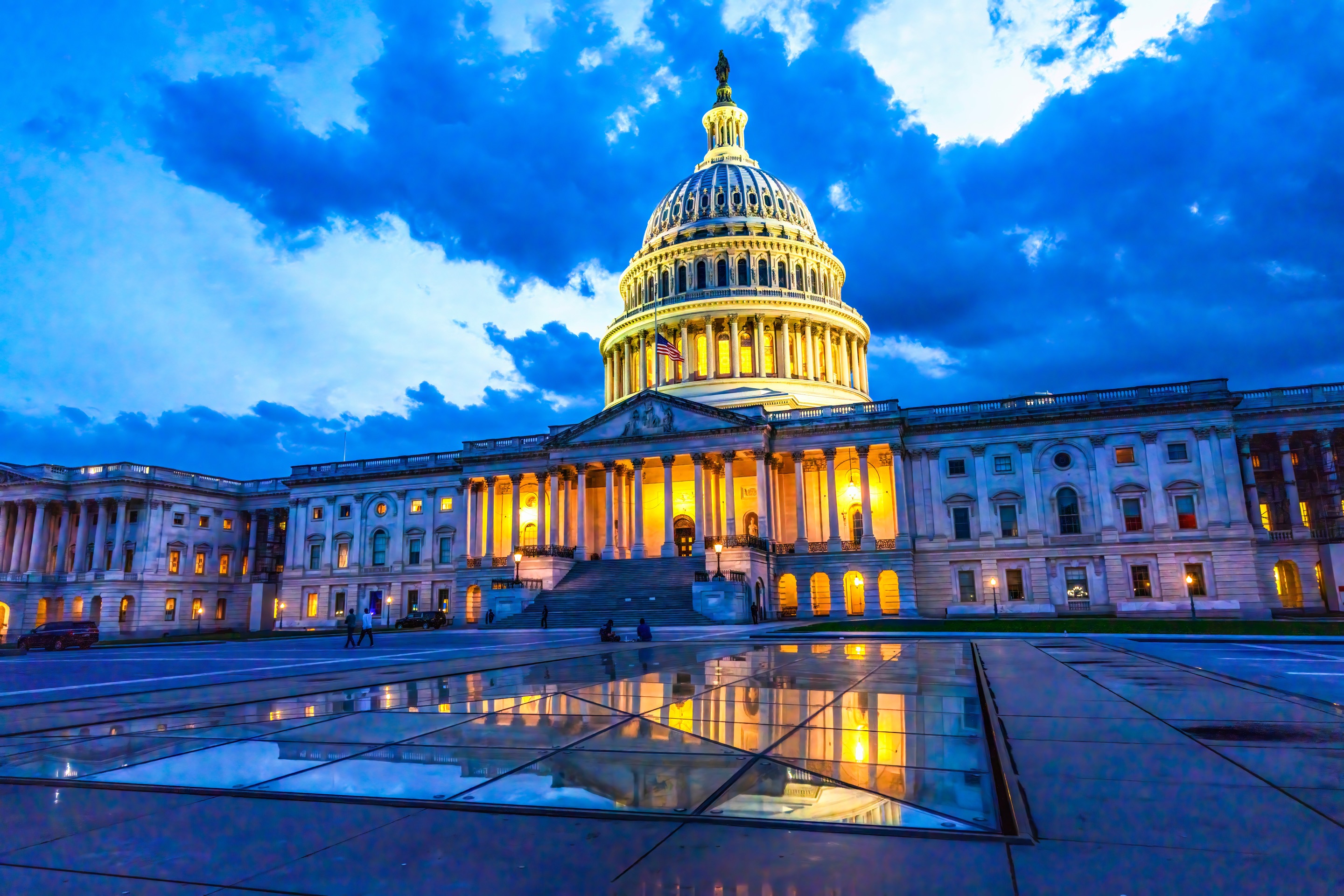
US Democracy Tracker

A quarterly look at the health of democracy in the United States.

Download PDF
Facebook Twitter Email

A quarterly look at the health of democracy in the United States.

Introduction

The United States of America is one of the world’s oldest and most powerful democracies. Its system of checks and balances guaranteed through three coequal branches of government as well as rights enshrined in a written constitution have been replicated by countries globally as a blueprint for democracy. Yet, like other democracies, the United States is facing unprecedented challenges. Freedom globally and in the United States has declined steadily over the last 20 years under pressure from emboldened autocrats and homegrown setbacks to the exercise of fundamental rights.1  Since 2005, the United States’ Freedom in the World score has fallen from 93 to 81 out of 100, reflecting a sustained deterioration of political rights and civil liberties.

As the United States marks its 250th anniversary, there is an acute need for timely, independent, and balanced assessment of the health of our most cherished institutions and rights. The US Democracy Tracker, launched in November 2026, provides analysis across eight categories—elections, political competition, accountability, the media, freedom of belief, education, speech, organization and assembly, access to justice, and personal liberty—on a quarterly basis.

The first issue of the tracker designates government accountability and freedom of the media as categories of “serious concern,” our highest status, indicating that corruption, lack of transparency, and attacks on journalists pose significant threats to US democracy. 

  • 1

    Yana Gorokhovskaia, Cathryn Grothe, and Amy Slipowitz, “Freedom in the World 2026: The Growing Shadow of Autocracy,” Freedom House, March 2026, https://freedomhouse.org/report/freedom-world/2026/growing-shadow-autocracy. 

In Partnership

Freedom House and Charles F. Kettering Foundation

Developments: July 1 – October 16, 2026*

Are elections well organized and well administered, accessible to all eligible voters, reasonably competitive, and held according to a clear, predetermined, and fair electoral framework overseen by independent election commissions?

Under Pressure
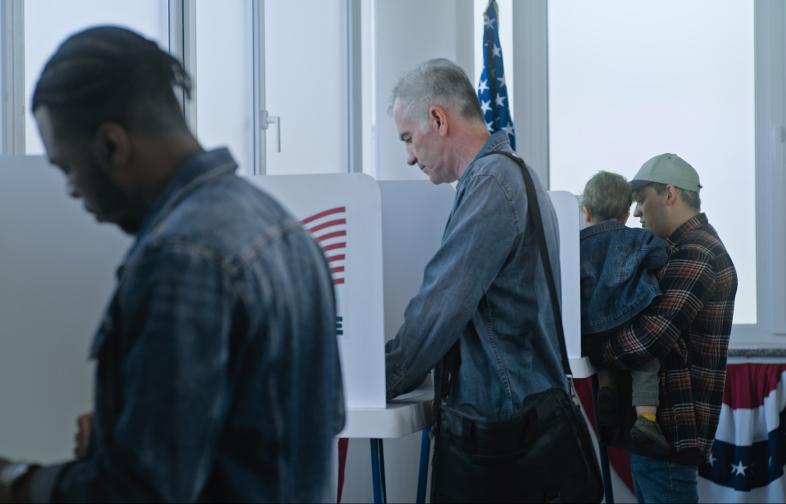
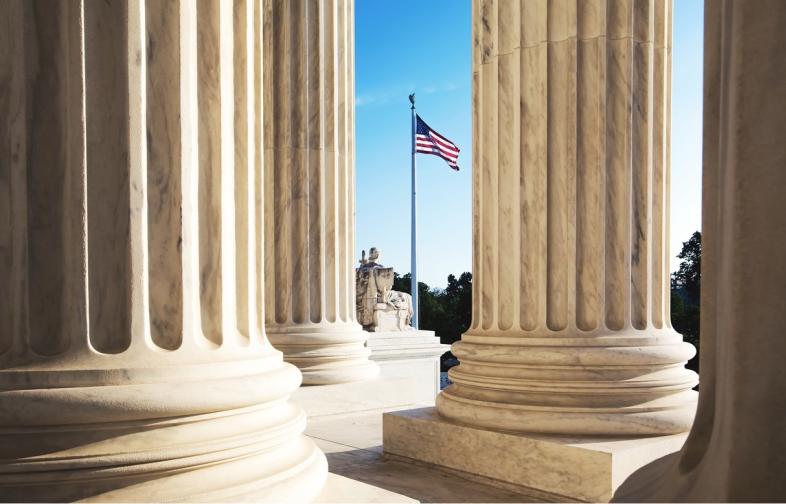
US Democracy Tracker - Free & Fair Elections

Status: Under Pressure

Share this indicator

  • Share on LinkedIn (opens in a new window)
  • Share on Bluesky (opens in a new window)
  • Share on Threads (opens in a new window)
  • Share on X (opens in a new window)
  • Share on Facebook (opens in a new window)
  • Share by email

During the lead-up to the 2026 midterm elections, federal authorities attempted to restrict access to the ballot and state election administrators faced pressure over unsubstantiated allegations of voter fraud.

The electoral framework in the United States is generally fair and overseen by a decentralized network of local and state officials. During the lead-up to the 2026 midterm elections, in which all 435 seats in the House of Representatives and 35 out of 100 seats in the Senate were being contested, federal authorities attempted to restrict access to the ballot and state election administrators faced pressure over unsubstantiated allegations of voter fraud.

In March 2026, the presidential administration issued an executive order directing various federal agencies to create and share lists of eligible voters and prevent the mailing of ballots to individuals not on those lists, among other changes.1 The action was preceded by years of claims made without evidence2 by President Donald Trump that mail-in voting—considered by nonpartisan and bipartisan institutes, statisticians, and other experts to be a safe and reliable method3 of casting a ballot, and which is used by nearly 30 percent of voters4—is fraudulent and corrupt.5 
    
In September, the Supreme Court denied the administration’s request to implement the changes, citing insufficient time before the midterms.6 The last-minute nature of the Supreme Court decision—which was announced after some states had already started mailing out ballots—heightened concerns among voters that the United States Postal Service (USPS) would not be able to deliver mail-in ballots in time to be counted.7  

Federal authorities continued to seek ways to combat alleged voter fraud, despite the fact that multiple studies have found that actual voter fraud in the United States is extremely rare and has never altered the outcome of any election.8 In July, the Department of Justice (DOJ) sent letters to election officials in all states and the District of Columbia to inform them that they could face criminal prosecution for “aiding and abetting” voting by noncitizens.9 Some election officials who received these letters described them as an attempt at intimidation.10 Also in July, the Federal Bureau of Investigation (FBI) deployed over 250 analysts to Fulton County, Georgia, to revive an investigation into debunked claims that the 2020 presidential election result there had been rigged.11 This is the same election office that the FBI, overseen by former Director of National Intelligence Tulsi Gabbard, raided in January.12

The DOJ sued election officials in California in October, after balloting had already begun, to prevent them from counting certain ballots because the state had failed to meet a 48-hour deadline to review an unverified list of 20,000 “likely” noncitizens. Among other issues with the request, under current federal law states are prohibited from changing voter rolls within 90 days of an election.13  

  • 1

    “Executive Order 14399 of March 31, 2026, Ensuring Citizenship Verification and Integrity in Federal Elections,” https://www.whitehouse.gov/presidential-actions/2026/03/ensuring-citizenship-verification-and-integrity-in-federal-elections/; Melissa Quinn, “Election officials raise alarm over implementing new mail voting rules before midterms: ‘Virtually impossible,’” CBS News, September 4, 2026, https://www.cbsnews.com/news/mail-voting-rules-usps-election-officials-midterms/.

  • 2

    Michael Barber and John B. Holbein, “The participatory and partisan impacts of mandatory vote-by-mail,” Science Advances, August 26, 2020, https://www.science.org/doi/10.1126/sciadv.abc7685; Kevin T. Morris, “Who votes by mail?,” Brennan Center for Justice, April 15, 2020, https://www.brennancenter.org/our-work/analysis-opinion/who-votes-mail; Samara Angel, Jonathan Katz, and Randi Wright, “Mail voting in the US: Data points to very low fraud and significant benefits to voters,” The Brookings Institution, November 6, 2025, https://www.brookings.edu/articles/mail-voting-in-the-us-data-points-to-very-low-fraud-and-significant-benefits-to-voters/.

  • 3

    Bipartisan Policy Center, “Mail voting is safe and secure,” February 20, 2026, https://bipartisanpolicy.org/report/mail-voting-is-safe-secure/; Brennan Center for Justice, “Voting by mail and using drop boxes are safe and trustworthy ways to vote thanks to numerous security features that protect against fraud,” accessed October 28, 2026, https://www.brennancenter.org/voting-mail-and-using-drop-boxes-are-safe-and-trustworthy-ways-vote-thanks-numerous-security; Samara Angel, Jonathan Katz, and Randi Wright, “Mail voting in the US: Data points to very low fraud and significant benefits to voters,” The Brookings Institution, November 6, 2025, https://www.brookings.edu/articles/mail-voting-in-the-us-data-points-to-very-low-fraud-and-significant-benefits-to-voters/; Jonathan Auerbach and Steve Pierson, “Does voting by mail increase fraud? Estimating the change in reported voter fraud when states switch to elections by mail,” American Statistical Association, October 26, 2020, https://www.amstat.org/docs/default-source/amstat-documents/pol-vote-by-mail.pdf. 

  • 4

    Amy Schoenfeld Walker, “Which states vote by mail the most?,” The New York Times, August 25, 2026, https://www.nytimes.com/2026/08/25/us/politics/mail-in-ballots-states-voting-trump.html. 

  • 5

    Adam Sella, “What to know about Trump’s attacks on mail voting,” The New York Times, July 16, 2026, https://www.nytimes.com/2026/07/16/us/politics/trump-mail-voting-elections-speech.html; MSNOW, @MSNOWNews, “President Trump: ‘I think mail-in voting is horrible, it’s corrupt,’” X, April 7, 2020, https://x.com/MSNOWNews/status/1247658663617138691; Donald J. Trump, @realDonaldTrump, “There is NO WAY (ZERO!) that Mail-in Ballots will be anything less than substantially fraudulent,” X, May 26, 2020, https://x.com/realDonaldTrump/status/1265255835124539392.

  • 6

    Amy Howe, “Supreme Court denies Trump administration’s request to implement parts of rule on mail-in voting,” SCOTUSblog, September 14, 2026, https://www.scotusblog.com/2026/09/supreme-court-denies-trump-administrations-request-to-implement-parts-of-usps-rule-on-mail-in-vo/. 

  • 7

    Hansi Lo Wang, “Poll: Trust in the US Postal Service delivering mail-in ballots on time has fallen,” NPR, September 23, 2026, https://www.npr.org/2026/09/23/nx-s1-5978081/usps-election-mail-in-ballot.

  • 8

    Elaine Kamarck, “How widespread is election fraud in the United States? Not very,” The Brookings Institution, October 28, 2024, https://www.brookings.edu/articles/how-widespread-is-election-fraud-in-the-united-states-not-very/; Brennan Center for Justice, “The Myth of Voter Fraud,” accessed October 28, 2026, https://www.brennancenter.org/topics/voting-elections/vote-suppression/myth-voter-fraud; The Heritage Foundation, “Election Fraud Map,” accessed October 28, 2026, https://electionfraud.heritage.org/; Andrew C. Eggers, Haritz Garro, and Justin Grimmer, “No evidence for systematic voter fraud: A guide to statistical claims about the 2020 election,” Proceedings of the National Academy of Sciences of the United States of America, November 2, 2021, https://www.pnas.org/doi/10.1073/pnas.2103619118; Yasmin Abusaif, “Debunking the voter fraud myth, again,” The American Bar Association, September 9, 2026, https://www.americanbar.org/groups/crsj/resources/human-rights/2026-september/debunking-voter-fraud-myth-again/; Jane C. Timm, “Battleground state election officials push back against noncitizen voting ‘myth,’” NBC News, September 19, 2024, https://www.nbcnews.com/politics/2024-election/battleground-state-election-officials-noncitizen-voting-myth-rcna171657. 

  • 9

    Michael Kosnar and Kyla Guilfoil, “DOJ threatens criminal charges for state election officials over noncitizen voting,” NBC News, July 8, 2026, https://www.nbcnews.com/politics/elections/doj-warns-criminal-charges-state-election-officials-non-citizen-voting-rcna353433. 

  • 10

    Deidre Henderson, @deidrehenderson, “Got another love letter this morning from the DOJ,” Threads, July 7, 2026, https://www.threads.com/@deidrehenderson/post/Daf_6faFINL; Lindsey Toomer, “DOJ letter an attempt to intimidate, Colorado’s top election official says,” Colorado Newsline, July 9, 2026, https://coloradonewsline.com/2026/07/09/doj-letter-attempt-to-intimidate-colorado/. 

  • 11

    Nick Corasaniti, Alan Feuer, Dustin Volz, and Richard Fausset, “FBI assigns scores of analysts to examine election records in Georgia,” The New York Times, July 2, 2026, https://www.nytimes.com/2026/07/02/us/politics/fbi-georgia-fulton-county-2020-election.html; Ken Dilanian, “FBI directing hundreds of analysts to dig into Georgia election probe subjects, sources say,” MSNOW, July 2, 2026, https://www.ms.now/news/fbi-directing-hundreds-of-analysts-to-dig-into-subjects-of-ga-election-probe-sources-say; Daniel Klaidman and Sarah N. Lynch, “FBI fires 2 analysts who raised concerns about Fulton County 2020 election probe, sources say,” CBS News, July 13, 2026, https://www.cbsnews.com/news/fbi-2020-election-probe-fulton-county-georgia-analysts-fired/; Kate Brumback, Alanna Durkin Richer, and Erin Tucker, “The FBI is directing hundreds of analysts to its investigation of Georgia’s 2020 presidential election,” The Associated Press, July 3, 2026, https://www.pbs.org/newshour/politics/the-fbi-is-directing-hundreds-of-analysts-to-its-investigation-of-georgias-2020-presidential-election. 

  • 12

    John Sakellariadis and Gregory Svirnovskiy, “‘Bizarrely and personally lurking’: Gabbard’s appearance at FBI election raid alarms Dems,” Politico, January 29, 2026, https://www.politico.com/news/2026/01/29/tulsi-gabbard-2020-election-investigation-00755487. 

  • 13

    Alanna Durkin Richer, Sophie Austin, and Safiyah Riddle, “Trump administration sues California to block counting of alleged noncitizen mail ballots,” The Associated Press, October 15, 2026, https://www.pbs.org/newshour/politics/trump-administration-sues-california-to-block-counting-of-alleged-noncitizen-mail-ballots. 
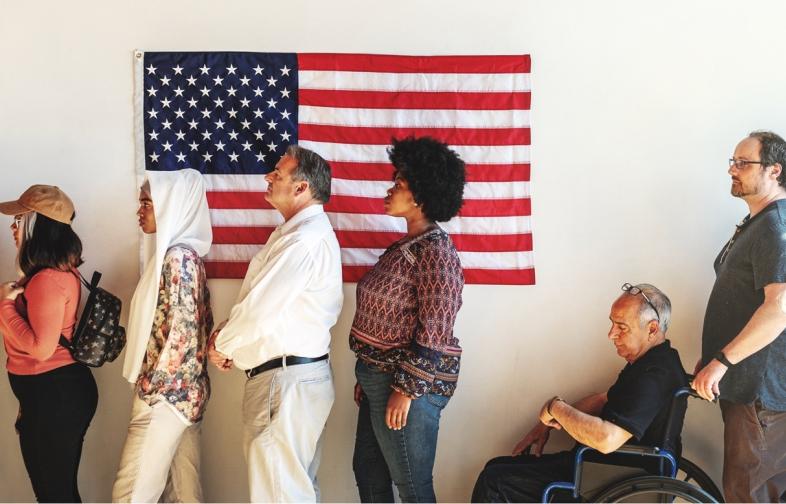
Can people organize into political parties freely? Can those parties compete without excessive obstacles to their registration or outside influence on their campaign activity and financing?

Under Pressure

US Democracy Tracker - Real competition

Status: Under Pressure

Share this indicator

  • Share on LinkedIn (opens in a new window)
  • Share on Bluesky (opens in a new window)
  • Share on Threads (opens in a new window)
  • Share on X (opens in a new window)
  • Share on Facebook (opens in a new window)
  • Share by email

The growing role of money in politics has been a persistent concern for at least the last decade, as each national election cycle has involved more campaign spending than the last.

Political competition in the United States is dominated by the Republican and the Democratic parties and power changes hands regularly between them at the federal level. However, the growing role of money in politics has been a persistent concern for at least the last decade, as each national election cycle has involved more campaign spending than the last.

The 2026 midterms were the first national elections since the Supreme Court ruled in June 2026 that the federal cap on campaign spending that is coordinated between political parties and candidates violates the First Amendment.1 While the ruling did not change how much individual donors could donate directly to candidates, it did allow national and state parties to use an unlimited amount of the donations made to them to work directly with their candidates to purchase television advertisements or perform polling, among other campaign activities. In the immediate aftermath, spending on campaigns by political parties soared: Republican committees exceeded the former national cap by more than $48 million by the end of August, while Democratic committees exceeded it by $4 million.2

Most competitive midterm primaries and races included extremely large amounts of campaign spending—as much as $1 billion in total according to some reports—the origins of which were difficult or impossible to trace because the groups providing the funding were not required to disclose their financial sources.3 The prevalence of so-called dark money meant that voters had less information about which donors support which specific issues or candidates.4 

Individual, high-net-worth private donors also provided considerable backing to 2026 campaigns. Elon Musk, the world’s wealthiest individual, directed hundreds of millions of dollars toward Republican candidates,5 while Michael Bloomberg, the philanthropist and former New York City mayor, injected tens of millions into Democratic campaigns.6

  • 1

    Amy Howe, “Justices strike down campaign finance law,” SCOTUSblog, June 30, 2026, https://www.scotusblog.com/2026/06/justices-strike-down-campaign-finance-law/.

  • 2

    John Kruzel, “Republican coordinated campaign spending surges after US Supreme Court ruling,” Reuters, September 24, 2026, https://www.reuters.com/legal/government/republican-coordinated-campaign-spending-surges-after-us-supreme-court-ruling-2026-09-24/.

  • 3

    Shane Goldmacher and Theodore Schleifer, “Millions of dollars in secret spending could upend the 2026 midterms,” The New York Times, August 31, 2026, https://www.nytimes.com/2026/08/31/us/politics/the-least-transparent-midterm-how-dark-money-is-washing-over-the-2026-election.html.

  • 4

    Brennan Center for Justice, “Dark Money,” accessed October 28, 2026, https://www.brennancenter.org/topics/money-politics/influence-big-money/dark-money.

  • 5

    Clara Ence Morse and Theodoric Meyer, “As Democratic candidates outraise Republicans, GOP megadonors rush to fill the gap,” The Washington Post, October 16, 2026, https://www.washingtonpost.com/politics/2026/10/16/democratic-candidates-outraise-republicans-gop-megadonors-rush-fill-gap; Dell Cameron and Hugo Lowell, “Elon Musk is almost single-handedly funding the Republican midterms push,” Wired, October 16, 2026, https://www.wired.com/story/elon-musk-is-almost-single-handedly-funding-the-republicans-midterms-push/; Forrest Wilder, “Texas has been considering selling a beloved state park to Elon Musk’s SpaceX, sources say,” Texas Monthly, October 16, 2026, https://www.texasmonthly.com/news-politics/boca-chica-spacex-elon-musk/. 

  • 6

    Chris Stein, “Michael Bloomberg spends $80m on Democrats as Trump moves $400m to Republican candidates,” The Guardian, October 20, 2026, https://www.theguardian.com/us-news/2026/oct/20/michael-bloomberg-donation-democrats-midterms. 

Does the executive exhibit excessive dominance over the legislature or has partisanship or obstructionism seriously impaired the basic functions of government? Are safeguards against official corruption strong and effective and does the government operate with transparency?

Serious Concern

US Democracy Tracker - Accountable Government

Status: Serious Concern

Share this indicator

  • Share on LinkedIn (opens in a new window)
  • Share on Bluesky (opens in a new window)
  • Share on Threads (opens in a new window)
  • Share on X (opens in a new window)
  • Share on Facebook (opens in a new window)
  • Share by email

Congressional dysfunction and executive overreach have seriously affected the basic functions of government. Safeguards against corruption continued to be eroded, and government transparency was under strain.

The president and Congress are empowered to determine government policies and craft legislation in the United States, but Congressional dysfunction and executive overreach have seriously affected the basic functions of government. Safeguards against corruption continued to be eroded, and government transparency was under strain as requests for public information under the Freedom of Information Act were answered more slowly, and various federal datasets were removed or modified.1 

While House Speaker Mike Johnson claimed that the 119th Congress was the most productive in 80 years,2 media reported that it was able to pass less than 1 percent of the bills that were introduced, a historic low for enacting legislation.3 Increased reliance on omnibus legislation, which bundles many bills under one umbrella, may make measures of productivity based solely on the number of enacted laws less useful;4 however, even when judging based on the number of disaggregated individual bills the 119th Congress lagged behind its predecessors.5  

The presidential administration continued to withhold funds legally appropriated by Congress. In September, it rescinded $810 million in federal spending.6 In response, the Government Accountability Office (GAO) stated that unilaterally withholding the money only days before the end of the fiscal year without getting congressional approval was unlawful.7  

While presidents are not required by law to divest themselves of existing businesses and investments, historically they have voluntarily done so to avoid perceived conflicts of interest. President Trump has not followed this practice. Financial disclosure forms released in July showed that his various businesses generated $2 billion in income in 2025, much of it from a meme coin and a cryptocurrency company.8 Members of Congress have also faced conflict-of-interest allegations for continuing to make stock trades while having access to private information relevant to the stock market.9 Polls show that a majority of Americans are deeply concerned about corruption and a lack of accountability by government officials.10  

Finally, although the government processed more requests for public information under the Freedom of Information Act in 2025 than ever before, access was granted at the lowest rate since 2010. A backlog of almost 340,000 requests had accumulated by the end of September. The law requires a response within 20 days, but most requests now take an average of 240 days.11 As of August, the administration had removed or modified nearly 400 federal datasets, many of which have long supported policy decisions, media investigations, and advocacy efforts.12  

  • 1

    dataindex.us, “Introducing the Federal Data Terminations Tracker,” August 19, 2026, https://dataindex.us/events/Introducing-the-Federal-Data-Terminations-Tracker; Amy Qin and Flávio Pessoa, “Trump 2.0 has deleted or altered nearly 400 US datasets, endangering public health, education and more,” The Guardian, August 18, 2026, https://www.theguardian.com/us-news/ng-interactive/2026/aug/18/trump-federal-data-deleted-altered. 

  • 2

    Mike Johnson, speech at the Republican National Committee’s 2026 midterm convention, September 10, 2026, https://www.youtube.com/watch?v=CbQ6YDX-9IY&t=382s. 

  • 3

    Sahil Kapur, “A sluggish Congress punts a long list of tasks until after the election,” NBC News, October 2, 2026, https://www.nbcnews.com/politics/congress/unproductive-congress-to-do-list-post-election-rcna600738. 

  • 4

    Kevin R. Kosar, “We mismeasure Congress’s productivity by counting laws,” April 16, 2026, https://kevinrkosar.substack.com/p/we-mismeasure-congresss-productivity. 

  • 5

    Emery Winter, “Is current Congress most productive in 80 years, as Mike Johnson claimed? We checked the numbers,” Snopes, September 16, 2026, https://www.snopes.com/fact-check/mike-johnson-productive-congress/. 

  • 6

    Proposed Recission of Budget Authority, September 25, 2026, https://www.whitehouse.gov/wp-content/uploads/2026/09/September-Rescissions-Package-for-Speaker-Johnson_signed-9.25.26.pdf. 

  • 7

    Mira Bhakta, “GAO reasserts pocket rescissions’ illegality after Trump uses tactic to cancel nearly $1B,” The Hill, September 29, 2026, https://thehill.com/business/budget/6118661-gao-trump-rescission-unlawful/; US Government Accountability Office, “Impoundment Control Act of 1974: Review of the President’s Special Message of September 25, 2026,” September 29, 2026, https://www.gao.gov/products/b-338788. 

  • 8

    “Trump’s $2B income in 2025 raises fresh questions about profiting off presidency,” PBS NewsHour, July 1, 2026, https://www.pbs.org/newshour/show/trumps-2b-income-in-2025-raises-fresh-questions-about-profiting-off-presidency. 

  • 9

    Olivia Diaz, “Here are the biggest stock traders in Congress,” The New York Times, August 14, 2026, https://www.nytimes.com/2026/08/14/us/politics/biggest-stock-traders-congress.html.

  • 10

    “6 in 10 Americans say Trump is profiting off the presidency unethically or illegally, new poll finds,” CBS News, October 13, 2026, https://www.cbsnews.com/minnesota/news/ap-norc-poll-trump-profiting-off-presidency-americans-say/; Max Rego, “Voters in Fox News poll list government corruption as top concern, beating inflation, healthcare,” The Hill, October 15, 2026, https://thehill.com/homenews/administration/6151433-fox-news-corruption-concerns-poll-midterms/; Benedict Vigers, “Record-high 89% in US say government corruption widespread,” Gallup, September 2, 2026, https://news.gallup.com/poll/713933/record-high-say-government-corruption-widespread.aspx.

  • 11

    Minho Kim, “Public records requests are surging. The government is falling behind,” The New York Times, July 29, 2026, https://www.nytimes.com/2026/07/29/us/politics/foia-public-document-requests.html.

  • 12

    dataindex.us, “Former federal data officials answer the question: How many federal datasets have been terminated since January 2025?,” August 10, 2026, https://www.prnewswire.com/news-releases/former-federal-data-officials-answer-the-question-how-many-federal-datasets-have-been-terminated-since-january-2025-302846373.html. 

Is a free, independent, and pluralistic media able to report without fear of censorship, surveillance, or reprisal?

Serious Concern

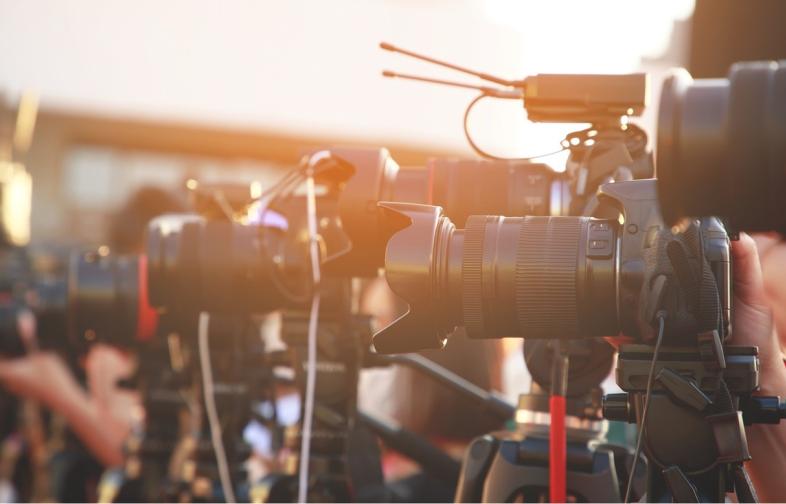
US Democracy Tracker - The Media

Status: Serious Concern

Share this indicator

  • Share on LinkedIn (opens in a new window)
  • Share on Bluesky (opens in a new window)
  • Share on Threads (opens in a new window)
  • Share on X (opens in a new window)
  • Share on Facebook (opens in a new window)
  • Share by email

The presidential administration and regulatory agencies have increasingly sought to punish news outlets for unfavorable coverage by subpoenaing journalists to gain access to confidential sources, limiting access to government officials, and threatening legal action.

The United States has a free and diverse press, operating under some of the strongest legal protections in the world. However, the presidential administration and regulatory agencies have increasingly sought to punish news outlets for unfavorable coverage by subpoenaing journalists to gain access to confidential sources, limiting access to government officials, and threatening legal action.

In July, the DOJ issued subpoenas, which it later withdrew, compelling New York Times journalists to testify before a grand jury in connection with reporting on a plane that the Qatari government had donated to President Trump.1 In September, the president announced that he had banned CNN, MSNOW, and Politico from the White House for “purposefully writ[ing] negative news,”2 although the administration later claimed that the bans were based on concerns about threats to national security.3 The outlets sued to restore their access and five television networks decided not to cover President Trump via the press pool as the legal dispute unfolded.4 The banned outlets’ credentials were eventually restored, although the White House continued to deny CNN and Politico access to the Oval Office and Air Force One. On October 13, a federal judge extended a preliminary injunction maintaining the outlets’ White House access while litigation continued.5 Days earlier the DOJ had announced that it would investigate whether the five television networks’ move to boycott coverage of the president violated antitrust law.6  

President Trump has filed multiple defamation lawsuits against media outlets, some of which have been struck down by the courts.7 For example, in August, a judge in Florida seemed skeptical of the claims in one such case against the Wall Street Journal, which had already been dismissed once.8 Also in August, ABC sued the Federal Communications Commission (FCC) and its chair, Brendan Carr, for infringing on its First Amendment rights. The lawsuit stemmed from an order issued by the FCC in April asking ABC to apply for early renewal of the broadcast licenses of eight of its stations. It came shortly after Jimmy Kimmel, whose late-night program airs on ABC, made a joke about Donald and Melania Trump. The agency argued in court that its request was motivated by an investigation into ABC’s diversity, equity, and inclusion practices, though public statements made by Carr suggested that the motivation could have been the company’s programming choices.9

  • 1

    Committee to Protect Journalists, “How subpoenas against journalists threaten press freedom,” August 4, 2026, https://cpj.org/2026/08/how-subpoenas-against-journalists-threaten-press-freedom/; Michael M. Grynbaum, “Times journalists subpoenaed as Trump escalates pressure on media,” The New York Times, July 11, 2026, https://www.nytimes.com/2026/07/11/business/media/new-york-times-trump-subpoenas.html. 

  • 2

    “Trump says he’s banning 3 outlets from White House in his latest attack on press freedom,” PBS NewsHour, September 18, 2026, https://www.pbs.org/newshour/show/trump-says-hes-banning-3-outlets-from-white-house-in-his-latest-attack-on-press-freedom.

  • 3

    Gary Grumbach and Adela Suliman, “Defending Trump media ban, DOJ cites national security and says White House access is a ‘privilege’,” NBC News, September 23, 2026, https://www.nbcnews.com/politics/politics-news/trump-media-ban-white-house-access-privilege-national-security-doj-rcna599347.

  • 4

    “Press pool declines to cover Trump in protest of his ban on news outlets,” PBS NewsHour, September 21, 2026, https://www.pbs.org/newshour/show/press-pool-declines-to-cover-trump-in-protest-of-his-ban-on-news-outlets.

  • 5

    Jack Queen and Jan Wolfe, “Judge extends White House access for CNN, MS NOW, Politico amid legal fight,” Reuters, October 13, 2026, https://www.reuters.com/world/judge-extends-white-house-access-cnn-ms-now-politico-amid-legal-fight-2026-10-14/. 

  • 6

    Faris Tanyos, “Justice Department investigating TV networks over suspension of press pool after Trump media ban,” CBS News, October 10, 2026, https://www.cbsnews.com/news/doj-investigating-tv-networks-suspension-press-pool-trump-media-ban/. 

  • 7

    Rebecca Hamilton, “The Trump Administration’s use of state power against media: keeping track of the big picture,” Just Security, August 18, 2026, https://www.justsecurity.org/112792/trump-administrations-state-power-big-picture/. 

  • 8

    Jeremy Barr, “Judge signals Trump’s defamation lawsuit against Wall Street Journal may be dismissed again,” The Guardian, August 5, 2026, https://www.theguardian.com/media/2026/aug/05/trump-defamation-lawsuit-murdoch-dismissal. 

  • 9

    Todd Spangler, “ABC alleges FCC’s attempts to curb its free speech were designed to evade judicial review,” Variety, October 12, 2026, https://variety.com/2026/tv/news/abc-fcc-free-speech-lawsuit-evade-judicial-review-1236909377/. 

Can people practice their religious faith or nonbelief, pursue education, and express personal views, online or offline, on sensitive topics without fear of retribution or political interference?

Under Pressure

US Democracy Tracker - Believe, Learnings, and Expression

Status: Under Pressure

Share this indicator

  • Share on LinkedIn (opens in a new window)
  • Share on Bluesky (opens in a new window)
  • Share on Threads (opens in a new window)
  • Share on X (opens in a new window)
  • Share on Facebook (opens in a new window)
  • Share by email

In recent years the Supreme Court has issued several rulings that eased restrictions designed to avoid the appearance of the government endorsing a particular religion, educational institutions have become significant sites of partisan conflict and political pressure, and both the government and nonstate actors have posed threats to free speech and expression.

The US Constitution protects the free exercise of religion and has been interpreted to guarantee some of the world’s most expansive protections for speech and expression. Educational institutions have enjoyed a long history of autonomy and robust legal protections for academic freedom. However, in recent years the Supreme Court has issued several rulings that eased restrictions designed to avoid the appearance of the government endorsing a particular religion, educational institutions have become significant sites of partisan conflict and political pressure, and both the government and nonstate actors have posed threats to free speech and expression.1

In July, the DOJ released updated government-wide guidance on religious freedom protections, which included providing religious organizations with broad “exemption or accommodation from antidiscrimination law”; critics argued that this could allow for discrimination based on identity including minority religious belief.2 In September, the US Air Force directed all airmen and guardians (US Space Force personnel) to update their religious affiliations in their official military records to comply with a May 2026 Department of Defense memo that reduced the number of official recognized faiths from 211 to 31, thereby excluding groups such as Deists, Wiccans, and Unitarians, as well as various New Age churches.3

Also in July, the Department of Education drafted new rules guiding accreditation and certification linked to access to federal funding and federal student aid. By emphasizing but not defining “intellectual diversity,” “free exchange of ideas,” and “range of academic perspectives,” these rules could curtail academic freedom by facilitating direct government influence over university and college courses, research, and hiring for faculty positions.4 Since 2025, federal authorities have also used investigations, lawsuits, and suspensions of federal research funds as leverage to force universities to change their admissions systems, antidiscrimination policies, and academic practices.5  

Despite significant pressure on freedom of expression, courts have upheld free-speech rights, though litigation continued over detention of and deportation orders issued for visa holders and permanent residents in response to nonviolent speech about sensitive topics.6 

  • 1

    Freedom House, “Freedom in the World2026: United States,” March 2026, https://freedomhouse.org/country/united-states/freedom-world/2026. 

  • 2

    Office of the Attorney General, “Federal Law Protections for Religious Liberty,” July 2026, https://www.justice.gov/opa/media/1453756/dl.

  • 3

    Nick Mordowanec, “DOD officially drops 180 faiths from military’s recognized religion list,” Military.com, June 4, 2026, https://www.military.com/dod-officially-drops-180-faiths-from-militarys-recognized-religion-list; Nick Mordowanec, “Air Force officially directs every airman, guardian to update religious affiliation to align with DOD,” Military.com, September 26, 2026, https://www.military.com/air-force-issues-official-new-guidance-directing-every-airman-guardian-update-religious-affiliation-align-dod.

  • 4

    Evan Yi, Madison Weiss, and Sara Patridge, “The Trump Administration moves to tighten grip on colleges,” Center for American Progress, July 14, 2026, https://www.americanprogress.org/article/the-trump-administration-moves-to-tighten-grip-on-colleges/. 

  • 5

    Freedom House, “Freedom in the World 2026: United States,” March 2026, https://freedomhouse.org/country/united-states/freedom-world/2026.

  • 6

    Brian Stelter, “America’s courts keep defending the First Amendment as Trump tries to silence critics,” CNN, September 25, 2026, https://www.cnn.com/2026/09/25/media/trump-free-speech-media-first-amendment-stelter-analysis. 

Can people organize and participate in protests as well as unionize or form other professional associations freely? Can nongovernmental organizations (NGOs) operate without undue political pressure?

Under Pressure

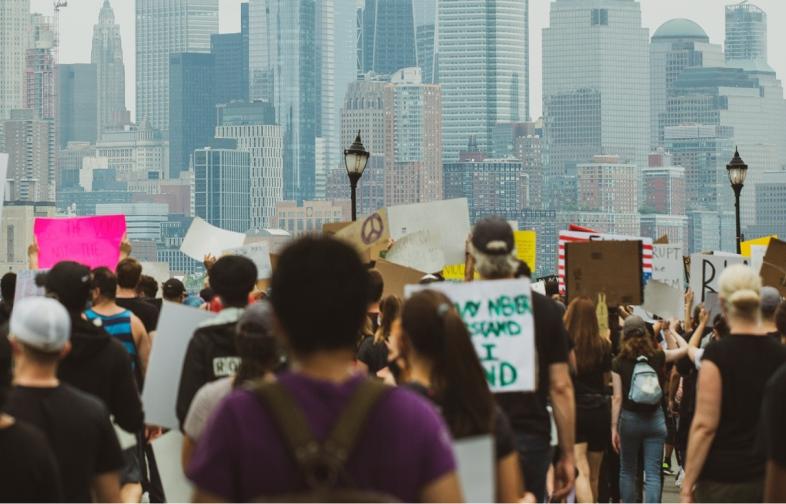
US Democracy Tracker - Organization & Assembly

Status: Under Pressure

Share this indicator

  • Share on LinkedIn (opens in a new window)
  • Share on Bluesky (opens in a new window)
  • Share on Threads (opens in a new window)
  • Share on X (opens in a new window)
  • Share on Facebook (opens in a new window)
  • Share by email

While authorities broadly respect the right to public assembly and US laws and practices give freedom to NGOs and activists to pursue their civic or policy agendas, protesters, NGOs, and unions have faced targeted investigations by federal authorities.

Authorities broadly respect the right to public assembly, while US laws and practices give freedom to NGOs and activists to pursue their civic or policy agendas.1 However, protesters, NGOs, and unions have faced targeted investigations by federal authorities.

In August, media reported that the Department of Homeland Security (DHS) had conducted expansive surveillance of activists, as well as groups including unions and nonprofit organizations, that opposed US Immigration and Customs Enforcement (ICE) operations in Minnesota. The investigations resulted in criminal charges against 15 protesters, although the indictment did not allege specific acts of violence.2 In October, a whistleblower alleged that the Trump administration had violated the First Amendment rights of anti-ICE protesters in Los Angeles by pressuring the FBI to investigate them for peaceful activities such as gathering outside federal buildings.3  

DHS also, according to a federal judge in California ruling on agency operations, “surveil[led], covertly infiltrate[d], and interrogate[d]” staff at up to 150 organizations, including churches, to determine whether their voter registration drives recruited noncitizens. DHS memos authorized agents to “disrupt” the activities of these groups and the judge said the nature of the operations raised concerns about voter intimidation.4  

  • 1

    Freedom House, “Freedom in the World 2026: United States,” March 2026, https://freedomhouse.org/country/united-states/freedom-world/2026.

  • 2

    Sam Levin and Rachel Leingang, “US conducted ‘mass spying campaign’ against left-wing groups and anti-ICE protesters, records reveal,” The Guardian, August 13, 2026, https://www.theguardian.com/us-news/2026/aug/13/us-government-spied-anti-ice-protesters; Trevor Dunning, “Rally brings attention to protesters charged after immigration enforcement surge,” The Minnesota Daily, October 6, 2026, https://mndaily.com/city/rally-brings-attention-to-protesters-charged-after-immigration-enforcement-surge/10/06/2026/eicmndaily-com/; Matt Sepic, Jon Collins and Ellie Roth, “Protests follow after 15 Minnesotans charged with anti-ICE conspiracy,” Minnesota Public Radio, June 16, 2026, https://www.mprnews.org/story/2026/06/16/federal-prosecutors-minnesota-announce-charges-against-immigration-enforcement-opponents

  • 3

    Ryan J. Reilly, “FBI whistleblower says White House pushed unconstitutional probe of protesters,” NBC News, October 6, 2026, https://www.nbcnews.com/politics/justice-department/fbi-whistleblower-says-white-house-pushed-unconstitutional-probe-prote-rcna601599. 

  • 4

    Zach Montague and Shawn Hubler, “Judge restricts DHS field operations aimed at unearthing voter fraud,” The New York Times, October 21, 2026, https://www.nytimes.com/2026/10/21/us/politics/judge-dhs-voter-fraud-elections.html; Madeleine Ngo, Richard Fausset, and Alexandra Berzon, “Trump officials ramp up investigations into voter registration groups,” The New York Times, October 7, 2026, https://www.nytimes.com/2026/10/07/us/politics/trump-voter-registration-noncitizens-investigation.html.

Are courts independent, and does the law apply equally to everyone? Do people have access to effective redress when they suffer physical abuse by state authorities? Do various segments of the population (e.g., ethnic, racial, LGBT+, noncitizen, and other relevant groups) enjoy equal access to legal protections like due process?

Under Pressure

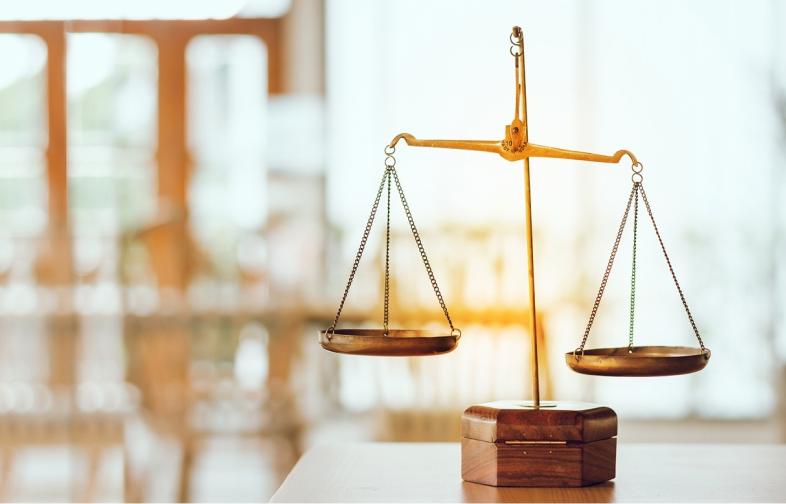
US Democracy Tracker - Equal Justice for All

Status: Under Pressure

Share this indicator

  • Share on LinkedIn (opens in a new window)
  • Share on Bluesky (opens in a new window)
  • Share on Threads (opens in a new window)
  • Share on X (opens in a new window)
  • Share on Facebook (opens in a new window)
  • Share by email

Courts have regularly demonstrated their autonomy by blocking or limiting executive and legislative actions, though the judicial system has come under pressure by the executive branch. Concerns about the politicization of the Department of Justice, which have persisted for decades, deepened.

Courts have regularly demonstrated their autonomy by blocking or limiting executive and legislative actions, though the judicial system has come under pressure by the executive branch.1  

In September, the DOJ filed a misconduct complaint against several federal judges in Minnesota who had spoken to the New York Times about the government’s failure to comply with multiple court orders, including orders to release people from detention, during the immigration crackdown there. Experts noted that such speech did not violate the federal judiciary’s ethics rules.2

Concerns about the politicization of the DOJ, which have persisted for decades, deepened. The Trump administration attempted to fire several US attorneys appointed by district judges.3 The DOJ and other agencies also pursued investigations into former and current public officials perceived to be Trump’s opponents, including former FBI Director James Comey;4  Federal Reserve Governor Lisa Cook also faced investigation for alleged mortgage fraud.5 In a growing number of cases, judges have declined to uphold the long-held judicial doctrine that government officials are acting in good faith during legal proceedings, underscoring claims of bias in the DOJ.6

The Trump administration’s mass deportation program includes emphasis on the detention and removal of undocumented immigrants, rather than on undocumented immigrants with records of criminal violence. The program has also featured the expulsion of detainees to home countries or third countries where they could face unsafe or abusive conditions.7 Detainees faced physical abuse and inhumane conditions in US facilities,8 and the National Immigration Project documented at least 28 deaths of individuals in ICE custody between January and October 2026.9 As of July, the Trump administration had arbitrarily removed over 100 of around 700 immigration judges—who are employed by the DOJ—undermining defendants’ due process rights.10  

Significant disparities on key indicators of equality persist, particularly with respect to gender, race, and immigration status.11 

  • 1

    Freedom House, “Freedom in the World 2026: United States,” March 2026, https://freedomhouse.org/country/united-states/freedom-world/2026.

  • 2

    Sarah N. Lynch and Melissa Quinn, “Justice Department files judicial misconduct complaint against federal judges in Minnesota,” CBS News, September 30, 2026, https://www.cbsnews.com/news/justice-department-files-judicial-misconduct-complaint-against-federal-judges-in-minnesota/; Mattathias Schwartz, “Trump’s Minnesota surge threatened democracy, judge warns,” The New York Times, September 17, 2026, https://www.nytimes.com/2026/09/17/us/politics/minnesota-judge-trump-immigration.html. 

  • 3

    Gene Johnson, “Judge overturns Trump’s decision to fire court-appointed US attorney in Seattle,” The Associated Press, October 1, 2026, https://apnews.com/article/rogoff-us-attorney-seattle-trump-096b29af640d3ccc764f3405d2073804. 

  • 4

    Eric Tucker, “‘No serious dispute’ that Comey's seashell post could be read as a Trump threat, prosecutors say,” The Associated Press, August 19, 2026, https://www.pbs.org/newshour/politics/no-serious-dispute-that-comeys-seashell-post-could-be-read-as-a-trump-threat-prosecutors-say. 

  • 5

    Amy Howe, “Trump announces committee investigation of Fed Governor Lisa Cook,” SCOTUSblog, October 9, 2026, https://www.scotusblog.com/2026/10/trump-announces-committee-investigation-of-fed-governor-lisa-cook/. 

  • 6

    Ryan Goodman, Siven Watt, Audrey Balliette, Margaret Lin, Michael Pusic, and Jeremy Venook, “The ‘presumption of regularity’ in Trump Administration litigation (4th edition),” Just Security, March 19, 2026, https://www.justsecurity.org/120547/presumption-regularity-trump-administration-litigation/; Devon Ombres, “Does a politically directed Department of Justice merit the presumption of regularity?,” Center for American Progress, September 17, 2025, https://www.americanprogress.org/article/does-a-politically-directed-department-of-justice-merit-the-presumption-of-regularity/. 

  • 7

    Freedom House, “Freedom in the World 2026: United States,” March 2026, https://freedomhouse.org/country/united-states/freedom-world/2026.

  • 8

    Michael Biesecker, “Report: Detainees at ICE facility in Texas report frequent beatings and other human rights abuses,” The Associated Press, July 15, 2026, https://www.pbs.org/newshour/nation/report-detainees-at-ice-facility-in-texas-report-frequent-beatings-and-other-human-rights-abuses; Josephine Walker, “ICE ordered to fix ‘squalid’ conditions at NYC detention facility,” Axios, September 24, 2026, https://www.axios.com/2026/09/24/ice-nyc-detention-center-unconstitutional-conditions; Douglas MacMillan, Aaron Steckelberg, N. Kirkpatrick, and Leslie Shapiro, “ICE officials warned of dangerous crowding. See how they kept packing people in,” The Washington Post, July 22, 2026, https://www.washingtonpost.com/immigration/interactive/2026/07/22/ice-officials-warned-dangerous-crowding-see-how-they-kept-packing-people/.

  • 9

    National Immigration Project, “Mourning Those Who Have Died in ICE Custody,” October 27, 2026, https://nipnlg.org/news/mourning-those-who-have-died-ice-custody. 

  • 10

    Jasper Ward, “UN experts concerned by Trump’s removal of immigration judges,” Reuters, July 16, 2026, https://www.reuters.com/legal/government/un-experts-concerned-by-trumps-removal-immigration-judges-2026-07-16/. 

  • 11

    Freedom House, “Freedom in the World 2026: United States,” March 2026, https://freedomhouse.org/country/united-states/freedom-world/2026.

Can people make personal choices about their marriage partner, size of family, and appearance freely and without discrimination?

Stable

US Democracy Tracker - Freedom to Live Your Life

Status: Stable

Share this indicator

  • Share on LinkedIn (opens in a new window)
  • Share on Bluesky (opens in a new window)
  • Share on Threads (opens in a new window)
  • Share on X (opens in a new window)
  • Share on Facebook (opens in a new window)
  • Share by email

There are no undue restrictions on choice of marriage partner, while access to abortion continued to vary following a 2022 Supreme Court decision that returned the issue to the states. The passage of legislation and court rulings concerning transgender people increased.

Men and women generally enjoy equal rights in divorce and custody proceedings, and there are no undue restrictions on choice of marriage partner.1 Numerous government and nongovernmental programs are designed to combat rape and domestic or intimate-partner violence and assist victims, but they remain serious problems in the United States.2  

Access to abortion continued to vary following a 2022 Supreme Court decision that returned the issue to the states. While some states responded by adding new, or strengthening existing, protections for abortion access,3 near-total bans on abortion remained in effect in 13 states, with only narrow exceptions that could make access extremely difficult or dangerous in practice. Bans based on gestational duration were in place in 28 other states.4 Ongoing litigation about Food and Drug Administration (FDA) restrictions on mifepristone, a pill used to end pregnancy that is deemed by researchers to be safe and effective,5 continued,6 as did restrictions on doctors via certain laws.7

The passage of legislation and court rulings concerning transgender people intensified.8 The Supreme Court ruled that states could exclude transgender athletes from women’s and girls’ sports, while blocking the administration’s effort to limit accommodation and medical care for transgender people in federal custody.9 Between July and October, the administration worked to place multiple restrictions on gender-affirming care for minors.10 

  • 1

    Movement Advancement Project, “Marriage and relationship recognition,” accessed October 28, 2026, https://mapresearch.org/equality-map/marriage-relationship-recognition-laws/. 

  • 2

    Federal Bureau of Investigation, “FBI Releases domestic violence special report,” February 11, 2026, https://www.fbi.gov/news/press-releases/fbi-releases-domestic-violence-special-report; Maya Yang, “New report reveals prevalence of physical and sexual violence in US,” The Guardian, September 16, 2026, https://www.theguardian.com/us-news/2026/sep/16/physical-sexual-violence-study-us. 

  • 3

    Freedom House, “Freedom in the World 2026: United States,” March 2026, https://freedomhouse.org/country/united-states/freedom-world/2026.

  • 4

    KFF, “Abortion in the United States dashboard,” accessed October 28, 2026, https://www.kff.org/womens-health-policy/abortion-in-the-u-s-dashboard/. 

  • 5

    Morgan Coulson, “What is mifepristone, aka ‘the abortion pill?’,” Johns Hopkins Bloomberg School of Public Health, October 8, 2025, https://publichealth.jhu.edu/2025/what-is-mifepristone-aka-the-abortion-pill. 

  • 6

    Center for Reproductive Rights, “Federal court rules FDA abortion pill restrictions are unjustified,” July 24, 2026, https://reproductiverights.org/news/abortion-pill-restrictions-unjustified/. 

  • 7

    Julia Strasser, Kavita Arora, Anitra Beasley, et al, “State-level abortion bans and the OBGYN workforce: A review of current evidence,” JAMA Health Forum, May 15, 2026, https://jamanetwork.com/journals/jama-health-forum/fullarticle/2848696.

  • 8

    Trans Legislation Tracker, “2026 anti-trans bills tracker,” accessed October 28, 2026, https://translegislation.com/. 

  • 9

    Amy Howe, “Court rules that states can exclude transgender athletes from girls’ and women’s sports teams,” SCOTUSblog, June 30, 2026, https://www.scotusblog.com/2026/06/court-rules-that-states-can-exclude-transgender-athletes-from-girls-and-womens-sports-teams/; Marina Dunbar, “Supreme Court blocks Trump’s bid to restrict gender care for trans prisoners,” The Guardian, October 21, 2026, https://www.theguardian.com/us-news/2026/oct/21/supreme-court-trump-gender-affirming-care-trans-prisoners. 

  • 10

    Lindsey Dawson, “New regulation prohibits federal medicaid funds from covering gender-affirming medical care for young people,” KFF, August 13, 2026, https://www.kff.org/quick-insights/new-regulation-prohibits-federal-medicaid-funds-from-covering-gender-affirming-medical-care-for-young-people/; Andrew Chung, “Trump administration asks Supreme Court to allow restrictions on transgender inmates,” Reuters, September 28, 2026, https://www.reuters.com/legal/government/trump-administration-asks-supreme-court-allow-restrictions-transgender-inmates-2026-09-28/; Joseph Golstein, “NYU Langone ends care for trans youth in deal with Justice Department,” The New York Times, September 18, 2026, https://www.nytimes.com/2026/09/18/nyregion/transgender-adolescents-nyu-langone-trump.html. 

*The assessment does not account for the November 3, 2026, midterm elections.

Download Report

  • Issue 1: July 1, 2026 – October 16, 2026

Methodology

This assessment is part of a series of periodic updates on the state of US democracy. The eight categories assessed—the electoral process, political competition, accountable government, media freedom, equal justice, freedom of association and assembly, academic freedom and freedom of belief and expression, and social freedoms—are derived from the Freedom in the World methodology. 

The assessment was designed to incorporate a peer review. Two external analysts separately track and evaluate developments impacting US democracy across the eight categories. Two outside advisers provide expert review of the consolidated assessment written by Freedom House staff. Based on this process, each category is assigned a status of stable, under pressure, or serious concern.

Acknowledgements

This report was made in partnership with the Charles F. Kettering Foundation.

The assessment was led by Yana Gorokhovskaia and Amy Slipowitz. Joshua Ferrer was instrumental in the research and writing of this assessment. Dani Schulkin and Jodi Vittori provided expert review. Shannon O’Toole edited the text. Jamie Fly and Katie LaRoque provided valuable input. 

Roosevelt_AWorldWhereallAreFree
Invest in Freedom’s Future

As Freedom House marks its 85th anniversary, we're asking you to join our Investing in Freedom's Future campaign. Global freedom has been in decline for two decades — and your support will sustain our world-class analysis, expand resources for rights defenders, and push back against authoritarian abuses. Help us build a world where all are free.

Artwork by Laura Roosevelt.

Be the first to know what's happening.

Join the Freedom House weekly newsletter

Subscribe

Footer Main Menu

  • Our Issues
  • Countries
  • Policy Recommendations
  • Explore the Map
  • Donate
  • News & Perspectives
  • Reports
  • Events
  • About
  • Careers

Address

1225 I Street NW #1200
Washington, DC 20005

(202) 296-5101

General Inquiries

[email protected]

Press & Media

[email protected]

Footer Social Menu

Follow

  • Facebook
  • Twitter
  • Instagram
  • Threads

Footer

  • Site Map
  • Contact Us
  • Manage Subscriptions
  • Privacy Policy
  • Content Permissions
  • Disclosure Statements
@2026 FreedomHouse
Freedom House is a 501(c)(3) organization registered in the US under EIN: 13-1656647.