

Tanzania
Not Free
28
100
| PR Political Rights | 6 40 |
| CL Civil Liberties | 22 60 |
Last Year's Score & Status
35
100
Not Free
A country or territory’s Freedom in the World status depends on its aggregate Political Rights score, on a scale of 0–40, and its aggregate Civil Liberties score, on a scale of 0–60.
See the methodology.
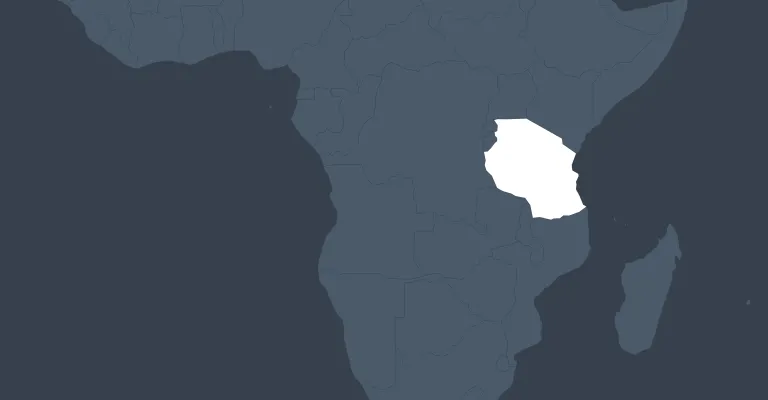


Tanzania held regular multiparty elections after its transition from a one-party state in the early 1990s, though the ruling Chama cha Mapinduzi (CCM) has retained power for over 60 years. Samia Suluhu Hassan became president in 2021 upon the death of President John Magufuli, who had cracked down on critics in the opposition, media, and civil society. After a brief period of liberalization President Hassan has engaged in similarly repressive tactics. She was reelected in a 2025 poll in which major opposition figures were banned from competing and hundreds of people were killed in a violent crackdown on dissent.
- General elections held in late October saw countrywide antigovernment protests and widespread, lethal state violence in response. Demonstrations erupted on election day and in the days afterward, as citizens protested a contest in which major opposition candidates had been banned from participating. The Tanzanian regime responded with brutal repression, with emerging videos and images suggesting that much of the violence was indiscriminate. The UN Office of the High Commissioner for Human Rights (OHCHR) said the number of resulting deaths was in the hundreds, and noted “disturbing reports” that security forces were “moving bodies from streets and hospitals” to undisclosed locations in an attempt to conceal evidence. During this period, internet services were restricted, social media platforms were blocked, and a nationwide curfew was imposed. Three days after the polls, Samia Suluhu Hassan, the incumbent president, was announced as the winner with over 97 percent of the vote.
- Following the elections, the regime cracked down on freedom of expression, assembly, and association. Hundreds of people were detained immediately following the polls, and at least 240 had been charged with treason by early November. Celebrations for Independence Day, a public holiday in December, were canceled and a nationwide ban on demonstrations was issued to prevent planned protests. Many individuals who had spoken out about planned demonstrations were detained.
- Tundu Lissu, leader of the opposition Chama cha Demokrasia na Maendeleo (Chadema) remained in detention at the end of the year after his arrest in April. He was charged with treason and “publishing false information” in connection with Chadema’s “No Reforms, No Election” campaign to boycott the year’s general election if electoral reforms were not passed. Chadema was barred from standing in the elections shortly after Lissu’s arrest due to its refusal to sign a code of conduct. In September, the opposition Alliance for Change and Transparency (ACT-Wazalendo) candidate Luhaga Mpina was also barred from running. A wave of arrests and abductions of opposition figures and rights activists took place ahead of the elections.
- Religious authorities were targeted during the year. In June, authorities deregistered a church in Dar es Salaam owned by CCM lawmaker Josephat Gwajima after he spoke against detentions and enforced disappearances by the government. The letter justifying the deregistration claimed that Gwajima’s sermons violated allowable behavior of religious organizations. In May, Charles Kitima, a Roman Catholic priest and head of the Catholic bishops’ organization, the Tanzania Episcopal Conference (TEC), was physically attacked by two unidentified people. He was also known for criticism of the government.
This report has been abridged for Freedom in the World 2026 due to ongoing budget constraints. Freedom in the World is entirely funded by nongovernmental sources such as private foundations, corporations, and individuals like you. Please consider making a donation to support future editions of this vital resource.
For additional background information, see last year’s full report.
A1
1.00-4.00 pts0-4 pts
| Was the current head of government or other chief national authority elected through free and fair elections? | 0.000 4.004 |
Score Change: The score declined from 1 to 0 because Samia Suluhu Hassan was declared the winner of a presidential election marred by the exclusion of opposition candidates, progovernment bias in media coverage, low voter turnout, and widespread, deadly violence against protesters.
A2
1.00-4.00 pts0-4 pts
| Were the current national legislative representatives elected through free and fair elections? | 0.000 4.004 |
Score Change: The score declined from 1 to 0 because President Hassan’s CCM party won 270 of the 272 directly elected seats and 113 of 115 indirectly elected seats in polls characterized by the same extreme political repression and violence as the concurrent presidential vote.
A3
1.00-4.00 pts0-4 pts
| Are the electoral laws and framework fair, and are they implemented impartially by the relevant election management bodies? | 0.000 4.004 |
Score Change: The score declined from 1 to 0 because Luhanga Mpina, the presidential candidate of ACT-Wazalendo, was disqualified from participating in the election by the attorney general after his candidacy had been reinstated by the High Court; and because there was no existing legal opportunity to challenge the result of the severely flawed presidential election after the Electoral Commission declared President Hassan the victor.
B1
1.00-4.00 pts0-4 pts
| Do the people have the right to organize in different political parties or other competitive political groupings of their choice, and is the system free of undue obstacles to the rise and fall of these competing parties or groupings? | 1.001 4.004 |
B2
1.00-4.00 pts0-4 pts
| Is there a realistic opportunity for the opposition to increase its support or gain power through elections? | 0.000 4.004 |
Score Change: The score declined from 1 to 0 because the primary opposition candidates were not allowed to participate in the year’s presidential election, and due to an environment of extreme repression preventing the opposition from meaningful competition.
B3
1.00-4.00 pts0-4 pts
| Are the people’s political choices free from domination by forces that are external to the political sphere, or by political forces that employ extrapolitical means? | 0.000 4.004 |
Score Change: The score declined from 1 to 0 due to forced disappearances during the lead-up to the 2025 elections, targeting lawyers, opposition supporters, and others in Tanzania.
B4
1.00-4.00 pts0-4 pts
| Do various segments of the population (including ethnic, racial, religious, gender, LGBT+, and other relevant groups) have full political rights and electoral opportunities? | 1.001 4.004 |
C1
1.00-4.00 pts0-4 pts
| Do the freely elected head of government and national legislative representatives determine the policies of the government? | 1.001 4.004 |
C2
1.00-4.00 pts0-4 pts
| Are safeguards against official corruption strong and effective? | 2.002 4.004 |
C3
1.00-4.00 pts0-4 pts
| Does the government operate with openness and transparency? | 1.001 4.004 |
D1
1.00-4.00 pts0-4 pts
| Are there free and independent media? | 1.001 4.004 |
D2
1.00-4.00 pts0-4 pts
| Are individuals free to practice and express their religious faith or nonbelief in public and private? | 2.002 4.004 |
Score Change: The score declined from 3 to 2 because authorities interfered with the operations of churches and clergy supportive of the opposition.
D3
1.00-4.00 pts0-4 pts
| Is there academic freedom, and is the educational system free from extensive political indoctrination? | 2.002 4.004 |
D4
1.00-4.00 pts0-4 pts
| Are individuals free to express their personal views on political or other sensitive topics without fear of surveillance or retribution? | 1.001 4.004 |
E1
1.00-4.00 pts0-4 pts
| Is there freedom of assembly? | 0.000 4.004 |
Score Change: The score declined from 1 to 0 because authorities used lethal force against antigovernment protesters, resulting in hundreds of deaths.
E2
1.00-4.00 pts0-4 pts
| Is there freedom for nongovernmental organizations, particularly those that are engaged in human rights– and governance-related work? | 2.002 4.004 |
E3
1.00-4.00 pts0-4 pts
| Is there freedom for trade unions and similar professional or labor organizations? | 2.002 4.004 |
F1
1.00-4.00 pts0-4 pts
| Is there an independent judiciary? | 1.001 4.004 |
F2
1.00-4.00 pts0-4 pts
| Does due process prevail in civil and criminal matters? | 1.001 4.004 |
F3
1.00-4.00 pts0-4 pts
| Is there protection from the illegitimate use of physical force and freedom from war and insurgencies? | 1.001 4.004 |
F4
1.00-4.00 pts0-4 pts
| Do laws, policies, and practices guarantee equal treatment of various segments of the population? | 1.001 4.004 |
G1
1.00-4.00 pts0-4 pts
| Do individuals enjoy freedom of movement, including the ability to change their place of residence, employment, or education? | 2.002 4.004 |
G2
1.00-4.00 pts0-4 pts
| Are individuals able to exercise the right to own property and establish private businesses without undue interference from state or nonstate actors? | 2.002 4.004 |
G3
1.00-4.00 pts0-4 pts
| Do individuals enjoy personal social freedoms, including choice of marriage partner and size of family, protection from domestic violence, and control over appearance? | 2.002 4.004 |
G4
1.00-4.00 pts0-4 pts
| Do individuals enjoy equality of opportunity and freedom from economic exploitation? | 2.002 4.004 |


Country Facts
-
Population
65,500,000 -
Global Freedom Score
28 100 not free
