

Israel
Free
73
100
| PR Political Rights | 34 40 |
| CL Civil Liberties | 39 60 |
Last Year's Score & Status
73
100
Free
A country or territory’s Freedom in the World status depends on its aggregate Political Rights score, on a scale of 0–40, and its aggregate Civil Liberties score, on a scale of 0–60.
See the methodology.
A Note About Related Territories
Territories are sometimes assessed separately from related countries if they meet certain criteria, including significantly different conditions for political rights and civil liberties, and boundaries that are sufficiently stable to allow annual comparisons.
Related Territories: 2026 Global Freedom Score Overview

Click on a scorecard to visit each country's Freedom in the World Report.


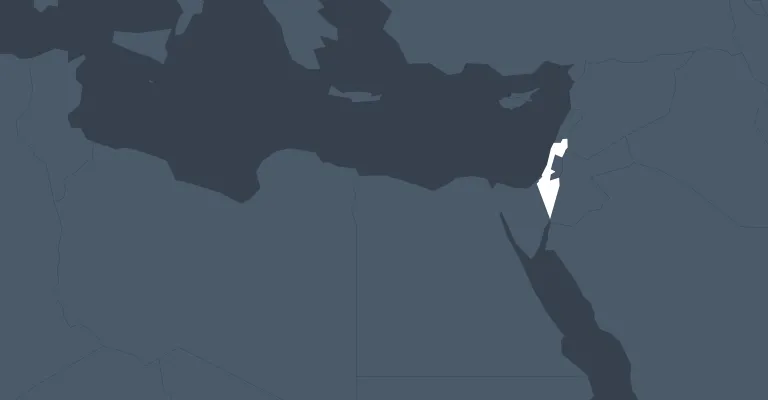
The numerical scores and status listed for Israel do not reflect the actions of the Israeli military or Jewish Israeli settlers in the Gaza Strip or the West Bank, as conditions there are examined in separate reports. Any actions that affect conditions for people within Israel, such as cross-border shelling from Gaza or Lebanon, are captured in this report. Although the international community generally considers East Jerusalem to be part of the occupied West Bank, it may be mentioned in this report to provide context for conditions in Israel proper. Freedom in the World reports assess the level of political rights and civil liberties in a given geographical area, regardless of whether they are affected by the state, nonstate actors, or foreign powers. Related, disputed, or occupied territories are sometimes assessed separately from the relevant countries if they meet certain criteria, including distinct conditions for political rights and civil liberties and boundaries that are sufficiently stable to allow year-on-year comparisons. For more information, see the report methodology and FAQ.
Israel is a parliamentary democracy with a multiparty system and independent institutions that generally guarantee political rights and civil liberties for the population within its borders. However, the judiciary’s independence has come under growing political pressure in recent years, and long-term discrimination against Arab and other ethnic and religious minority populations has resulted in systemic disparities in areas including criminal justice, local government budgets, education, and economic opportunity.
- Prime Minister Benjamin Netanyahu’s long-running trial on corruption charges continued throughout the year and remained unresolved at year’s end. At least four other members of the cabinet and four Knesset (parliament) members from the ruling coalition also faced investigations or trials for alleged corruption or other suspected offenses.
- In March, the Knesset narrowly adopted government-backed legislation to overhaul the judicial appointments system. The existing nine-member appointments committee was composed of four political representatives (one of whom is traditionally from the opposition), three Supreme Court justices, and two representatives of the Israel Bar Association. The new legislation reallocated the two seats from the Israel Bar Association to political representatives—one chosen by the opposition and one by the ruling coalition. The change, which was set to take effect after the next scheduled elections in 2026, would effectively give government representatives a majority, and opponents warned that it could reduce the independence of the judiciary.
- In August, the government decided to remove the attorney general from office. The Supreme Court issued an interim order to suspend the move, and in December the court unanimously nullified the attorney general’s dismissal, ruling that the government in June had improperly eliminated a requirement for consultation with an independent vetting committee before such a dismissal could proceed. The attempted removal of the attorney general was seen as another bid by the government to weaken independent checks on its authority.
- Israelis continued to face arrests and interrogations for alleged offenses such as incitement to terrorism in response to their social media posts. In July, for example, journalist and activist Israel Frey was arrested over a post in which he welcomed the recent deaths of Israeli soldiers in the Gaza Strip, arguing that they were participating in crimes against humanity. He was released to house arrest after several days, and this restriction was also lifted four days later. Yolanda Yavor, a lecturer at Tel Aviv University, was arrested in September and again in November for social media posts that called for a “rebellion” against Netanyahu’s government. Like Frey, she spent short stints in detention and then under house arrest after each incident.
- The government offered compensation plans that encouraged the return of residents who had been displaced from northern Israel by cross-border missile and rocket strikes during the country’s conflict with Hezbollah militants in Lebanon; that conflict had tapered off after a November 2024 ceasefire. However, a 12-day war with Iran caused new temporary displacements in June.
- The government reached a cease-fire deal with Hamas militants in the Gaza Strip in October, leading to the release of nearly 2,000 Palestinians from Israeli prisons and detention centers as well as the bodies of 195 prisoners. Freed prisoners reported having suffering abuses while in detention. Israeli officials rejected accusations of abuse in their prison systems but have denied independent watchdog agencies direct access to detention facilities to monitor conditions.
This report has been abridged for Freedom in the World 2026. Freedom in the World is entirely funded by nongovernmental sources such as private foundations, corporations, and individuals like you. Please consider making a donation to support future editions of this vital resource.
For additional background information, see the reports from the 2024 and 2025 editions of Freedom in the World.
A1
1.00-4.00 pts0-4 pts
| Was the current head of government or other chief national authority elected through free and fair elections? | 4.004 4.004 |
A2
1.00-4.00 pts0-4 pts
| Were the current national legislative representatives elected through free and fair elections? | 4.004 4.004 |
A3
1.00-4.00 pts0-4 pts
| Are the electoral laws and framework fair, and are they implemented impartially by the relevant election management bodies? | 4.004 4.004 |
B1
1.00-4.00 pts0-4 pts
| Do the people have the right to organize in different political parties or other competitive political groupings of their choice, and is the system free of undue obstacles to the rise and fall of these competing parties or groupings? | 3.003 4.004 |
B2
1.00-4.00 pts0-4 pts
| Is there a realistic opportunity for the opposition to increase its support or gain power through elections? | 4.004 4.004 |
B3
1.00-4.00 pts0-4 pts
| Are the people’s political choices free from domination by forces that are external to the political sphere, or by political forces that employ extrapolitical means? | 4.004 4.004 |
B4
1.00-4.00 pts0-4 pts
| Do various segments of the population (including ethnic, racial, religious, gender, LGBT+, and other relevant groups) have full political rights and electoral opportunities? | 2.002 4.004 |
C1
1.00-4.00 pts0-4 pts
| Do the freely elected head of government and national legislative representatives determine the policies of the government? | 4.004 4.004 |
C2
1.00-4.00 pts0-4 pts
| Are safeguards against official corruption strong and effective? | 2.002 4.004 |
C3
1.00-4.00 pts0-4 pts
| Does the government operate with openness and transparency? | 3.003 4.004 |
D1
1.00-4.00 pts0-4 pts
| Are there free and independent media? | 3.003 4.004 |
D2
1.00-4.00 pts0-4 pts
| Are individuals free to practice and express their religious faith or nonbelief in public and private? | 3.003 4.004 |
D3
1.00-4.00 pts0-4 pts
| Is there academic freedom, and is the educational system free from extensive political indoctrination? | 3.003 4.004 |
D4
1.00-4.00 pts0-4 pts
| Are individuals free to express their personal views on political or other sensitive topics without fear of surveillance or retribution? | 3.003 4.004 |
E1
1.00-4.00 pts0-4 pts
| Is there freedom of assembly? | 3.003 4.004 |
E2
1.00-4.00 pts0-4 pts
| Is there freedom for nongovernmental organizations, particularly those that are engaged in human rights– and governance-related work? | 2.002 4.004 |
E3
1.00-4.00 pts0-4 pts
| Is there freedom for trade unions and similar professional or labor organizations? | 4.004 4.004 |
F1
1.00-4.00 pts0-4 pts
| Is there an independent judiciary? | 3.003 4.004 |
F2
1.00-4.00 pts0-4 pts
| Does due process prevail in civil and criminal matters? | 2.002 4.004 |
F3
1.00-4.00 pts0-4 pts
| Is there protection from the illegitimate use of physical force and freedom from war and insurgencies? | 1.001 4.004 |
F4
1.00-4.00 pts0-4 pts
| Do laws, policies, and practices guarantee equal treatment of various segments of the population? | 2.002 4.004 |
G1
1.00-4.00 pts0-4 pts
| Do individuals enjoy freedom of movement, including the ability to change their place of residence, employment, or education? | 2.002 4.004 |
G2
1.00-4.00 pts0-4 pts
| Are individuals able to exercise the right to own property and establish private businesses without undue interference from state or nonstate actors? | 3.003 4.004 |
G3
1.00-4.00 pts0-4 pts
| Do individuals enjoy personal social freedoms, including choice of marriage partner and size of family, protection from domestic violence, and control over appearance? | 3.003 4.004 |
G4
1.00-4.00 pts0-4 pts
| Do individuals enjoy equality of opportunity and freedom from economic exploitation? | 2.002 4.004 |


Country Facts
-
Population
9,558,000 -
Global Freedom Score
73 100 free
