

Burkina Faso
Past Election
65
100
| Digital Sphere | 26 32 |
| Electoral System and Political Participation | 19 32 |
| Human Rights | 20 36 |
Scores are based on a scale of 0 to 100, with 100 representing the strongest defenses against digital election interference.
See the methodology.
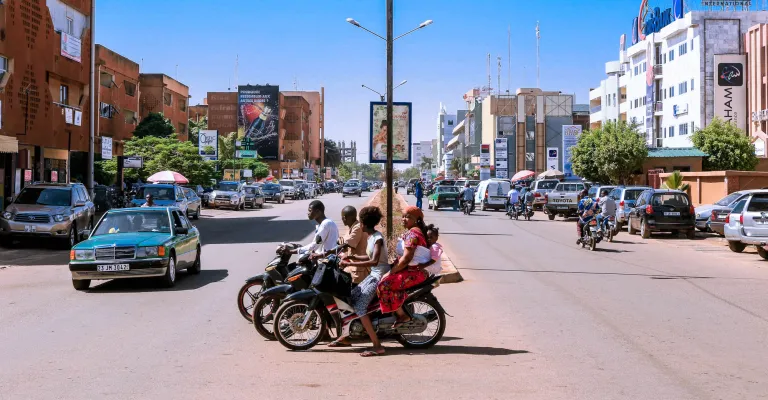


Burkinabè will vote in November in the second presidential and legislative elections since Blaise Campaoré’s 27-year regime was overthrown in 2014. Over 20 candidates filed for the first round of the 2020 presidential contest, including numerous prominent figures such as incumbent president Roch Marc Christian Kaboré, whose People’s Movement for Progress (MPP) party holds a plurality in parliament; Zephirin Diabré of the opposition Union for Progress and Change (UPC) party; and former prime minister Yacouba Isaac Zida, who now lives in Canada and could face charges for desertion should he return to Burkina Faso.
The election takes place amid a deterioration in security that, as of August 2020, has forced over a million Burkinabè to flee their homes. Insecurity —driven in large part by militant groups operating in the north and east of the country—is a major challenge to the electoral environment, making it unsafe to campaign and limiting access to polls in some areas. The government has responded to the security situation by criminalizing speech that “demoralizes” the security forces. A new law allows the Constitutional Court to certify election results based on incomplete returns in cases of “force majeure or exceptional circumstances,” potentially disenfranchising thousands of people residing in northern rural areas where voting is likely to be disrupted due to violence. These regions are also home to large populations of ethnic and religious groups that have been historically underrepresented in politics and government.
Burkina Faso has a score of 65 out of 100, with 100 representing the least vulnerable in terms of election integrity, on Freedom House’s Election Vulnerability Index, which is based on a selection of key election-related indicators. Burkina Faso’s score reflects generally credible and competitive recent elections and a relatively robust environment for media and civil society, despite significant security challenges that threaten the democratic gains made in recent years. The country is rated Partly Free in Freedom in the World 2020, with a score of 56 out of 100 with respect to its political rights and civil liberties. To learn more about this annual Freedom House assessment, please visit the Burkina Faso country report for Freedom in the World.
Freedom House has identified the following as key issues to watch ahead of election day:
- Arrests and prosecutions: Individuals are sometimes arrested for their online activity, including in relation to a 2019 revision of the penal code that criminalized the dissemination of information related to terrorist attacks and speech that “demoralizes the defense and security forces.” Given the close ties between security and elections issues, the use of this law could hinder election-related media coverage and online discussion.
- Blocking websites: The recently amended penal code permits the blocking of websites or email addresses that disseminate alleged false information. The provision is subject to judicial oversight, but any legal avenue for blocking is cause for concern and the Burkinabè judiciary sometimes suffers from political interference.


Country Facts
-
Population
22,670,000 -
Global Freedom Score
20 100 not free -
Date of Election
November 22, 2020 -
Type of Election
General -
Internet Penetration
17.50% -
Population
20.3 million -
Election Year
_2020-
