

Mexico
Partly Free
59
100
| A Obstacles to Access | 18 25 |
| B Limits on Content | 24 35 |
| C Violations of User Rights | 17 40 |
Last Year's Score & Status
61
100
Partly Free
Scores are based on a scale of 0 (least free) to 100 (most free).
See the methodology and report acknowledgements.
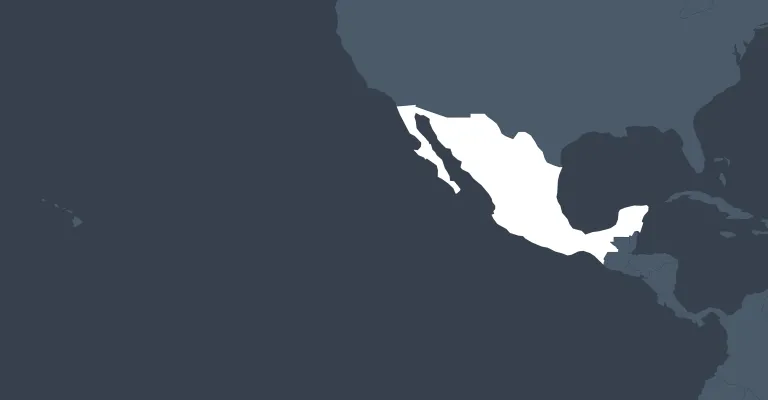


Internet freedom in Mexico declined during the coverage period. The legislature approved a package of laws facilitating state surveillance without adequate oversight.1 Mexico continued to be one of the world’s deadliest countries for journalists, with significant impunity for perpetrators. Judicial harassment against online journalists continued to escalate. All of these factors contributed to a climate of self-censorship.
This report has been abridged for Freedom on the Net 2026. Please consider making a donation to support future editions of this vital resource. For additional information, see the 2024 full report and 2025 abridged report.
- 1Red en Defensa de los Derechos Digitales, “El gobierno mexicano refuerza sus capacidades de vigilancia con el nuevo paquete de leyes [The Mexican government is strengthening its surveillance capabilities with a new package of laws],” August 6, 2025, https://r3d.mx/2025/08/06/el-gobierno-mexicano-refuerza-sus-capacidades….
A1
1.00-6.00 pts0-6 pts
| Do infrastructural limitations restrict access to the internet or the speed and quality of internet connections? | 5.005 6.006 |
A2
1.00-3.00 pts0-3 pts
| Is access to the internet prohibitively expensive or beyond the reach of certain segments of the population for geographical, social, or other reasons? | 1.001 3.003 |
A3
1.00-6.00 pts0-6 pts
| Does the government exercise technical or legal control over internet infrastructure for the purposes of restricting connectivity? | 6.006 6.006 |
A4
1.00-6.00 pts0-6 pts
| Are there legal, regulatory, or economic obstacles that restrict the diversity of service providers? | 4.004 6.006 |
A5
1.00-4.00 pts0-4 pts
| Do national regulatory bodies that oversee service providers, digital platforms, and the internet more broadly fail to operate in a free, fair, and independent manner? | 2.002 4.004 |
B1
1.00-6.00 pts0-6 pts
| Does the state block or filter, or compel service providers to block or filter, internet content, particularly material that is protected by international human rights standards? | 5.005 6.006 |
Score Change: The score declined from 6 to 5 because two websites that illegally distributed films remained blocked for copyright infringement during the coverage period pending a court challenge.1
- 1International Intellectual Property Alliance, “IIPA 2026 Special 301 Report on Copyright Protection and Enforcement,” January 2026, https://www.iipa.org/files/uploads/2026/01/IIPA-2026-Special-301-Commen….
B2
1.00-4.00 pts0-4 pts
| Do state or nonstate actors employ legal, administrative, or other means to force publishers, digital platforms, content hosts, or other intermediaries to delete content, particularly material that is protected by international human rights standards? | 2.002 4.004 |
B3
1.00-4.00 pts0-4 pts
| Do restrictions on the internet and digital content lack transparency, proportionality to the stated aims, or an independent appeals process? | 3.003 4.004 |
B4
1.00-4.00 pts0-4 pts
| Do journalists, commentators, and ordinary people practice self-censorship online? | 2.002 4.004 |
B5
1.00-4.00 pts0-4 pts
| Are online sources of information controlled or manipulated by the government or other powerful actors to advance a favored interest? | 1.001 4.004 |
B6
1.00-3.00 pts0-3 pts
| Are there economic, regulatory, or other constraints that negatively affect individuals’ ability to publish content online? | 2.002 3.003 |
B7
1.00-4.00 pts0-4 pts
| Does the online information landscape lack diversity and reliability? | 3.003 4.004 |
B8
1.00-6.00 pts0-6 pts
| Do conditions impede individuals’ ability to form communities, mobilize, and campaign online, particularly on political and social issues? | 6.006 6.006 |
C1
1.00-6.00 pts0-6 pts
| Do the constitution or other laws fail to protect rights such as freedom of expression, access to information, and press freedom, including on the internet, and are they enforced by a judiciary that lacks independence? | 3.003 6.006 |
C2
1.00-4.00 pts0-4 pts
| Are there laws that assign criminal penalties or civil liability for online activities, particularly those that are protected under international human rights standards? | 2.002 4.004 |
C3
1.00-6.00 pts0-6 pts
| Are individuals penalized for online activities, particularly those that are protected under international human rights standards? | 4.004 6.006 |
C4
1.00-4.00 pts0-4 pts
| Does the government place restrictions on anonymous online communication or encryption? | 3.003 4.004 |
Score Change: The score declined from 4 to 3 due to the implementation of a provision in the new Federal Telecommunications and Broadcasting Law that compels mobile phone providers to connect users’ phone lines to official identification.1
- 1“Ley en Materia de Telecomunicaciones y Radiodifusión [Federal Telecommunications and Broadcasting Law],” July 2025, Camara de Diputados, https://www.diputados.gob.mx/LeyesBiblio/pdf/LMTR.pdf; Fernanda González, “Telcel reconoce vulnerabilidad técnica en su portal de registro de líneas móviles [Telcel acknowledges technical vulnerability in its mobile line registration portal],” Wired, January 12, 2026, https://es.wired.com/articulos/telcel-reconoce-vulnerabilidad-tecnica-e…; Red en Defensa de los Derechos Digitales, “Inicia registro obligatorio de líneas telefónicas sin salvaguardas contra abusos [Mandatory registration of telephone lines begins without safeguards against abuse],” January 12, 2026, https://r3d.mx/2026/01/12/inicia-registro-obligatorio-de-lineas-telefon….
C5
1.00-6.00 pts0-6 pts
| Does state surveillance of internet activities infringe on individuals’ right to privacy? | 1.001 6.006 |
C6
1.00-6.00 pts0-6 pts
| Does monitoring and collection of user data by service providers and other technology companies infringe on individuals’ right to privacy? | 3.003 6.006 |
C7
1.00-5.00 pts0-5 pts
| Are individuals subject to extralegal intimidation or physical violence by state authorities or any other actor in relation to their online activities? | 0.000 5.005 |
C8
1.00-3.00 pts0-3 pts
| Are websites, governmental and private entities, service providers, or individuals subject to widespread hacking and other forms of cyberattack? | 1.001 3.003 |


Country Facts
-
Population
127,500,000 -
Global Freedom Score
58 100 partly free -
Internet Freedom Score
59 100 partly free -
Freedom in the World Status
Partly Free
