

Nigeria
Partly Free
56
100
| A Obstacles to Access | 15 25 |
| B Limits on Content | 24 35 |
| C Violations of User Rights | 17 40 |
Last Year's Score & Status
59
100
Partly Free
Scores are based on a scale of 0 (least free) to 100 (most free).
See the methodology and report acknowledgements.
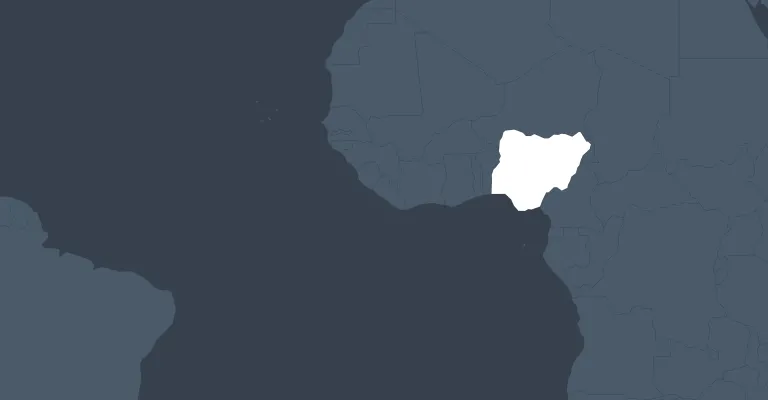


Internet freedom in Nigeria declined during the coverage period. Journalists and activists who negatively portrayed powerful individuals online continued to face arrests, online harassment, cyberattacks, and physical violence.1 Authorities sought to remove posts and deactivate the accounts of a well-known activist and journalist who criticized Nigeria’s president on social media platforms.2 Investigative reporting published during the coverage period also revealed new details about the extent of security services’ use of spyware and digital surveillance tools with little judicial oversight.3
This report has been abridged for Freedom on the Net 2026. Please consider making a donation to support future editions of this vital resource. For additional information, see the 2024 full report and 2025 abridged report.
- 1Evelyn Okakwu, “3 Nigerian journalists detained on cybercrime allegations, despite reform,” Committee to Protect Journalists, November 14, 2025, https://cpj.org/2025/11/3-nigerian-journalists-detained-on-cybercrime-a…; Committee to Protect Journalists, “Nigerian authorities detain another journalist for cybercrimes over governance reports,” November 26, 2025, https://cpj.org/2025/11/nigerian-authorities-detain-another-journalist-…; “DSS maintains cyber stalking charge against Sowore, drops X, Meta from defendant list,” BusinessDay, January 19, 2026, https://businessday.ng/news/article/dss-maintains-cyber-stalking-charge…; Media Rights Agenda, “Police Arrest, Arraigns University Student Over Social Media Criticism of Niger State Governor,” November 19, 2025, https://mediarightsagenda.org/police-arrest-arraigns-university-student…; Foundation for Investigative Journalism, “Police Assault FIJ Journalist Daniel Ojukwu, Threaten to Behead Him Inside Ikeja Command,” August 29, 2025, https://fij.ng/article/police-assault-fij-journalist-daniel-ojukwu-thre…; Usman Babaji, “Inside the campaign to silence WikkiTimes,” International Centre for Investigative Reporting, July 12, 2025, https://www.icirnigeria.org/inside-the-campaign-to-silence-wikkitimes/.
- 2Rachael Omidiji, “JUST IN: DSS sues Sowore, Meta, X over anti-Tinubu post,” Tribune Online, September 16, 2025, https://tribuneonlineng.com/just-in-dss-sues-sowore-meta-x-over-anti-ti…; Department of State Services (DSS), @OfficialDSSNG, “6th September, 2025 The Chairman and CEO X Corp. Bastrop County, Texas USA Email: [email protected] RE: MISLEADING INFORMATION AND WILLFUL, INTENTION TO FURTHERING AN IDEOLOGY,” X, September 6, 2025, https://x.com/OfficialDSSNG/status/1964484933482635292?t=5hF0ERv47A7UiR….
- 3“How DSS Spyware acquisition enables illegal wiretaps and detentions,” International Centre for Investigative Reporting, July 6, 2026, https://www.icirnigeria.org/how-dss-spyware-acquisition-enables-illegal….
A1
1.00-6.00 pts0-6 pts
| Do infrastructural limitations restrict access to the internet or the speed and quality of internet connections? | 3.003 6.006 |
A2
1.00-3.00 pts0-3 pts
| Is access to the internet prohibitively expensive or beyond the reach of certain segments of the population for geographical, social, or other reasons? | 1.001 3.003 |
A3
1.00-6.00 pts0-6 pts
| Does the government exercise technical or legal control over internet infrastructure for the purposes of restricting connectivity? | 4.004 6.006 |
Score Change: The score declined from 6 to 4 because of monthslong localized internet disruptions affecting at least four areas of Zamfara State during the coverage period.1
- 1Access Now, “#KeepItOn: Authorities in Nigeria must reconnect people in Zamfara North now,” November 4, 2025, https://www.accessnow.org/press-release/keepiton-authorities-in-nigeria….
A4
1.00-6.00 pts0-6 pts
| Are there legal, regulatory, or economic obstacles that restrict the diversity of service providers? | 5.005 6.006 |
A5
1.00-4.00 pts0-4 pts
| Do national regulatory bodies that oversee service providers, digital platforms, and the internet more broadly fail to operate in a free, fair, and independent manner? | 2.002 4.004 |
B1
1.00-6.00 pts0-6 pts
| Does the state block or filter, or compel service providers to block or filter, internet content, particularly material that is protected by international human rights standards? | 4.004 6.006 |
B2
1.00-4.00 pts0-4 pts
| Do state or nonstate actors employ legal, administrative, or other means to force publishers, digital platforms, content hosts, or other intermediaries to delete content, particularly material that is protected by international human rights standards? | 2.002 4.004 |
B3
1.00-4.00 pts0-4 pts
| Do restrictions on the internet and digital content lack transparency, proportionality to the stated aims, or an independent appeals process? | 2.002 4.004 |
B4
1.00-4.00 pts0-4 pts
| Do journalists, commentators, and ordinary people practice self-censorship online? | 3.003 4.004 |
B5
1.00-4.00 pts0-4 pts
| Are online sources of information controlled or manipulated by the government or other powerful actors to advance a favored interest? | 2.002 4.004 |
B6
1.00-3.00 pts0-3 pts
| Are there economic, regulatory, or other constraints that negatively affect individuals’ ability to publish content online? | 3.003 3.003 |
B7
1.00-4.00 pts0-4 pts
| Does the online information landscape lack diversity and reliability? | 3.003 4.004 |
B8
1.00-6.00 pts0-6 pts
| Do conditions impede individuals’ ability to form communities, mobilize, and campaign online, particularly on political and social issues? | 5.005 6.006 |
C1
1.00-6.00 pts0-6 pts
| Do the constitution or other laws fail to protect rights such as freedom of expression, access to information, and press freedom, including on the internet, and are they enforced by a judiciary that lacks independence? | 3.003 6.006 |
C2
1.00-4.00 pts0-4 pts
| Are there laws that assign criminal penalties or civil liability for online activities, particularly those that are protected under international human rights standards? | 1.001 4.004 |
C3
1.00-6.00 pts0-6 pts
| Are individuals penalized for online activities, particularly those that are protected under international human rights standards? | 2.002 6.006 |
C4
1.00-4.00 pts0-4 pts
| Does the government place restrictions on anonymous online communication or encryption? | 2.002 4.004 |
C5
1.00-6.00 pts0-6 pts
| Does state surveillance of internet activities infringe on individuals’ right to privacy? | 3.003 6.006 |
C6
1.00-6.00 pts0-6 pts
| Does monitoring and collection of user data by service providers and other technology companies infringe on individuals’ right to privacy? | 3.003 6.006 |
C7
1.00-5.00 pts0-5 pts
| Are individuals subject to extralegal intimidation or physical violence by state authorities or any other actor in relation to their online activities? | 2.002 5.005 |
C8
1.00-3.00 pts0-3 pts
| Are websites, governmental and private entities, service providers, or individuals subject to widespread hacking and other forms of cyberattack? | 1.001 3.003 |
Score Change: The score declined from 2 to 1 because the website of an investigative journalism outlet was targeted with distributed denial-of-service (DDoS) attacks after publishing reports on the black-market sale of Nigerians’ identity information from a government database.1
- 1Timileyin Akinmoyeje, “FIJ’s Website Attacked From NIMC Headquarters After Multiple Reports on NIN, BVN-Selling Websites,” Foundation for Investigative Journalism, August 22, 2025, https://fij.ng/article/fijs-website-attacked-from-nimc-headquarters-aft….


Country Facts
-
Population
218,500,000 -
Global Freedom Score
44 100 partly free -
Internet Freedom Score
56 100 partly free -
Freedom in the World Status
Partly Free
