

Northern Cyprus*
Free
75
100
| PR Political Rights | 28 40 |
| CL Civil Liberties | 47 60 |
Last Year's Score & Status
76
100
Free
A country or territory’s Freedom in the World status depends on its aggregate Political Rights score, on a scale of 0–40, and its aggregate Civil Liberties score, on a scale of 0–60.
See the methodology.
* Indicates a territory as opposed to an independent country.
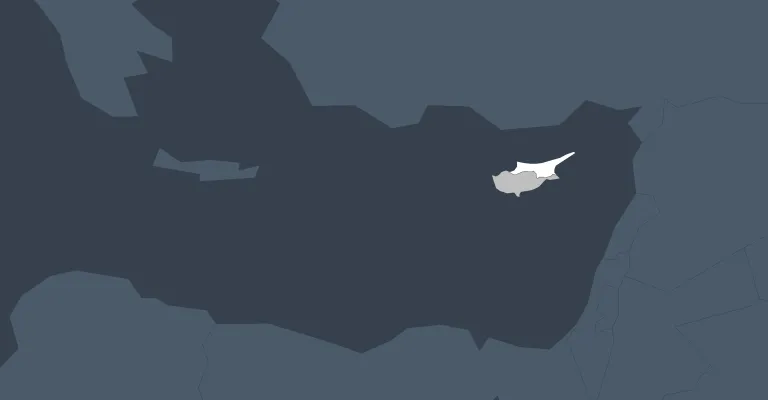


Freedom in the World reports assess the level of political rights and civil liberties in a given geographical area, regardless of whether they are affected by the state, nonstate actors, or foreign powers. Related, disputed, or occupied territories are sometimes assessed separately if they meet certain criteria, including distinct conditions for political rights and civil liberties and boundaries that are sufficiently stable to allow year-on-year comparisons. For more information, see the report methodology and FAQ.
The Turkish Republic of Northern Cyprus (TRNC) is a self-declared state recognized only by Turkey. Civil liberties are generally upheld, and the multiparty political system is largely democratic, though it has experienced increasing interference from the Turkish government. Other ongoing concerns include corruption, discrimination against minority groups, and human trafficking.
This report has been abridged for Freedom in the World 2026. Freedom in the World is entirely funded by nongovernmental sources such as private foundations, corporations, and individuals like you. Please consider making a donation to support future editions of this vital resource.
For additional background information, see the reports from the 2024 and 2025 editions of Freedom in the World.
A1
1.00-4.00 pts0-4 pts
| Was the current head of government or other chief national authority elected through free and fair elections? | 3.003 4.004 |
Score Change: The score improved from 2 to 3 because the Turkish government’s efforts to influence Northern Cyprus’s presidential election in favor of the incumbent were unsuccessful, and an opposition candidate easily won the contest.
A2
1.00-4.00 pts0-4 pts
| Were the current national legislative representatives elected through free and fair elections? | 4.004 4.004 |
A3
1.00-4.00 pts0-4 pts
| Are the electoral laws and framework fair, and are they implemented impartially by the relevant election management bodies? | 3.003 4.004 |
B1
1.00-4.00 pts0-4 pts
| Do the people have the right to organize in different political parties or other competitive political groupings of their choice, and is the system free of undue obstacles to the rise and fall of these competing parties or groupings? | 4.004 4.004 |
B2
1.00-4.00 pts0-4 pts
| Is there a realistic opportunity for the opposition to increase its support or gain power through elections? | 4.004 4.004 |
B3
1.00-4.00 pts0-4 pts
| Are the people’s political choices free from domination by forces that are external to the political sphere, or by political forces that employ extrapolitical means? | 2.002 4.004 |
B4
1.00-4.00 pts0-4 pts
| Do various segments of the population (including ethnic, racial, religious, gender, LGBT+, and other relevant groups) have full political rights and electoral opportunities? | 2.002 4.004 |
C1
1.00-4.00 pts0-4 pts
| Do the freely elected head of government and national legislative representatives determine the policies of the government? | 2.002 4.004 |
C2
1.00-4.00 pts0-4 pts
| Are safeguards against official corruption strong and effective? | 2.002 4.004 |
C3
1.00-4.00 pts0-4 pts
| Does the government operate with openness and transparency? | 2.002 4.004 |
D1
1.00-4.00 pts0-4 pts
| Are there free and independent media? | 3.003 4.004 |
D2
1.00-4.00 pts0-4 pts
| Are individuals free to practice and express their religious faith or nonbelief in public and private? | 3.003 4.004 |
D3
1.00-4.00 pts0-4 pts
| Is there academic freedom, and is the educational system free from extensive political indoctrination? | 3.003 4.004 |
Score Change: The score declined from 4 to 3 because the government, under pressure from the government of Turkey, in recent years has implemented changes in the education system that promote Sunni Muslim religious education and identity.
D4
1.00-4.00 pts0-4 pts
| Are individuals free to express their personal views on political or other sensitive topics without fear of surveillance or retribution? | 3.003 4.004 |
Score Change: The score declined from 4 to 3 because a number of factors have contributed to growing self-censorship, including online harassment, criminal cases stemming from online expression, and a multiyear pattern of incidents in which Turkish Cypriots are denied entry to or detained in Turkey, reportedly in retaliation for their critical speech.
E1
1.00-4.00 pts0-4 pts
| Is there freedom of assembly? | 4.004 4.004 |
E2
1.00-4.00 pts0-4 pts
| Is there freedom for nongovernmental organizations, particularly those that are engaged in human rights– and governance-related work? | 4.004 4.004 |
E3
1.00-4.00 pts0-4 pts
| Is there freedom for trade unions and similar professional or labor organizations? | 3.003 4.004 |
F1
1.00-4.00 pts0-4 pts
| Is there an independent judiciary? | 4.004 4.004 |
F2
1.00-4.00 pts0-4 pts
| Does due process prevail in civil and criminal matters? | 3.003 4.004 |
F3
1.00-4.00 pts0-4 pts
| Is there protection from the illegitimate use of physical force and freedom from war and insurgencies? | 3.003 4.004 |
F4
1.00-4.00 pts0-4 pts
| Do laws, policies, and practices guarantee equal treatment of various segments of the population? | 3.003 4.004 |
G1
1.00-4.00 pts0-4 pts
| Do individuals enjoy freedom of movement, including the ability to change their place of residence, employment, or education? | 3.003 4.004 |
G2
1.00-4.00 pts0-4 pts
| Are individuals able to exercise the right to own property and establish private businesses without undue interference from state or nonstate actors? | 3.003 4.004 |
G3
1.00-4.00 pts0-4 pts
| Do individuals enjoy personal social freedoms, including choice of marriage partner and size of family, protection from domestic violence, and control over appearance? | 3.003 4.004 |
G4
1.00-4.00 pts0-4 pts
| Do individuals enjoy equality of opportunity and freedom from economic exploitation? | 2.002 4.004 |
Country Facts
-
Global Freedom Score
75 100 free
