

Ukraine
Partly Free
51
100
| PR Political Rights | 22 40 |
| CL Civil Liberties | 29 60 |
Last Year's Score & Status
51
100
Partly Free
A country or territory’s Freedom in the World status depends on its aggregate Political Rights score, on a scale of 0–40, and its aggregate Civil Liberties score, on a scale of 0–60.
See the methodology.
A Note About Related Territories
Territories are sometimes assessed separately from related countries if they meet certain criteria, including significantly different conditions for political rights and civil liberties, and boundaries that are sufficiently stable to allow annual comparisons.
Related Territories: 2026 Global Freedom Score Overview

Click on a scorecard to visit each country's Freedom in the World Report.


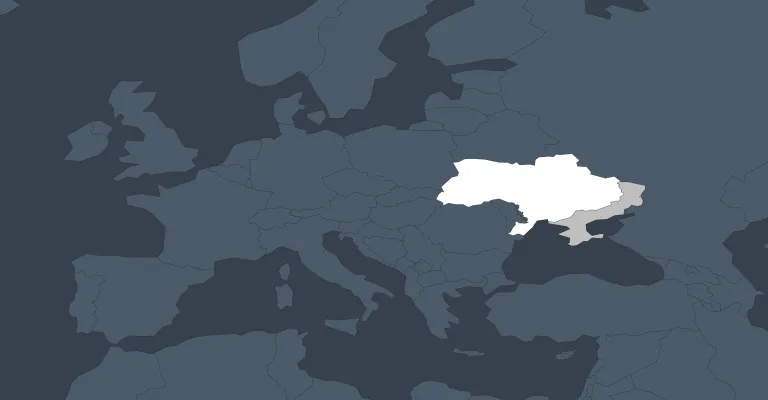
As of 2025, Russian military forces controlled most or all of the Ukrainian regions of Crimea, Luhansk, and Donetsk, and parts of Kherson and Zaporizhzhia. The Russian Federation claims to have annexed these regions following illegal invasions in 2014 and 2022. The numerical scores and status listed here reflect conditions in government-controlled areas of Ukraine, and do not reflect conditions in the Russian-occupied territories of Ukraine, which are examined in a separate report. Freedom in the World reports assess the level of political rights and civil liberties in a given geographical area, regardless of whether they are affected by the state, nonstate actors, or foreign powers. Related, disputed, or occupied territories are sometimes assessed separately if they meet certain criteria, including distinct conditions for political rights and civil liberties and boundaries that are sufficiently stable to allow year-on-year comparisons. For more information, see the report methodology and FAQ.
The Russian armed forces launched an illegal all-out invasion of Ukraine in February 2022, inflicting massive civilian and military casualties and destroying civilian infrastructure. President Volodymyr Zelenskyy declared martial law immediately after the invasion. Under this designation, scheduled parliamentary and presidential elections have been postponed and other rights remain restricted. The current administration has enacted a number of positive reforms as part of a drive to strengthen democratic institutions, but the country still struggles with corruption in the government, the judiciary, and other sectors.
- In July, the parliament passed and President Zelenskyy signed a law watchdogs said would strip the independence of the country’s key anticorruption bodies—the National Anti-Corruption Bureau of Ukraine (NABU) and the Specialized Anti-Corruption Prosecutor’s Office (SAPO)—by subordinating them to the office of the prosecutor general. The developments prompted protests in major Ukrainian cities and drew warnings from the European Commission that the move could jeopardize Ukraine’s European Union (EU) accession. Lawmakers repealed the measure days later.
- Later in the year, the anticorruption agencies exposed several high-level corruption scandals, including a large-scale embezzlement scheme at one of Ukraine’s largest energy companies. In the wake of those revelations, Andriy Yermak, an influential aide to Zelensky, resigned as the president’s chief of staff and from top national security bodies. The resignation and other developments were regarded as reflecting long-standing problems with structural corruption in Ukraine and the Zelensky’s administration’s willingness to respond to public pressure on the issue. In a related development, by the end of the year a number of Ukrainian anticorruption initiatives and media outlets that undertook anticorruption reporting lost funding due to the dismantling of the US Agency for International Development (USAID).
- In August 2025, the Ukraine government announced that men aged 18 to 22 would be permitted to cross the country’s borders freely. Previously, men aged 18 to 60 were barred under martial law from leaving the country. The Ukrainian government framed the policy change as an effort to help young Ukrainians maintain ties with the homeland and pursue education abroad, while also responding to demographic pressures and youth discontent.
- The number of Russian drone attacks increased at least tenfold compared to 2024, according to data from the Ukrainian air force. Strikes against Ukraine’s civilian infrastructure targeted medical facilities, cultural sites, residential buildings, and supermarkets. According to the Office of the UN High Commissioner for Human Rights (OHCHR), July 2025 was the deadliest month for civilians since October 2022 (with at least 286 killed and 1,388 injured), reflecting escalating use of explosive weapons in populated areas.
A1
1.00-4.00 pts0-4 pts
| Was the current head of government or other chief national authority elected through free and fair elections? | 3.003 4.004 |
The president is directly elected for up to two five-year terms. In the 2019 election, Zelenskyy defeated incumbent president Petro Poroshenko with 73.2 percent of the second-round vote. International observers deemed the election competitive and credible, although polling could not take place in Russian-occupied Crimea and areas of eastern Donbas.
Presidential elections scheduled for spring 2024 were postponed due to warfare and a constitutional prohibition on holding elections under martial law, with all parties in parliament agreeing that the poll would take place six months after the end of martial law. The government assessed that holding elections would pose significant security risks, and that voting would be difficult, if not impossible, for millions of Ukrainian refugees abroad, internally displaced persons (IPDs), and soldiers on the front line.
A2
1.00-4.00 pts0-4 pts
| Were the current national legislative representatives elected through free and fair elections? | 2.002 4.004 |
The 450 members of the unicameral Supreme Council (Verkhovna Rada) are elected to five-year terms through a mixed system in which half are chosen by closed-list proportional representation and the other half in single-member districts.
Legislative elections have not been held since 2019 due to martial law and ongoing war. In early elections held in July 2019, President Zelenskyy’s Servant of the People party won 254 seats, giving it an outright majority—the first time any party had crossed that threshold since independence. The Poroshenko bloc, which had rebranded as European Solidarity, took 25 seats. The Opposition Platform–For Life (OPZZh) grouping took 43 seats, Fatherland won 26, and the Voice Party won 20.
The elections were deemed generally competitive and credible, despite some problems. Voting was impossible in Crimea and eastern Donbas, so only 424 of 450 seats were filled. In addition, approximately one million Ukrainian citizens were unable to vote for lack of a registered address. An Organization for Security and Co-operation in Europe (OSCE) election-monitoring mission cited irregularities including “widespread vote buying, misuse of incumbency, and the practice of exploiting all possible legislative loopholes,” contributing to inequalities among competitors.
Elections scheduled for November 2023 were postponed while the country remained under martial law and in a state of war. The development prompted some criticism but polls reflected support from many Ukrainians. Experts cited the security risks of holding elections in wartime and the likely disenfranchisement of displaced citizens and front-line soldiers.
Score Change: The score declined from 3 to 2 because Ukraine has not held legislative elections since 2019, and lawmakers are consequently serving without a mandate.
A3
1.00-4.00 pts0-4 pts
| Are the electoral laws and framework fair, and are they implemented impartially by the relevant election management bodies? | 2.002 4.004 |
The Central Election Commission (TVK) generally administers elections professionally. The mixed electoral system for the parliament that governed past polls, including the most recent parliamentary elections in 2019, was criticized as prone to manipulation and vote buying. In December 2019, however, the parliament adopted an electoral code that partially implemented a proportional-representation voting system, with open party lists for both parliamentary and local elections. Zelenskyy enacted it at the end of that year. Local elections in 2020 were held under the new code, with some modifications allowing IDPs to participate.
Martial law prohibits calling and holding elections or referendums at both the national and local levels as long as it remains in effect. Parliamentary elections originally set for October 2023 were postponed, as was the presidential election due in March 2024.
B1
1.00-4.00 pts0-4 pts
| Do the people have the right to organize in different political parties or other competitive political groupings of their choice, and is the system free of undue obstacles to the rise and fall of these competing parties or groupings? | 3.003 4.004 |
Prior to the 2022 invasion, with the exception of a ban on the Communist Party, there were no formal barriers to the creation and operation of political parties in Ukraine. However, in May 2022, Zelenskyy signed a law banning political parties that justify, recognize as legitimate, or deny Russian aggression against Ukraine. More than a dozen parties were subsequently identified as “pro-Russian” and banned, including the largest opposition party, the OPZZh. Some members of the banned parties found ways to stay in office, including by forming new parties.
Parliamentary parties are provided with state funding, but the process favors established groups: parties must win at least 5 percent of the vote to receive funds. New-party registration fees are high relative to average income and cost of living. Parties can only register with the Ministry of Justice if they can demonstrate a significant support base (10,000 signatures) in two-thirds of Ukraine’s oblasts (regions). Independent candidates cannot run for local council positions in towns with over 10,000 inhabitants. Massive war-induced population displacement and human losses since February 2022 present additional challenges to future party formation.
B2
1.00-4.00 pts0-4 pts
| Is there a realistic opportunity for the opposition to increase its support or gain power through elections? | 3.003 4.004 |
Ukrainian politics have long featured dynamic competition. Opposition groups are represented in the parliament, and their political activities are generally not impeded by administrative restrictions or legal harassment.
However, wartime dynamics have created practical barriers to the rise of new competitive actors. Elections remained suspended under martial law, preventing new parties from contesting power or gaining visibility. Expanded anti–money-laundering requirements have increased oversight and administrative burdens on nongovernmental organizations (NGOs), which are often seen as incubators of new political actors. Since the start of the full-scale invasion in 2022 there has been a strong stigma around political dissent. Senior security officials have warned that calls for elections or criticism of the government could aid Russian interests, potentially discouraging opposition organizing. Additionally, because the media is focused heavily on front-line news, mobilization, casualty reports, defense procurement, and other urgent topics, it is difficult for new party platforms to gain attention in public discourse.
Under a 2022 presidential decree, Ukraine’s main news channels broadcast only government-approved content and give airtime predominantly to ruling-party representatives, limiting opposition parties’ avenues for exposure. However, political opposition parties use other channels of influence, such as social media platforms, to reach constituents. A war-ravaged economy, displacement, and donor fatigue have also reduced financial support capacity for new parties.
B3
1.00-4.00 pts0-4 pts
| Are the people’s political choices free from domination by forces that are external to the political sphere, or by political forces that employ extrapolitical means? | 2.002 4.004 |
Powerful Ukrainian business magnates, commonly referred to as oligarchs, exert significant influence over politics both directly and indirectly, including through financial support for political parties and lobbying for the appointment of loyalists to key institutional positions. Since 2014, the power of Ukrainian oligarchs has declined somewhat as Ukraine has pursued reforms aimed at curbing their political influence and severed economic ties with Russia. Oligarchs’ power has also been weakened by changes in the media landscape, including government controls over media outlets implemented after the 2022 full-scale invasion, and as increasing numbers of Ukrainians turn to social media for news. Oligarchs have also suffered significant business losses due to warfare.
The Russian state continues to pursue disinformation campaigns and other online operations aimed at dividing or demoralizing Ukrainian citizens, though their effect in government-controlled areas has been limited.
B4
1.00-4.00 pts0-4 pts
| Do various segments of the population (including ethnic, racial, religious, gender, LGBT+, and other relevant groups) have full political rights and electoral opportunities? | 3.003 4.004 |
There are no formal restrictions on the participation of women and members of ethnic, racial, or other minority groups in political life. However, their voting and representation are hindered by factors including discrimination that discourages political participation and, for many Roma, a lack of identity documents. Societal discrimination against LGBT+ people affects their ability to engage in political and electoral processes.
C1
1.00-4.00 pts0-4 pts
| Do the freely elected head of government and national legislative representatives determine the policies of the government? | 2.002 4.004 |
Elected officials craft and implement policies and legislation, though many initiatives stall due to opposition from powerful business groups and other special interests. The main obstacle to effective governance in government-controlled parts of Ukraine is corruption.
In 2025, the mandates of both the president and parliament had expired.
C2
1.00-4.00 pts0-4 pts
| Are safeguards against official corruption strong and effective? | 1.001 4.004 |
Corruption remains a serious problem, and political will to fight it has been inconsistent. Anticorruption agencies have repeatedly been ensnared in politically fraught conflicts with other state entities and elected officials. Since 2022, however, Ukraine’s anticorruption agencies, monitored closely by Ukraine’s civil society, have uncovered multiple cases of embezzlement among high-level government officials, leading to dismissals. And despite severe disruption to governance caused by the 2022 full-scale invasion, authorities have been able to push through improvements to the country’s anticorruption apparatus.
In July 2025, Ukraine’s parliament passed and President Zelenskyy signed a law watchdogs said would strip the independence of the country’s key anticorruption bodies—the National Anti-Corruption Bureau of Ukraine (NABU) and the Specialized Anti-Corruption Prosecutor’s Office (SAPO)—by subordinating them to the office of the prosecutor general. The new law prompted protests in major Ukrainian cities and drew warnings from the European Commission that the move could jeopardize Ukraine’s EU accession. Lawmakers repealed the measure days later.
Ukraine’s anticorruption agencies continued to expose high-level corruption scandals in the following months, including involving inflated wartime defense procurement contracts and a bribery scheme inside Ukraine’s parliament. In November, the agencies exposed a large-scale embezzlement scheme at one of Ukraine’s largest energy companies. In the wake of the energy-sector scandal revelations, Andriy Yermak, an influential aide to Zelensky, resigned as the president’s chief of staff and from top national security bodies. The resignation and other developments were regarded as reflecting long-standing problems with structural corruption in Ukraine and the Zelensky’s administration’s willingness to respond to public pressure on the issue. In a related development, by the end of the year a number of Ukrainian anticorruption initiatives and media outlets that undertook anticorruption reporting lost funding due to the dismantling of the US Agency for International Development (USAID).
A 2025 Organisation for Economic Co-operation and Development (OECD) review of Ukraine’s anticorruption efforts said that despite the full-scale Russian invasion, “the country’s anticorruption progress has been significant,” highlighting improvements in evaluation of anticorruption strategy, strengthened whistleblower protection, and strengthening of the specialized anticorruption agencies.
C3
1.00-4.00 pts0-4 pts
| Does the government operate with openness and transparency? | 1.001 4.004 |
Poor government transparency has long helped to facilitate corruption, and transparency has declined as a result of the ongoing war and martial law. Journalists have found state registers holding public information to be incomplete, poorly updated, and subject to war-related cyberattacks. Parliamentary committee meetings are no longer open to the public as ordinarily required by law; meeting locations, times, and agendas are no longer disclosed in advance. President Zelenskyy’s “United 24” initiative, launched in 2022, coordinates charitable donations in support of Ukraine, but critics say it further centralizes authority, as the distribution of funds is believed to be the responsibility of the cabinet.
In October 2023, Zelenskyy signed a law to resume asset declarations for officials and make them publicly accessible. The National Agency on Corruption Prevention (NACP) reported in 2024 that at least half of selected declarations evaluated contained inaccurate information or evidence of illegal enrichment or unjustified assets. From January to July 2025, the agency conducted 567 full audits and detected violations in 563 (99 percent) of them; of those, 57 percent revealed signs of false declarations, unlawful enrichment, or unjustified assets.
In 2023, Ukrainian legislators amended the defense procurement law to introduce greater transparency for defense-industry purchases through the national e-procurement system, Prozorro. Additional amendments in 2024 refined mechanisms to prevent overpricing. The 2025 OECD review of Ukraine’s anticorruption efforts highlighted improvements in transparency in the country’s e-procurement system.
D1
1.00-4.00 pts0-4 pts
| Are there free and independent media? | 2.002 4.004 |
The constitution guarantees freedoms of speech and expression, and libel is not a criminal offense. At the start of the Russian invasion in February 2022, the Ukrainian government consolidated all television channels under a single government-controlled information platform, United News, that is broadcast around the clock on all channels in Ukraine. In late December 2022, Zelenskyy signed into law a controversial bill that expanded the government’s control over print and online media. Among other provisions, the law allows authorities to close news sites that are not officially registered as media without a court order. A number of Russian outlets have been banned.
Journalists continue to face intimidation, cyberattacks, and institutional pressure in the course of their work, with the Ukrainian Institute of Mass Information, Council of Europe, and other organizations documenting numerous such instances each year. Journalists in Ukraine also continue to face life-threatening risks as a result of the full-scale Russian invasion, including direct attacks on press-identified personnel and deliberate strikes on accommodations used by media workers. The Committee to Protect Journalists (CPJ) reported in December 2025 that the Russian military had killed four journalists during the year. The National Council of Ukraine on Television and Radio Broadcasting said in November that since February 2022, 116 Ukrainian and foreign journalists had died in Ukraine, 18 of them while on duty.
D2
1.00-4.00 pts0-4 pts
| Are individuals free to practice and express their religious faith or nonbelief in public and private? | 3.003 4.004 |
The constitution and a 1991 law define religious rights in Ukraine, and these are generally respected. However, smaller religious groups continue to report some discrimination.
In August 2024, President Zelensky signed a law banning religious organizations with links to Russia, which in effect banned the Moscow Patriarchate of the UOC (the UOC-MP) from operating in Ukraine. The ban was expected to affect significant numbers of Ukrainians, as UOC-MP had more parishes in Ukraine than the Orthodox Church of Ukraine (OCU). The move drew public support, but critics cautioned that the law could curb religious freedom. In 2025, early implementation of the law had been uneven. Several local authorities had begun reviewing or terminating UOC-MP property leases and registrations, while others awaited court clarification or faced parish-level disputes over affiliation and property.
National security and law enforcement bodies in Ukraine have continued to justify restrictions on religious organizations tied to Russia by pointing to ongoing investigations into alleged collaboration, propaganda, and influence operations within the clergy. In August 2025, the head of the Security Service of Ukraine (SBU) reported that the agency was investigating more than 170 criminal cases against UOC-MP priests on charges including high treason and incitement of hostility. Earlier, in July, Zelenskyy signed a decree revoking the Ukrainian citizenship of Orest Berezovskyy, better known as Metropolitan Onufriy of the UOC-MP. The citizenship of 36 UOC-MP clergy was similarly revoked in 2023.
D3
1.00-4.00 pts0-4 pts
| Is there academic freedom, and is the educational system free from extensive political indoctrination? | 2.002 4.004 |
Academic freedom was generally respected in government-controlled areas before the full-scale 2022 invasion.
In areas that were successfully liberated by Ukrainian forces, Ukrainian teachers who had worked under Russian control have faced criminal collaboration investigations. A December 2024 Human Rights Watch (HRW) report documented several cases of Ukrainian teachers prosecuted for “acts of collaboration” for continuing their professional duties during Russian occupation. The penalties included bans on working in certain professions or in public service, and prison terms.
Two laws passed since 2017 have faced criticism for mandating the use of Ukrainian as the primary language of instruction in publicly funded secondary schools.
D4
1.00-4.00 pts0-4 pts
| Are individuals free to express their personal views on political or other sensitive topics without fear of surveillance or retribution? | 2.002 4.004 |
The polarizing effects of years of war, as well as a high number of prosecutions for collaborationism, have weighed on political expression. Heated exchanges in the media and instances of violence against those expressing views considered controversial are not uncommon, likely contributing to self-censorship among ordinary people.
A week after Moscow launched the full-scale invasion of Ukraine in February 2022, Ukrainian lawmakers, in the absence of meaningful public comment, amended the criminal code to expand grounds for collaborationism charges to include public denial of Russian aggression, glorification of Russia, and insulting the honor and dignity of Ukrainian soldiers. Violations are punishable by fines, imprisonment, and restrictions on the ability to “hold certain positions or engage in certain activities” for a period of up to three years. Human rights defenders caution that the laws are too broad and may result in legal issues for nearly anyone who had contact with Russian occupation authorities, including people who accepted social services, medical and other workers providing basic services in previously occupied areas, and those who may have interacted with them only for survival under occupation. From March 2022 to February 2025, more than 9,500 collaborationism cases had been registered by Ukraine’s prosecutor general.
Legal and other pressure on journalists and civil society figures may also contribute to self-censorship among ordinary Ukrainians.
E1
1.00-4.00 pts0-4 pts
| Is there freedom of assembly? | 3.003 4.004 |
The constitution guarantees the right to peaceful assembly but requires organizers to give the authorities advance notice of demonstrations. Ukraine lacks a law governing the conduct of demonstrations and specifically providing for freedom of assembly. Martial law enacted after the full-scale invasion placed restrictions on the constitutional guarantee of freedom of assembly, though gatherings have continued to take place.
A number of demonstrations took place in 2025. Among them, large protests took place across major cities in July 2025 in response to a new law that weakened the country’s independent anticorruption agencies. Following sustained public pressure, the government reversed course, restoring the bodies’ independence by the end of the month.
E2
1.00-4.00 pts0-4 pts
| Is there freedom for nongovernmental organizations, particularly those that are engaged in human rights– and governance-related work? | 2.002 4.004 |
Numerous civic groups influence decision-making at various levels of government. Ukraine’s civil society has mobilized significant resources to support Ukraine’s defense and humanitarian needs since 2022; watchdog groups also contribute to anticorruption efforts. In 2025, Ukrainian civil society remained influential in government decision-making, most visibly during nationwide protests in July against legislation that weakened independent anticorruption bodies. The laws were later reversed following public pressure.
Some civil society activists continued to face intimidation and threats, and law enforcement agencies have sometimes failed to bring perpetrators to justice. Civil society figures sometimes face legal pressure from authorities. In July 2025, authorities conducted searches at the home and workplace of prominent anticorruption activist Vitaliy Shabunin, head of the Anti-Corruption Action Center (AntAC). They seized devices belonging to him and his family and charged him with draft evasion and fraud, carrying a possible 10-year prison sentence. AntAC characterized the events as an “attack” against Shabunin, and dozens of Ukrainian NGOs signed a public statement condemning authorities’ actions.
Civil society organizations are required to disclose their ultimate beneficiaries and ownership structure under money-laundering legislation; leaders of many groups have characterized this as interference in their work or have said requirements bring an undue administrative burden. Since the full-scale invasion, government control over financial transactions between nongovernmental organizations and foreign banks has been strengthened on grounds that in wartime, the risk of using charity organizations for possible money laundering is higher.
E3
1.00-4.00 pts0-4 pts
| Is there freedom for trade unions and similar professional or labor organizations? | 2.002 4.004 |
Trade unions function in the country, but strikes and worker protests are infrequent, as the largest trade union, stemming from the Soviet-era labor federation, lacks independence from the government and employers. Factory owners still pressure their workers to vote according to the owners’ preferences.
In 2022, a new labor code applicable under martial law took effect. The code effectively stripped employees of companies with fewer than 250 employees of any legal protection—making pay structure, working hours, and the conditions or terms of contract termination subject to the employer’s discretion. Amendments to the law that took effect in June 2025 appear to continue favoring employers by allowing firms greater operational flexibility in wartime. However, they also added safeguards preventing dismissal for absence if a place of work is located in an area of active hostilities, and included other modest improvements.
Separately, in June 2025, Ukrainian authorities forcibly seized control of the Kyiv Trade Union Building that belonged to Federation of Trade Unions of Ukraine (FPU), and transferred control of the building to a private management company. Authorities justified the takeover by citing alleged improper management of state property by the FPU. The move sparked public protest in Ukraine and prompted condemnation from the International Trade Union Confederation (ITUC) and other international labor organizations.
In May 2025, the government adopted a resolution allowing work experience gained abroad to count toward age-based retirement eligibility, removing the previous requirement for bilateral recognition agreements. Experts viewed the reform as a significant improvement to social protections for workers, particularly those displaced abroad by war.
F1
1.00-4.00 pts0-4 pts
| Is there an independent judiciary? | 1.001 4.004 |
Ukraine has long suffered from corrupt and politicized courts, and reform initiatives meant to address the issue have often stalled or fallen short of expectations. However, despite the ongoing war, authorities have implemented some improvements. The reestablishment of the High Council of Justice and the High Qualification Commission of Judges in 2023 paved the way to start the process of filling more than 2,000 judicial vacancies and vetting some 1,900 sitting judges, all of which had been on hold due to political gridlock since 2019.
The 2023 adoption of a merit-based procedure for the appointment of Constitutional Court judges was another long-awaited achievement. Also in 2023, Ukraine enacted laws improving disciplinary proceedings against judges as well as the selection processes for officials overseeing those procedures. Efforts to modernize and depoliticize its judiciary have since continued, with authorities improving integrity-vetting procedures, while the High Qualification Commission of Judges has made new candidate recommendations to fill judicial vacancies.
Despite ongoing reforms, however, thousands of judicial positions remained vacant in 2025, prolonging case backlogs and limiting access to justice, especially in regions affected by Russian attacks on court infrastructure. Court facilities in front-line areas face shelling, and numerous judges and court staff have been killed in Russian attacks since the start of the full-scale invasion.
F2
1.00-4.00 pts0-4 pts
| Does due process prevail in civil and criminal matters? | 1.001 4.004 |
Although due process guarantees exist, in practice individuals with financial resources and political influence can often escape prosecution for wrongdoing. Judges have stymied corruption investigations into high-profile officials, including within the judiciary. In 2025, several high-profile corruption cases remained stalled or were delayed in the courts, prompting renewed criticism from civil-society watchdogs.
Wartime collaboration was added to Ukraine’s criminal code a few days after the full-scale Russian invasion in February 2022. The law did not introduce a clear definition of what constituted collaboration, and charges and penalties have varied considerably from region to region. Critics also say the law is too harsh in its punishment of people in occupied territories, who may have engaged in banned activities due to Russian military coercion. Domestic and international observers have also expressed concern about whether accused individuals will receive proper due process in the midst of a war.
Despite these and other significant challenges, the Ukrainian courts have showed resilience during the conflict, with most maintaining high clearance rates. Experts have positively noted the expansion of digital case-management systems and remote-hearing technologies.
In August 2024, President Zelenskyy signed a law to ratify the Rome Statute, the International Criminal Court (ICC)’s founding treaty. However, the Ukrainian government also invoked the treaty’s special provision allowing governments to limit the court’s jurisdiction over war crimes committed by the country’s nationals for seven years following ratification. Human rights groups have urged Ukraine’s officials to drop the limitation, which risks guarding war criminals from accountability.
F3
1.00-4.00 pts0-4 pts
| Is there protection from the illegitimate use of physical force and freedom from war and insurgencies? | 0.000 4.004 |
All regions of Ukraine have been subjected to indiscriminate Russian missile or artillery strikes against both civilian and military targets. Invading Russian troops have engaged in a range of human rights violations affecting both civilians and combatants, including arbitrary detention and forced disappearance, torture, conflict-related sexual violence, and other apparent war crimes.
Long-distance strikes on civilian infrastructure across the country by Russian forces have at times left millions of Ukrainians without power, heating, water, and adequate housing. Civilians who have remained in areas near the front lines face daily attacks involving explosive weapons with wide-area effects. Russian drone and missile attacks target Ukraine’s civilian infrastructure, including medical facilities, cultural sites, residential buildings, and supermarkets. The number of drone attacks increased at least tenfold in 2025 compared to 2024 according to data from the Ukrainian air force.
According to the Office of the UN High Commissioner for Human Rights (OHCHR), July 2025 was the deadliest month for civilians since October 2022 (with at least 286 killed and 1,388 injured), reflecting escalating use of explosive weapons in populated areas. The large-scale aerial bombardment of Ukraine intensified further in September and October 2025, as part of the Russian military’s ongoing campaign of degrading Ukraine’s energy resources ahead of winter and reducing the country’s overall civilian capacity. According to the Ukrainian officials, Russian forces carried out at least 75,000 strikes on civilian infrastructure in the first 10 months of 2025.
F4
1.00-4.00 pts0-4 pts
| Do laws, policies, and practices guarantee equal treatment of various segments of the population? | 2.002 4.004 |
A 2012 law introduced a nonexclusive list of grounds on which discrimination is prohibited, and gender discrimination is explicitly banned under the constitution. However, these protections are inconsistently enforced. Members of the Romany minority and LGBT+ people experience significant discrimination in practice. Rights groups have reported that employers openly discriminate on the basis of gender and age.
In August 2025, the Ukrainian parliament introduced a draft law to strengthen antidiscrimination protections by including sexual orientation and gender identity as protected grounds, and introducing administrative liability for discriminatory practices to align with European Union standards. However, some human rights experts note that Ukraine’s antidiscrimination legislation remains weak, emphasizing that genuine progress will also depend on training judges, prosecutors, police, and civil servants to better identify and prevent discrimination.
G1
1.00-4.00 pts0-4 pts
| Do individuals enjoy freedom of movement, including the ability to change their place of residence, employment, or education? | 2.002 4.004 |
The full-scale invasion has caused significant displacement. In addition to the disruption to employment and education caused by the Russian invasion, the danger of land mines and unexploded ordnance prevents refugees and IDPs from returning home and impairs agricultural activity.
Russian and Russian-affiliated authorities have forcibly transferred Ukrainian civilians, including children, to either Russia or Russian-occupied areas of Ukraine, in violation of international law.
Mobilization reforms of 2024 obligated all men of military age to self-report their updated location, biographic data, and contact information in a new government-run mobile application. Facing a reduced number of military-aged men, the Ukrainian government has also launched efforts to repatriate more than 850,000 Ukrainian men estimated to have fled abroad. The efforts include a new rule where men aged 18 through 60 may only renew their passports in Ukraine.
In August 2025, the Ukraine government announced that men aged 18 to 22 would be permitted to cross the country’s borders freely. Previously, men aged 18 to 60 were barred under martial law from leaving the country. The Ukrainian government framed the policy change as an effort to help young Ukrainians maintain ties with the homeland and pursue education abroad, while also responding to demographic pressures and youth discontent.
Score Change: The score improved from 1 to 2 due to a new law that allows men aged 18 to 22 to cross the country’s borders freely.
G2
1.00-4.00 pts0-4 pts
| Are individuals able to exercise the right to own property and establish private businesses without undue interference from state or nonstate actors? | 2.002 4.004 |
The government has taken steps to scale back regulation of private businesses in recent years, though the business environment is affected by widespread corruption. Military mobilization has been a persistent challenge for the private sector since the beginning of Russia’s full-scale invasion. Changes introduced to mobilization laws in May 2024 that made it more difficult to defer service have impacted companies’ ability to hire and retain staff.
Private businesses have reported selective pressure by law-enforcement bodies in certain regions, including unfounded searches, seizure of documents and equipment, obstructing activities, and dubious arrests. In July 2025, Zelenskyy issued a decree that banned “groundless” inspections of businesses by law enforcement, customs, tax, and other regulatory bodies. In September, the Office of the Prosecutor General launched a portal for businesses to lodge complaints about undue pressure by law enforcement. It was unclear whether these new safeguards have resulted in tangible new protection for businesses.
Wartime conditions, including currency controls and damaged commercial infrastructure, continued to constrain the full enjoyment of property rights.
G3
1.00-4.00 pts0-4 pts
| Do individuals enjoy personal social freedoms, including choice of marriage partner and size of family, protection from domestic violence, and control over appearance? | 3.003 4.004 |
The government generally does not restrict personal social freedoms.
Same-sex marriage remains unrecognized in Ukraine. Ongoing Russian military aggression has added urgency to calls for the legalization of same-sex marriage, which would afford same-sex partners of wounded and deceased soldiers the same rights and benefits as those granted to heterosexual spouses. A civil-partnership bill registered in late 2023 remained in committee review in 2025.
Gender-based and domestic violence, already high before the war, have surged significantly since 2022, and police responses to victims who report such abuse are inadequate. According to a 2024 UN report, across Ukraine, women report challenges in disclosing intimate partner violence, particularly when returning soldiers are celebrated as heroes within their communities.
G4
1.00-4.00 pts0-4 pts
| Do individuals enjoy equality of opportunity and freedom from economic exploitation? | 2.002 4.004 |
The trafficking of women domestically and abroad for the purpose of prostitution continues. IDPs are especially vulnerable to exploitation for sex trafficking and forced labor. A January 2025 UN report noted that women and girls across Ukraine experience heightened exposure to trafficking, exploitation, and abuse due to mass displacement and deteriorating living conditions.
The new labor code adopted in 2022 threatened to increase exploitative conditions for Ukrainians working at companies with fewer than 250 employees, as it withdrew legal protections and made their pay structure, working hours, and conditions or terms of contract termination subject to the employer’s discretion.


Country Facts
-
Population
38,000,000 -
Global Freedom Score
51 100 partly free -
Internet Freedom Score
62 100 partly free
