

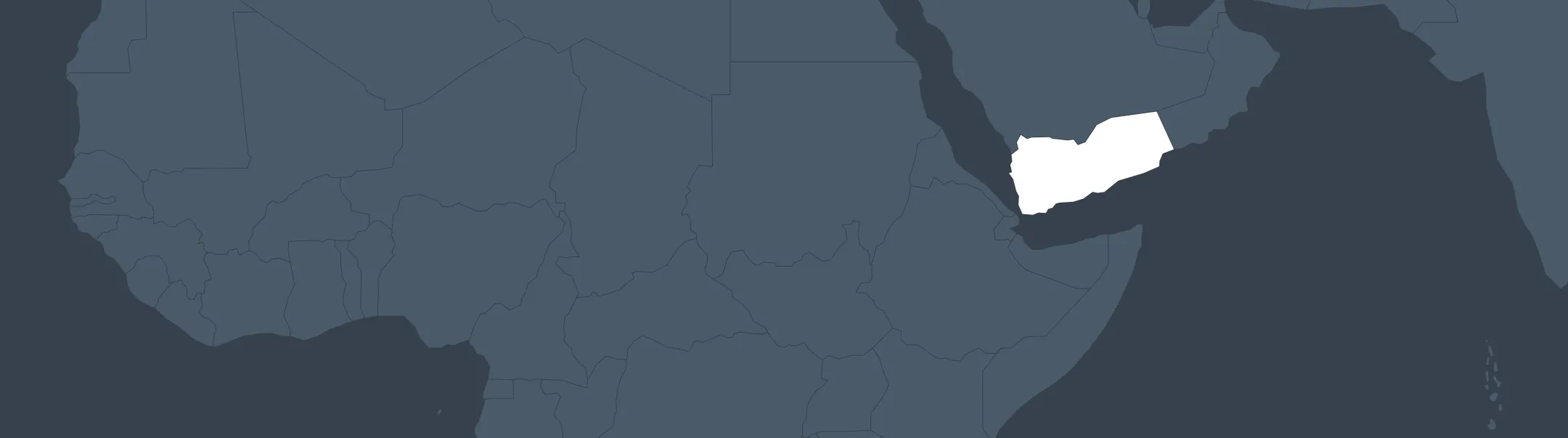

Yemen
Freedom at a Glance
Global Freedom
10 / 100
Not Free


Yemen has been devastated by a civil war involving regional powers since 2015. The civilian population has suffered from direct violence, as well as from hunger and disease caused by the interruption of trade and aid. Elections are long overdue, normal political activity has halted, and many state institutions have ceased to function.
Research & Recommendations
Yemen
Not Free
10
100
| PR Political Rights | 1 40 |
| CL Civil Liberties | 9 60 |
Last Year's Score & Status
10
100
Not Free
A country or territory’s Freedom in the World status depends on its aggregate Political Rights score, on a scale of 0–40, and its aggregate Civil Liberties score, on a scale of 0–60.
See the methodology.
Overview
Yemen, previously home to smaller internal conflicts, has been devastated by a civil war involving regional powers since 2015. Saudi Arabia, the United Arab Emirates (UAE), and their allies intervened that year to support the internationally recognized government against Ansar Allah (Supporters of God), also known as the Houthis—an armed rebel movement that is rooted in the Zaidi Shiite community, which forms a large minority concentrated in northwestern Yemen. The civilian population has suffered from violence and repression by both sides, as well as from hunger and disease caused by the interruption of trade and aid. Elections are long overdue, normal political activity has halted, and many state institutions have ceased to function.
Freedom in the World 2026 Policy Recommendations
Strengthen democratic coordination and collective action in a contested global order
Democratic resilience will increasingly depend on stronger coordination among countries that share a commitment to freedom, the rule of law, and accountable governance.
Reimagine international democracy assistance to help reverse the global decline in freedom
International support for democratic institutions, civil society, and independent media has been associated with modest but meaningful improvements in democratic governance, and it is far less costly than the military outlays necessitated by rising authoritarian aggression.
Prioritize engagement with younger generations in the digital spaces where civic identity is now formed
Young people are increasingly dissatisfied with democracy—not because they reject its principles, but because they see institutions failing to deliver on them. Programmatic work should create clear pathways for meaningful political participation, from voting and policy engagement to community organizing and public leadership, so that young people can translate their expectations into agency.
News and Updates
Featured

Freedom House Perspectives

News Releases & Media Coverage


Country Facts
Basic Facts
Freedom in the World Score
10
/ 100
Not Free
Population: 33,700,000
Internet Facts
Status
Not Tracked
Election Facts
Status
Not Tracked
Transnational Repression
Status
Not Tracked
