

China Dissent Monitor
2026
Issue 13: July – September 2026


Highlights
- 948 protests in the quarter. CDM logged 948 dissent events in the third quarter of 2026, a rise from the previous quarter but a 33 percent decrease from the same period in 2025. The year-on-year drop is still influenced by intensified censorship that CDM described last quarter and likely does not reflect a real-world change. Workers led the highest percentage of protests during the third quarter of 2026 (44 percent), followed by homeowners (27 percent), and rural residents (9 percent). The remainder were led by groups that include small business owners, consumers, parents, students, investors, petitioners, and activists. Guangdong was the top region for protest this quarter (13 percent), followed by Henan, Shaanxi, Hebei, and Shandong. CDM has recorded a total of 16,845 cases of dissent since data collection began in June 2022.
- More than 1,100 protests linked to land expropriation and forced relocation. China’s local governments have long relied heavily on land sales for revenue. Often riddled with corruption, a lack of transparency, and unfair negotiation or compensation, the land acquisition process frequently results in protests by predominantly rural citizens. CDM analysis indicates that this type of dissent has increased in recent years.
- An uneven recovery leaves workers unpaid and protesting earlier. China’s prolonged property slump and uneven post-pandemic recovery has drained cash from real estate developers and the contractors that build for them. That strain is passing down the payment chain to the workers, who frequently do not receive the wages that they are due. CDM’s data suggest that wage protests, commonly seen at construction sites and in coastal factories, may be occurring earlier in the year and with more provocative tactics than in years past.
- Many protesters involved in more than one event. CDM has logged at least 1,359 protests with a link to at least one other case. This novel finding demonstrates that it is not rare for a single group of aggrieved people to protest numerous times in China. Analysis also indicates that rural residents and financial customers are more likely to be involved in reoccurring protests than other groups.


Featured Analysis
A Prolonged Struggle against Forced Relocation
Dispossession as revenue source for local government. China’s local governments have long relied heavily on land sales, accounting for 30 to 60 percent of general budgetary revenues over the past two decades, according to the Organization for Economic Co-operation and Development (OECD). Local governments have accumulated acute levels of debt, reaching a combined 90 percent of local government gross domestic product (GDP) at the end of 2025, and a reliance on land revenues contributes to widespread land expropriation and relocation of predominantly rural citizens. The land acquisition process is often riddled with corruption, a lack of transparency, and unfair negotiation or compensation. In a political system without meaningful due process or political accountability, this frequently results in conflict that leads citizens to dissent.
More than 1,100 related protests. Since June 2022, CDM has recorded 643 dissent events linked to land expropriation, which generally involve rural or urban residents demanding that local authorities cancel planned land acquisitions. Another 503 events involve forced relocation and can be divided into two categories: residents obstructing the demolition of their properties and protests concerning resettlement arrangements. The latter is more complex and involves a wider range of issues, including demands for promised resettlement housing and payment of relocation compensation, as well as concerns over the quality of resettlement housing. Of the 1,146 cases in this dataset, nearly half (558) involved some form of repression, a higher prevalence than in the full CDM database.
Land grabs cause intractable disputes. When local governments dispossess residents of their homes or land, it can spur grievances that persist for many years, often linked to inadequate or delayed compensation. Among the 1,146 cases in CDM’s database, at least 18 involve residents who continued protesting for more than five years after their homes were demolished, demanding resettlement housing or compensation. At least 10 cases have lasted more than 10 years. The longest-running dispute in the database involves the demolition of homes for the Guangzhou Higher Education Mega Center; for 20 years, residents have been demanding resettlement housing and compensation.
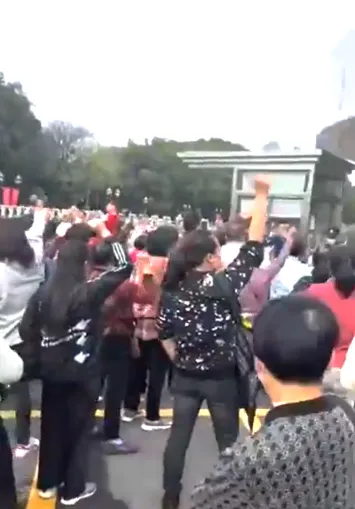
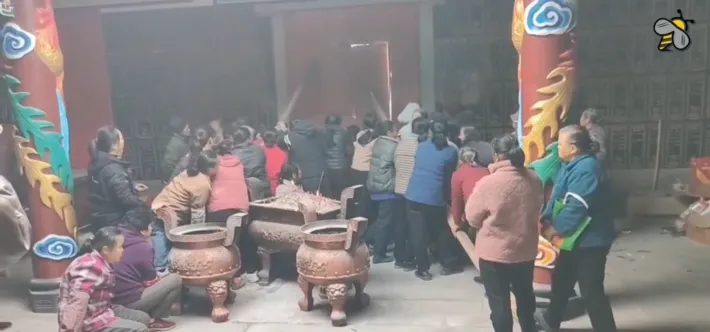
Protests in the public interest. While most dissent events in the dataset were related to private property or collectively owned land, at least 10 protests were aimed at protecting public interests. Despite their small number, most of these cases involved intense confrontations with the police. For example, more than 100 police officers armed with shields and batons were deployed in Guangxi Province in December 2025 to disperse protesters resisting the local authorities’ demolition of Longfu Temple. Six cases concerned religious beliefs, with protesters opposing the demolition of mosque domes or Taoist temples. Two cases involved efforts to protect ancestral halls, while another two concerned preserving village cultural halls.
Protest over land and forced relocation has become more frequent. While the populous provinces of Guangdong, Hebei, Shaanxi, and Henan had the highest counts of protests linked to land expropriation or forced relocation, CDM has documented such events across 31 regions, reflecting a broad geographic scope. This type of protest has also become more common in recent years, increasing five-fold from 2023 to 2025, possibly driven by greater public discontent in a sluggish economy or increasingly indebted local governments that intensify land seizures for revenue or provide less compensation. Despite intensified censorship for much of 2026, CDM has documented 267 events up to the end of September, surpassing the same period in 2024.

An Uneven Recovery Leaves Workers Unpaid and Protesting Earlier
China’s prolonged property slump and uneven postpandemic recovery has drained cash from real estate developers and the contractors that build for them. That strain is being passed down the payment chain to the workers, who do not receive their due wages. CDM’s third quarter data suggests that wage protests, often seen at construction sites and in coastal factories, may be occurring earlier in the year and with more provocative tactics than in previous years.
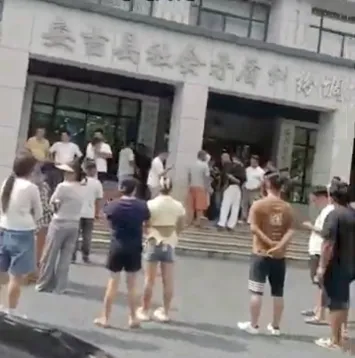
The annual wage-protest cycle may be emerging early. CDM’s data show a recurring rise in worker protests over unpaid wages before the Lunar New Year, followed by a decline after the holiday. This seasonal rise, which has also been identified in other research, generally begins in the fourth quarter. However, it appears this cyclical rise may have begun earlier in 2026. Labor protests accounted for 45.2 percent of all offline events in the third quarter, compared to 38.2 percent in the same period in 2025. The share of worker protests rose sharply from 28 percent in July to 58 percent in August, exceeding every month in the third quarters of both 2024 and 2025.

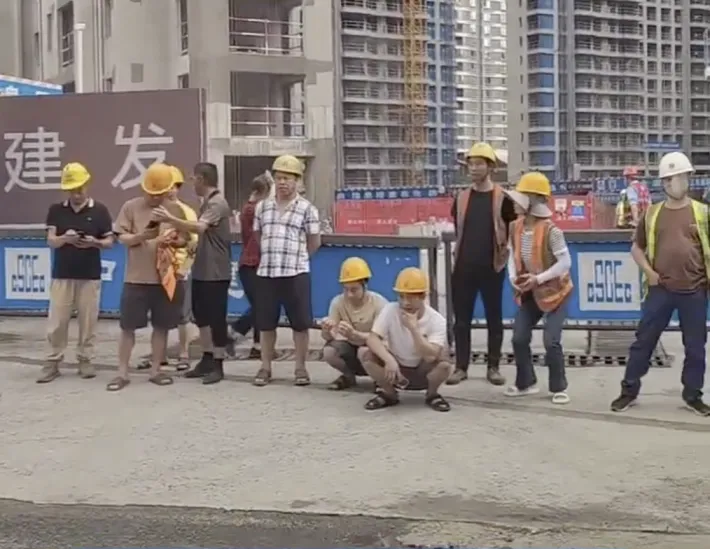
Construction sites show economic strain. Construction sites account for 52.8 percent of worker protests, much higher than the construction sector’s 10 percent share of non-farm employment as reported in China’s economic census—the share of construction worker protests is particularly pronounced in Hubei, Shaanxi, and Guizhou. Beyond the entrenched problems of a subcontracting system that passes wage payment responsibility down through multiple layers, the concentration of protests at construction sites may also reflect China’s recent financial crisis among property developers, which has impacted developers’ ability to pay subcontracted construction workers.
The same state-owned enterprises (SOEs) are repeatedly targeted. Despite traditionally being viewed as relatively reliable employers, state-owned construction firms have been targeted by an increasing number of wage protests since 2025. Among construction site protests, 38.1 percent had links to SOEs, with 43 distinct units from 15 separate named SOE groups. More than half of the units targeted for protest during the third quarter of 2026 had been protested at least once in the past year. In 2026, China State Construction Engineering Corporation (CSCEC) has been the most frequent target (85 events), and its Second and Fourth Engineering Bureaus drew nearly as many protests as its Third Bureau, despite having less than half its revenue. These two bureaus may have a poorer financial situation because of past work on projects for major distressed developers like Sunac, Wanda, and Evergrande. For example, the Second Bureau expected to lose 900 million yuan ($134.5 million) owed by Wanda alone,1 and the Fourth Bureau’s losses on unpaid bills, at 2.2 billion yuan ($328.7 million), were once four times its pretax profit. These financial pressures could make it harder to recover project payments and maintain the cash for workers’ wages.
Factory protests are prominent in coastal industry hubs. The strain is not confined to construction. Although factory protests accounted for only 24.5 percent of worker protests recorded in the third quarter of 2026, their share was higher in Zhejiang, Jiangsu, Guangdong, and Fujian provinces. Zhejiang stood out in particular: 53.3 percent of its 30 worker protests involved factories, up from 36.8 percent over the same period last year. At least 10 of these 16 events were at shoe, garment, or furniture factories. These disputes may reflect local light-industry pressures, even as overall manufacturing indicators have improved modestly, which is in line with the larger pattern of uneven economic recovery.2
Threat-to-jump protests are becoming more common at private construction sites. Among the protest methods used by workers during the third quarter of 2026, gatherings at worksites or along roads remain the most common (45.8 percent), followed by the occupation of places of business or obstruction of entrances and roads (28.8 percent). One of the most provocative modes of worker protest, which CDM has previously reported on, is the threat to jump from buildings or other elevated places. While it remained only a small share of events in the third quarter (2.4 percent), CDM analysis indicates that the use of this tactic at private construction sites has risen over the past three years. This may reflect the continuing deterioration of private developers and the wider property sector as the year-on-year decline in property development investment deepened from 10.6 percent in the full year of 2024 to 19.9 percent in January–August 2026.3 Workers facing multiple layers of subcontracting may struggle to identify who is responsible for payment. When the Lunar New Year or the start of the school year brings urgent expenses, some may use threat-to-jump protests to attract attention and increase pressure for the payment of wage arrears.
- 1
China Chengxin International credit-rating reports: Second Bureau, 2026, pp. 8, 11; Fourth Bureau, 2023, p. 9; Fourth Bureau, 2025, p. 12-13. The Fourth Bureau’s 2024 losses also reflect the wider property slump, not only the named developers.
- 2
Data from China’s National Bureau of Statistics for August 2026 and September 2026 indicate moderate growth in manufacturing in China, with manufacturing purchasing managers’ index (PMI) rising from 49.8 in August to 50.1 in September.
- 3
The figures are year-on-year changes for their specified periods, rather than a cumulative decline from 2024.

This upward trend is specific to private construction sites. Workers protesting at SOE–linked sites more often resorted to relatively less contentious methods such as gatherings, while threat-to-jump protests and collective petitioning accounted for fewer events. This pattern is consistent with earlier research associating public-sector protests with nonviolent action and more tolerant policing. SOE workers may perceive a higher risk or less of a need to use tactics with greater public visibility, such as threatening to jump.
By the Data
Many Protestors Involved in More Than One Event
Of the 16,845 protests recorded in the CDM database to date, at least 1,359 are repeat protests, with a link to at least one other case in the database. These events include protests occurring in close succession, such as two events in the same week, and prolonged disputes leading to multiple protests over months. While the number of linked cases is unquestionably an undercount, this novel finding demonstrates that it is far from rare for a single group of aggrieved people to protest numerous times. It also punctuates how Chinese citizens remain defiant despite an authoritarian government that has long prioritized suppressing public protest and collective action.

CDM analysis indicates that 20.6 percent of repeat protests are led by rural residents, which is more than twice the share of dissent by rural residents in the full database. The share of investors and bank customers leading repeat protests more than 3 times greater than in the full database. Dissent by these two groups is often motivated by prolonged conflicts that make reoccurring protests more likely. Rural protest, as discussed earlier in this report, typically involves land disputes that traverse multiple years of planning, executing, and compensating land confiscation, which produces protracted conflict. Dissent by investors or bank customers, on the other hand, often involves large sums of money lost by distressed companies; this both strengthens the motivation of their customers to dissent and makes full concessions by the companies or government less likely, drawing out the dispute.
There are two main factors setting apart rural protesters from financial customers. First, rural protest is 5 times more common than protest by financial customers and has become more frequent in recent years. Second, CDM analysis has shown that rural protests are disproportionately more likely than other groups to target local governments and involve allegations of perceived corruption. The persistent, state-targeted nature of this dissent likely explains why rural protest has a relatively high prevalence of repression.
Explore the China Dissent Monitor

Explore the Data
Explore the data about the frequency and diversity of dissent in the People’s Republic of China.

Sign Up for Future Updates
Subscribe to receive future issues of the China Dissent Monitor in your inbox.
